Transmission trouble comes with the widest range of fixes in the trade — a solenoid and a rebuild look identical from the driver's seat. We find out which one you are looking at, then price every sensible option: a repair, an in-house rebuild, or a matched used genuine OEM unit through Eskimo Auto & Truck Parts.
Transmissions rarely fail without warning. Slipping between gears, hard or delayed shifts, shuddering at highway speed, dark or burnt-smelling fluid — these show up weeks or months before the unit lets go. Caught early, the fix might be a fluid and filter service, a solenoid, or a valve body repair. Ignored, it becomes a full replacement. So we work in a fixed order: fluid level and condition first where there is a dipstick to check, because colour and smell is thirty seconds that shapes everything after it, and the pan magnet tells the rest of the story once the pan is down. Then a full scan with live data. Then a road test, so we feel what you are describing instead of taking a guess at it. Diagnostics are $120 an hour, quoted before we start, and nobody here quotes a rebuild over the phone. We are at 12940 53 Street NW, (780) 482-2424, AMVIC licensed.
Repair, Rebuild or Replace — Which One Your Transmission Actually Needs
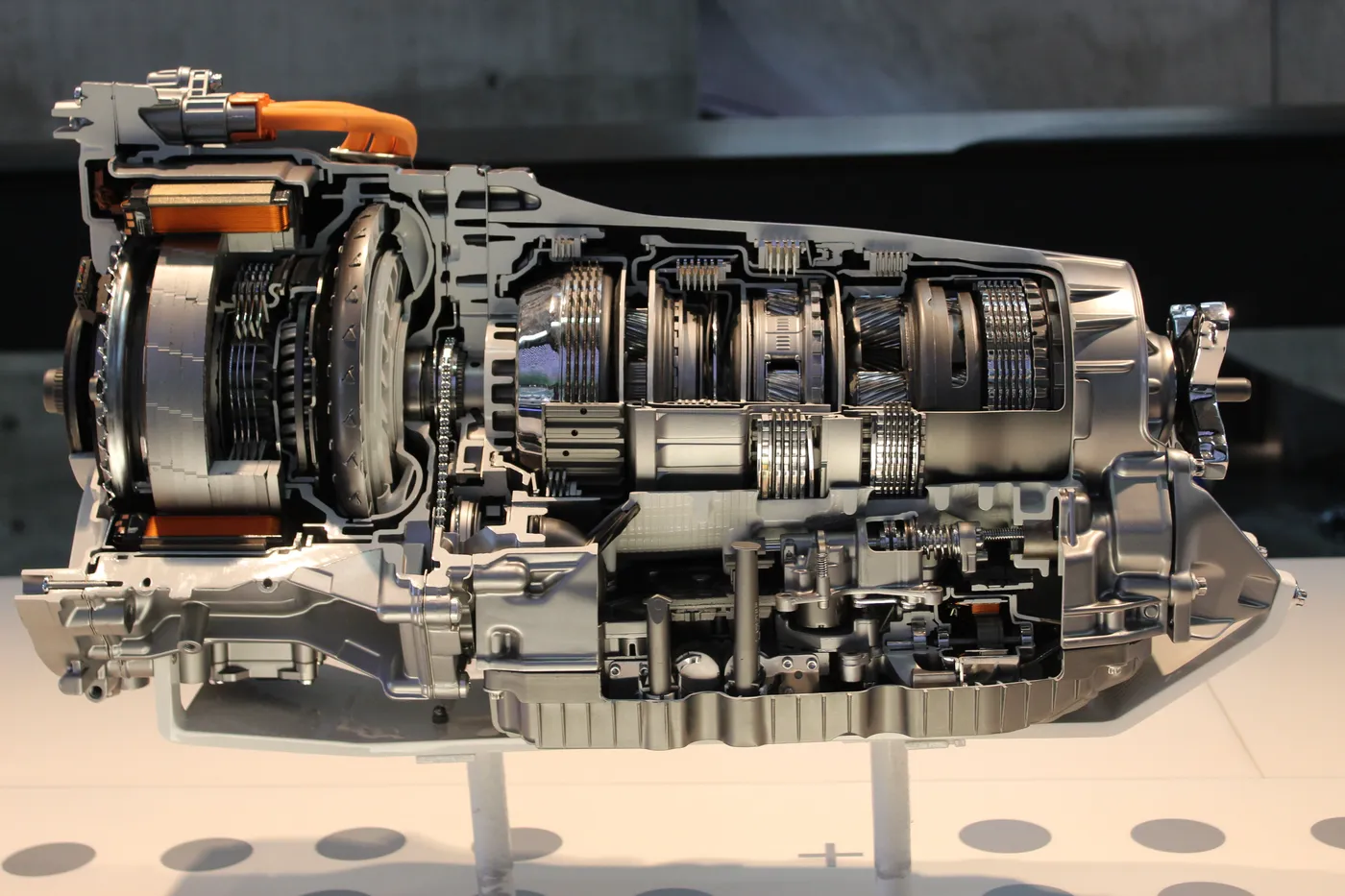
Three words get used interchangeably, and they are three different bills. A repair means the unit stays in the vehicle, or comes out without being opened: cooler lines, pan gaskets, axle and front seals, solenoids, the valve body, sensors, wiring and converter clutch faults. That is the right call when the parts inside are still healthy, which is often the case in the first weeks of a symptom. A rebuild means it comes out, comes apart on a bench, every hard part measured and every soft part replaced — the right call when there is friction material or metal in the pan, a gear range is gone, or gear-ratio codes survive a control-side repair. Our transmission rebuild page covers what happens once it is open. A replacement means a matched used genuine OEM unit, which usually wins when a good donor exists and the vehicle has years on it. Both routes are ours, so the comparison does not depend on which one you pick. Burnt clutches are what separate the first bill from the other two. Installation decides how the other two feel — a good unit installed without the proper adaptation resets can shift badly and get blamed unfairly.
Shift Solenoid, Valve Body and Sensor Faults That Are Not a Rebuild
A modern automatic is a hydraulic switchboard with a computer at the controls: shift solenoids, the pressure control or EPC solenoid, the torque converter clutch solenoid, speed sensors and the range sensor. When one of those goes, the transmission hunts between gears, flares between shifts, bangs into gear once it is warm, refuses a gear outright, or drops into limp mode. Valve bodies also wear their bores, and the cross-leaking pressure that causes imitates worn clutches convincingly. ATF wicking up a case connector into the harness is another real fault we look for. Codes worth naming: gear-ratio faults P0730 and P0731 through P0736, the pressure faults P0868 and P1745 behind the 68RFE pattern in our Dodge Ram 68RFE guide, and P0746 for pressure control performance. This is the cheapest tier of transmission work, and it stays available only while the parts underneath are still healthy. If yours has dropped into limp mode, drive it gently straight here or have it towed in, and stop driving it after that.
What a Transmission Fluid Service Can Fix — And What It Can't
A fluid and filter service genuinely helps some things and cannot touch others, and the trade blurs that line in both directions. It can clean up mild shift-quality complaints, a delayed engagement caused by degraded fluid, early converter judder, and cold-morning harshness that got worse over a winter. It cannot fix worn friction material, a cracked drum, a scored pump or a leak. Fluid spec is not interchangeable either: a Nissan CVT takes NS-2 or NS-3, a Honda or Subaru CVT takes its own, a wet dual-clutch takes its own, and universal ATF is not a substitute for any of them. Many modern units have no dipstick and are filled at a specified fluid temperature, and a fill done by eye either starves the clutches or foams the fluid. We go by fluid condition and your manual's severe-service interval rather than the lifetime fluid myth, and in this city towing, gravel-road heat and stop-and-go traffic all count as severe. Fluid is cheap. Transmissions are not.
Torque Converter Shudder: The Vibration That Isn't Your Tires
The torque converter is the fluid coupling between the engine and the gearbox, and at steady cruise its lockup clutch clamps to kill the slip and save fuel. When that clutch chatters instead of clamping, you get a rhythmic vibration at steady light throttle, usually around 60 to 90 km/h, that owners describe as driving over rumble strips. The tell is that it disappears the instant you accelerate or lift off. That separates it from tire balance, which tracks road speed and is there off-throttle too, and from a misfire, which tracks engine rpm. Causes are worn converter clutch lining, degraded or contaminated fluid, a failing lockup solenoid, or a valve body leaking apply pressure. Caught early, fluid and a solenoid can be the entire repair. Left long enough, the converter is a sealed drum full of its own debris, and reaching it means the transmission comes out. If you feel it, book it while it is still the cheap version of this conversation, and tell us the speed it happens at and whether it clears when you lift.
Conventional Automatics and CVTs Don't Fail the Same Way
A conventional automatic warns you. It slips, flares, bangs or hunts for weeks before it quits, and each of those symptoms points at specific parts, which is why it stays the most repairable layout on the road here. Six, eight and ten-speeds add clutches and a great deal more software, so the adaptation relearn after any work matters more than it used to. A CVT gives you a different set of tells, because there are no gears to shift: a whine that rises with road speed rather than engine rpm, judder under light throttle, rpm flare pulling away from a stop, then overheat limp mode on a long grade or a loaded summer highway run. The early fluid-service window on these is real and short, and our Nissan CVT guide covers that pattern in detail. Whether a worn CVT is worth replacing at all is a question our transmission rebuild page takes on directly.
DSG, S tronic and PowerShift: The Dual-Clutch Service Interval Nobody Mentions
A dual-clutch gearbox — sold as DSG, S tronic, PowerShift or DCT — is two manual gearboxes with computer-operated clutches and a mechatronic unit deciding which one is engaged. It does not misbehave the way an automatic does. Shunting at low speed, a shudder pulling away from a stop, a clunk on the one-two change, or a message telling you to stop safely are the usual first complaints, and on a wet-clutch unit a lot of that traces back to fluid. Wet ones need a real fluid and filter service on an interval most owners are never told about. Dry ones do not share that fluid and fail differently, usually at the clutch pack or the actuator. The first useful thing anyone can tell you is which one you have, and we will — along with whether the programming it needs is something we do here or a dealer-only procedure.
Cold-Weather Shifting in Edmonton: Why the First Shifts at -30 Feel Wrong
At -30 the fluid is thick, pressures spike, the valve body responds slowly, and many transmissions deliberately run a different shift schedule until they have heat in them. The rule that matters: cold-morning firmness that clears with warm-up is climate, and anything that persists once warm, slips, or is clearly worse than last winter is mechanical. Winter also finds leaks for free, because fresh snow shows every red or brown drip under the vehicle, and low fluid is the most preventable cause of transmission failure there is. A cooler line or pan seal fixed in November is a small bill; the slipping it prevents is not. And a vehicle that lives outside repeats that same cold start every morning for five months, which is why the shifting complaints that land here in January are usually a unit that was already marginal in August. If yours behaves differently this winter than it did last winter, say so when you book it.
When a Transmission Isn't Worth Fixing — Running the Math Before Anyone Orders a Unit
Before anyone orders a unit, we run the arithmetic with you out loud. The replacement route is a matched used genuine OEM transmission sourced through Eskimo Auto & Truck Parts — a separate company at this address, and one of Edmonton's largest auto recyclers, shipping units across Canada and the USA. It is matched to your VIN, the donor vehicle's kilometres are on record, warranty terms are in writing, and installed it often lands in the $2,500–$5,500 range all-in. Trucks, diesels and all-wheel-drive units run higher, and lead time on a sourced unit is worth asking about when you call. Rebuilds in Alberta typically run $3,500–$6,500 or more depending on the unit; what one costs on your vehicle is what our transmission rebuild page is for. Then the part that costs us work: if the vehicle is worth about what the unit costs, the rockers are going from ten winters of salt and the engine is next in the queue, we will say so, and we would rather lose the job than sell it. On a truck you plan to keep another eight years, the same bill is the cheapest way to buy those years. Call (780) 482-2424.
Signs you need this service
- Slipping — the engine revs but the vehicle doesn't pull like it should
- Engine rpm sitting higher than it used to at the same highway speed
- A pause before the vehicle moves after shifting into Drive or Reverse
- Hunting between gears on the highway, or a shift that lands with a bang once the vehicle is warm
- A rhythmic shudder at steady light throttle around 60-90 km/h that vanishes the moment you accelerate
- Firm or delayed shifts that used to clear after a few minutes at -30 and now stay harsh once warm
- Fluid that's dark brown or smells burnt instead of red and clean
- Red fluid spots on the driveway or garage floor
- A check engine light with transmission codes, or the vehicle stuck in limp mode
- Whining or droning that rises with speed on CVT-equipped vehicles
What's included
- Road test and full scan of transmission codes and live data before any recommendation, with fluid colour and smell checked before anything else and the pan magnet read once the pan is down
- Transmission fluid and filter services with the correct fluid spec for your unit, set at temperature on units with no dipstick
- Leak repairs — cooler lines, pan gaskets, axle seals, front seals — plus cooler and cooler-line flow testing, which is what protects the repair on a towing vehicle
- Solenoid, valve body and torque converter work, including converter clutch shudder diagnosis by fluid, lockup solenoid and apply-pressure testing before anyone talks about pulling the transmission
- Speed sensor, range sensor, connector and wiring faults, including ATF wicking up a case connector into the harness
- CVT and dual-clutch diagnosis, wet units serviced to their own fluid spec, and a straight answer on whether yours is serviceable or a replacement candidate
- In-house transmission rebuilds that correct your unit's known weak points, plus clutch replacement on manual gearboxes
- Used genuine OEM transmission sourcing through Eskimo Auto & Truck Parts, matched to your VIN
- Complete replacement installs including programming and relearn procedures
- Warranty terms in writing before work begins
The Liqui Moly we use for transmission repair & replacement
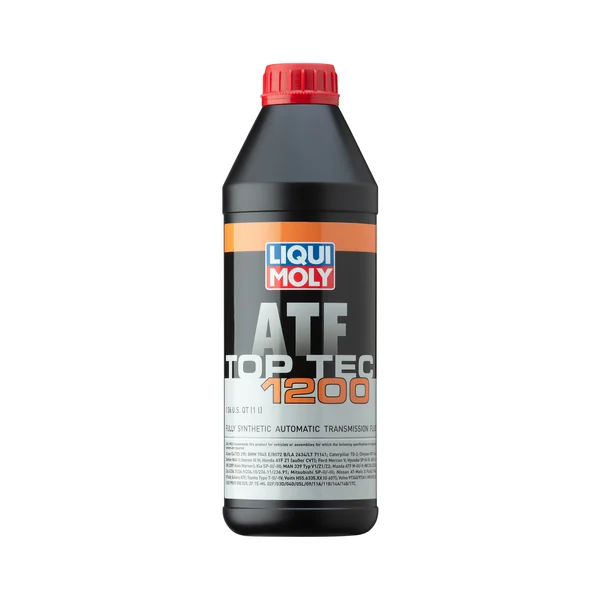
The right ATF is not optional on a modern automatic — the wrong spec is how transmissions come back.
Automatic Transmission Fluid
Top Tec ATF 1200
1 L · $24.85
Automatic Transmission Fluid
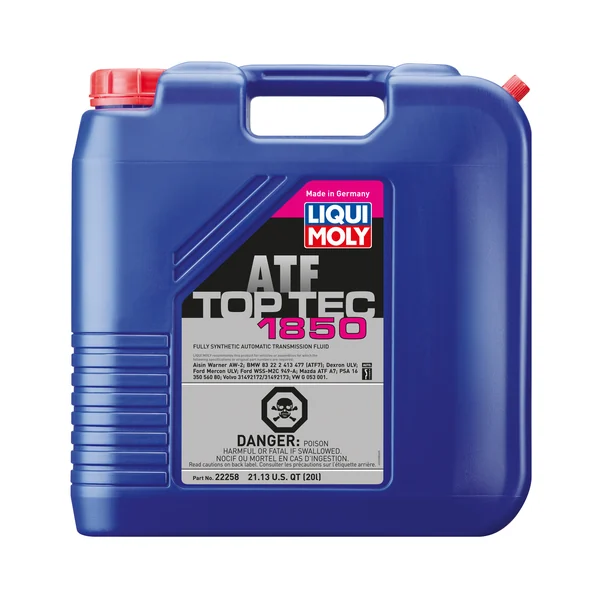
Top Tec ATF 1850
20 L · $335.40
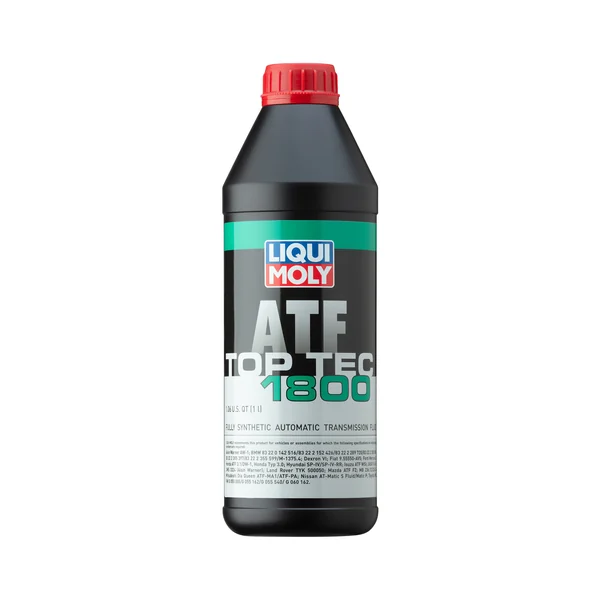
Automatic Transmission Fluid
Top Tec ATF 1800
1 L · $20.55
Not sure which one your engine needs? Use the oil finder or browse all our oils & additives. Free pickup in Edmonton, or we ship it.
Frequently asked questions
Will a fluid change fix my slipping transmission?
Sometimes, and the way we decide is the same every time. Fluid colour and smell first, then the pan magnet if the pan has to come down anyway, then a scan with live data, then a road test to feel the slip and note where in the shift it happens. Clean fluid with a mild complaint and no debris is worth a service. Burnt fluid, friction material on the magnet and slip under load is not, and we will say so before you spend the money.
Genuine OEM or rebuild — which makes more sense?
Three things decide it. Whether a good VIN-matched donor unit actually exists for your vehicle, because on some models they are plentiful and on others they are not. Whether your transmission has a known design weakness a rebuild can correct during assembly, which is the argument for keeping your own case. And how many more years you want out of the vehicle. We price the sensible options side by side for your specific vehicle rather than steering you at one of them.
Is a used genuine OEM transmission a gamble?
Not the way we do it. The unit comes through Eskimo Auto & Truck Parts, matched to your VIN, with the donor vehicle's kilometres on record. Then the install decides the rest: the cooler and cooler lines get flushed and flow-tested so debris from the old failure cannot eat the replacement, it gets the correct fluid set at temperature, and the adaptation relearn gets done properly. Warranty terms are in writing before we start. Ask about lead time when you call, because it depends on the unit.
How much does transmission replacement cost in Edmonton?
Typical honest ranges: fluid and filter service a few hundred dollars; solenoid and valve body work often under $1,500; a used genuine OEM unit installed usually $2,500–$5,500 all-in. Trucks, diesels and all-wheel-drive units run higher. What a rebuild costs, and whether your vehicle has earned one, is laid out on our transmission rebuild page. Diagnosis comes first so you are paying for the right repair, and diagnosis is $120 an hour, quoted before we start.
Should I warm up my transmission in winter?
Let the engine idle a minute or so at -25 and colder, then drive gently — the transmission warms far faster under light driving than idling in the driveway. Keep it easy for the first few kilometres and avoid hard acceleration until the drivetrain has heat in it. That last part is the one that matters: cold thick fluid plus a heavy right foot is where most winter wear comes from, not the idling you skipped.
I've heard changing the fluid on a high-kilometre transmission will kill it. Is that true?
No, and the story survives because of a coincidence. Transmissions that fail shortly after a service were almost always already worn out. Fresh fluid changes how tired clutches grab, so a failure that was weeks away arrives this week, but the wear was already done, and correct-spec fluid with a new filter does not cause it. What we will not do is push a high-pressure flush through a unit whose fluid is already burnt and full of debris, and we will tell you honestly when fluid is the last thing that will help.
My transmission is slipping. Can I keep driving it?
Not for long, and not hard. A clutch that slips makes heat, heat cooks the fluid, and cooked fluid takes the next clutch with it, so this bill climbs by the week rather than by the year. A gentle direct drive to the shop is reasonable. Pulling a trailer, climbing hills, merging hard or another month of commuting on it is how a solenoid-and-fluid repair turns into a replacement. If it is slipping badly or it smells burnt, have it towed in instead.
Does my CVT need different fluid than regular automatic transmission fluid?
Yes, and it is not a detail you can compromise on. A CVT transfers everything through a steel belt or chain squeezed between pulley faces, and the fluid's friction properties are what stop it slipping — the wrong fluid causes the exact belt slip you were trying to avoid. Nissan units want NS-2 or NS-3, Honda and Subaru have their own, and a universal CVT fluid is not equivalent to any of them. We look up the spec for your unit and fill it to temperature.
Known problems we repair
Deep guides on the failures we see most — symptoms, honest costs, and repair options.
Ram 2500/3500 6.7L Cummins — 68RFE 6-Speed (2007.5–2024)
Dodge Ram 68RFE Transmission Problems: What Fails, What It Costs, and What to Do About It
Nissan Jatco CVT (2003-2020)
Nissan CVT Transmission Failure (Jatco): Symptoms, Years Affected, and Repair Costs in Canada
Transmission — any make
Transmission Won't Shift in Edmonton: Cold-Weather Shifting, Slipping, Limp Mode, and Honest Costs
Related services
Book your transmission repair & replacement
Call for a straight answer on cost and timing, or book online.