
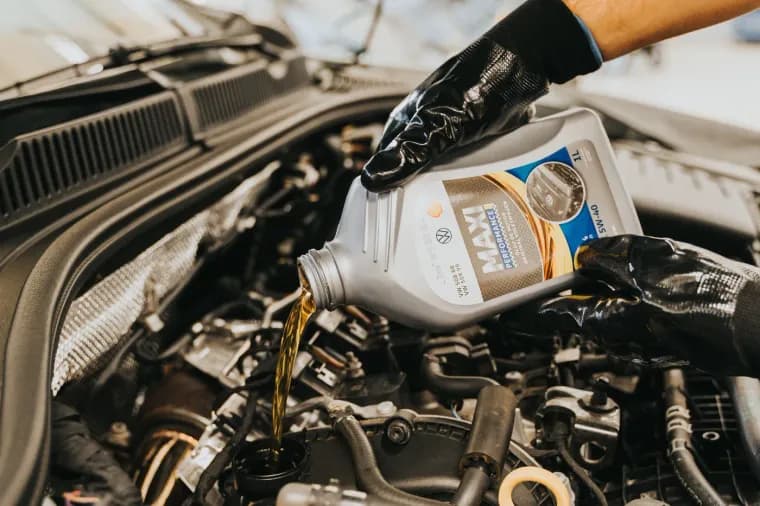
The cheapest repairs are the ones you never need. We do maintenance by the book — your owner's manual, not a laminated upsell menu — with the correct oil spec, every fluid tracked against your factory schedule, and a real inspection every visit.
Scheduled maintenance is the calendar, not the visit. At 12940 53 Street NW we track what comes due at which kilometres on your specific vehicle, against the manufacturer's own schedule. Bring your VIN: the schedule is engine-specific, and working out which one applies to your vehicle is most of the job. Eskimo Auto Repair is AMVIC-licensed, the estimate comes in writing before the work, and Alberta law says your final bill can't run more than 10% over that estimate without your OK. You can have your old parts back, the fluid specification goes on the invoice, and you leave with dated records. Call (780) 482-2424 or book online.
What a Factory Maintenance Schedule Actually Lists — and What It Doesn't
A factory schedule is a table of kilometres and dates tied to your engine and VIN. It lists oil and filter, tire rotation, engine and cabin air filters, brake inspection, spark plugs at the interval your engine specifies — the spread between a turbocharged engine and one running long-life plugs is wide, and our tune-ups page carries the ranges — a timing belt where one is fitted, transmission fluid and coolant. It also separates inspect from replace, and a counter menu blurs the two: the book asks you to look at a belt or a brake at a given interval, not to sell one. What almost never appears in yours: an engine flush, a fuel injection service sold by the calendar, a transmission flush the manual never asked for, throttle-body cleaning, or an additive at every visit. Where a manual does call for induction work or a specific additive, we use it. The difference is whether the book asks or the counter does.
Why Edmonton Driving Is Severe Service by the Manufacturer's Own Definition
Your owner's manual carries two maintenance schedules: normal and severe. Edmonton driving is the severe one, and the list belongs to the manufacturer — trips under about 15 km where the engine never fully warms, sustained cold, stop-and-go, dusty or gravel roads, towing, and long idling. What that changes: oil at roughly every 8,000 km or six months on full synthetic instead of the 12,000-plus kilometres the normal schedule allows, transmission fluid and the air filter sooner, and brake inspection sooner because sand and salt pack into the caliper slide pins. Short cold trips also put fuel in the oil, which our Honda 1.5T oil dilution guide walks through. Following the normal schedule in a severe-service city is how engines sludge up and warranty claims get denied.
How Often Transmission and CVT Fluid Actually Need Changing
Engine oil is one line on this schedule, priced and specified on our oil change page. Transmission fluid is the line that gets missed. We like to see it every 60,000 to 100,000 km on a conventional automatic, and sooner on a CVT — our Nissan CVT guide puts most units at 50,000 to 60,000 km. A service means fluid, filter, pan gasket and seals rather than a top-up, so it is a number to budget for and a visit to book on its own, not something to slip into an oil change. Where it lands on your calendar depends on how the vehicle works for a living: towing through the summer, a commute that is all stop-and-go, and gravel-road heat all pull it forward, and we would rather move it up a year than find it by road test. What a fluid service can and can't fix, and why the fill temperature matters, is on our transmission repair page.
Coolant, Brake Fluid, Differentials and the Transfer Case Nobody Remembers
The fluids that get skipped are the ones nobody sees. Coolant gets tested rather than replaced on the calendar — freeze point and condition checked at every service, protection set to -45, and a date on the record so the next shop isn't guessing either. Why old coolant costs you a water pump or a heater core is on our heating and cooling page. Brake fluid absorbs moisture over the years, which corrodes calipers and the ABS unit long before it shows up in pedal feel, so it gets tested with a meter instead of judged by colour. Nobody thinks about the differentials or the transfer case, and AWD and 4WD are everywhere here. A lifetime fill that nobody ever changes is one of the most common reasons those units fail early, and towing, gravel and slush pull the interval in. Many newer vehicles have electric-assist steering, so there is no power steering fluid to sell you.
What the Inspection Measures, and How It Moves Your Next Service Date
Every visit includes a multi-point inspection, covered in full on our oil change page. What matters here is what happens to the numbers. Brake pads get measured in millimetres, tread depth on all four tires, coolant and brake fluid tested rather than eyeballed, and every figure goes on your record with a date against it. Two dated measurements are a wear rate. That turns 'the pads look fine' into 'you have about a winter left on the fronts, book it in March' — the difference between choosing when you spend and being told when. A weeping hose or a torn boot gets dated the same way, so it lands in the plan. If a scan turns up a misfire, that is a tune-up question, and our tune-ups page covers it.
Starting a Maintenance Schedule on a Used Vehicle With No Service Records
Plenty of vehicles arrive here with a glovebox full of nothing. A used purchase with no history is not a lost cause. We assume the long-interval items were never done, then work out which ones are destructive to skip. Timing belt first, because age counts as much as kilometres and an interference engine turns a snapped belt into bent valves. Then transmission fluid, coolant condition, brake fluid moisture, and differential and transfer case fluid — the ones where neglect compounds rather than waits. Short-interval items we test instead of replacing on principle, because a clean filter is clean whoever put it in. What you end up with is a baseline: a dated record of what was actually done. If the vehicle is still under its new-vehicle warranty, that record is what a claim turns on, and it does not have to come from a dealer.
When to Book Winter Prep, Spring Checks and Pre-Towing-Season Service in Edmonton
Fall is the busy one, and September is when to book it. Winter tires switch at about seven degrees rather than at the first snowfall, but book before the snowfall rush — our winter tire changeover page covers the seven-degree rule. The same visit takes the battery load test, the block heater and cord check, coolant freeze protection to -45, and winter wipers; our battery replacement and block heater pages carry the reasoning. Winter is about not stretching an oil interval through the hardest months. Spring is one visit: an underside look at what salt, sand and potholes did, caliper and hardware service, and an alignment check, covered on our wheel alignment page. Before you hook up a trailer for the season, transmission fluid, coolant and the rear suspension get checked — book that in spring, not the week you leave. Several vehicles on one account belong on our fleet maintenance page. Call (780) 482-2424 or book online.
Signs you need this service
- You can't remember the last oil change, and the sticker in the windshield is from a shop you no longer use
- The maintenance reminder is on and you don't know what it's actually asking for
- You bought the vehicle used and it came with no service history
- You're coming up on 60,000, 90,000 or 120,000 km and nobody has told you what's due
- The transmission fluid has never been changed because someone said it was filled for life
- Your commute is ten minutes each way, the vehicle sits outside overnight, and the remote starter idles it most winter mornings
- The coolant in the overflow bottle looks rusty or muddy
- You tow in the summer and the transmission and differential fluid have never been touched
- The block heater hasn't been tested since last winter — they fail quietly
- Your new-vehicle warranty is still in force and the records have to hold up
What's included
- Your factory maintenance schedule pulled for your exact engine and VIN, on severe-service intervals
- Oil and filter to the exact manufacturer specification and approval — Liqui Moly for European engines, ENEOS for Japanese makes, Lucas oils and additives
- Transmission and CVT fluid, filter, pan gasket and seals at the interval your unit calls for, rather than a top-up
- Spark plugs, belts, and the timing belt where one is fitted, at their scheduled interval
- Coolant tested for freeze point and condition, and set to -45 when it's serviced
- Brake fluid, differential and transfer case fluid by schedule and by test, pulled in earlier by towing, gravel and slush
- Engine air and cabin filters, wipers and tire rotation at their own intervals
- Fall winter prep in one visit — battery load test, block heater and cord check, seasonal tire changeover
- Inspection measurements written down and dated, and records carrying the fluid specification on the invoice
The Liqui Moly we use for oil changes & scheduled maintenance
What we reach for on a routine service — engine oil, plus the additive that keeps an injector system clean.
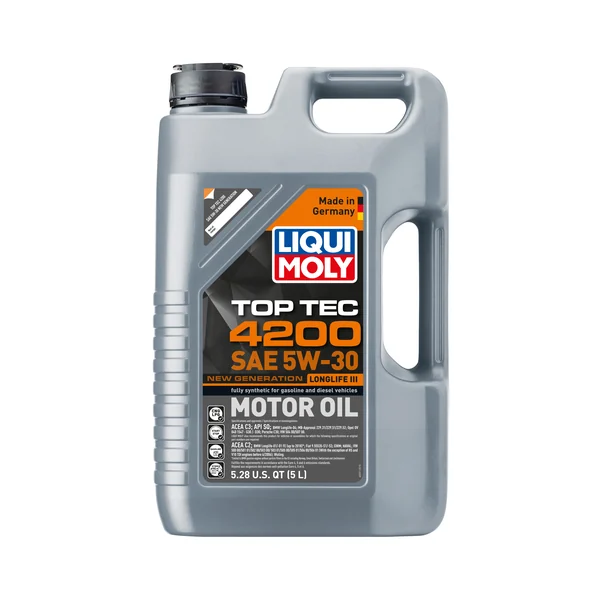
Engine Oil
Top Tec 4200 SAE 5W-30 New Generation
5 L · $92.60
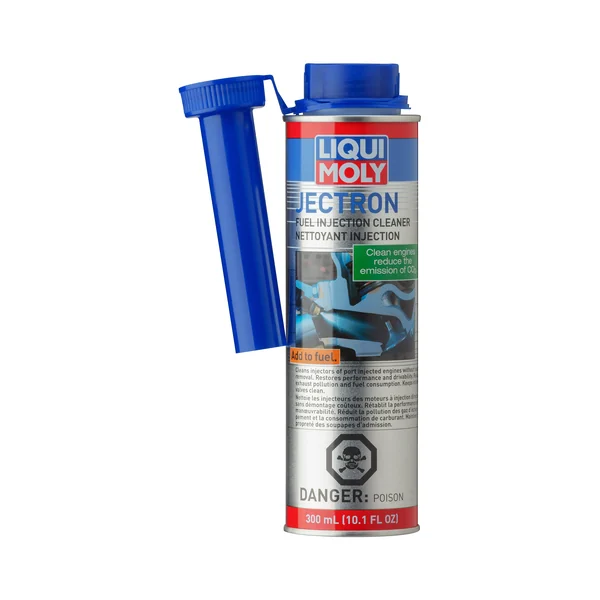
Fuel System Cleaner
Jectron Fuel System Cleaner
$18.50
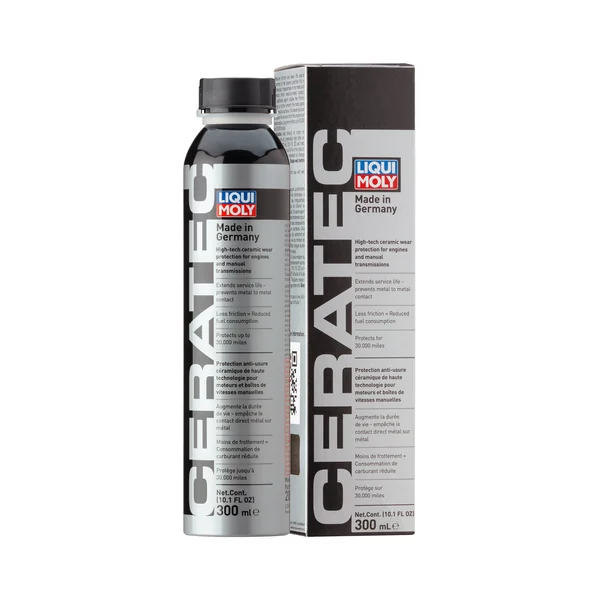
Engine Oil Additive
Cera Tec
$54.35
Not sure which one your engine needs? Use the oil finder or browse all our oils & additives. Free pickup in Edmonton, or we ship it.
Frequently asked questions
What comes due at 30,000, 60,000 and 90,000 km?
That depends on your vehicle, which is why we pull yours instead of quoting a generic list. The short intervals are oil, filters, rotation and inspections. The long ones add spark plugs, transmission fluid, coolant, differential and transfer case fluid, and a timing belt if your engine has one. Bring your VIN or call (780) 482-2424.
How much does scheduled maintenance cost in Edmonton?
There is no flat rate. A visit where only oil and a rotation are due is not the visit where the timing belt, coolant and transmission fluid all land together. What moves the number is how many items come due at once, and how much oil the engine holds and which approval it needs. We quote in writing first.
Is my driving really severe service, or is that just an upsell?
It is the manufacturer's own second column, not ours, and it does not catch everyone. Commute 60 km each way on the highway and your engine reaches full temperature every trip — you belong on the normal schedule, and we will say so. What puts most of this city in the other column is the ten-minute trip and the vehicle parked outside at -30.
Does a remote starter change how often I need service?
It adds engine hours the odometer never records. Ten minutes of idling on a winter morning, five mornings a week, is running time the schedule counts even though the kilometres do not move. Long idling sits on the manufacturer's severe-service list, so if you remote start all winter, go by months as much as kilometres.
Do I need the dealer's maintenance schedule, or will a generic one do?
Use the manufacturer's, and get it for your engine rather than your model. A generic shop menu averages across a whole model line and misses what varies: plug intervals on turbo engines, belt versus chain, which transmissions have their own service interval, whether your trim has a transfer case. That is why we start at the VIN.
Is the maintenance reminder light the same as my maintenance schedule?
No, and the difference costs people money. Most reminder systems are oil life monitors: an algorithm watching engine temperature, load and run time to estimate when the oil is done. It knows nothing about transmission fluid, coolant, spark plugs or a timing belt, and on some vehicles it is a mileage counter anyone can reset.
Does my engine have a timing belt or a timing chain?
We can tell you off the VIN, and it is worth knowing. A belt has a published interval in kilometres and in years, and on an interference engine a snapped belt bends valves and turns a maintenance job into an engine job. A chain has no scheduled replacement, but it lives on oil changed on time.
If money is tight, which maintenance can wait?
Some of it genuinely can. A cabin filter, a rotation, a set of wiper blades — deferring those costs you nothing but inconvenience. What does not wait is anything where neglect compounds: a timing belt past its date, transmission fluid on a unit already working hard, coolant that has lost its protection, brake fluid full of moisture. Tell us the budget and we will sort the list that way.
Known problems we repair
Deep guides on the failures we see most — symptoms, honest costs, and repair options.
Nissan Jatco CVT (2003-2020)
Nissan CVT Transmission Failure (Jatco): Symptoms, Years Affected, and Repair Costs in Canada
Honda 1.5L Turbo (L15B7/L15BE), 2016–2022
Honda 1.5 Turbo Oil Dilution: The Cold-Climate Problem Edmonton Drivers Need to Understand
Toyota 2AZ-FE 2.4L (2006-2015)
Toyota 2.4L 2AZ-FE Oil Consumption: Why These Engines Burn Oil and What Actually Fixes It
Related services
Book your oil changes & scheduled maintenance
Call for a straight answer on cost and timing, or book online.