The short answer
The 68RFE six-speed automatic behind the 6.7L Cummins in 2007.5–2024 Ram 2500 and 3500 pickups is the weakest link in an otherwise stout drivetrain. Valve body wear, solenoid pack failures, a marginal torque converter, and heat under towing are the classic failure paths, and they usually announce themselves before the transmission dies outright. This guide covers the symptoms stage by stage, the limp-mode codes, honest Canadian repair costs from a fluid service up to a built unit, and when a genuine OEM transmission makes more sense than a rebuild.
In Edmonton?
We fix this in our shop — transmission repair & replacement in Edmonton.
Call (780) 482-2424Symptoms, from first warning to failure
Delayed or harsh shifts, especially 2-3 and 3-4
The first sign is usually shift quality drifting off. Engagements that used to be crisp turn lazy or start banging, often worse when the transmission is stone cold or fully heat-soaked after towing. On the 68RFE this points at valve body wear or solenoid pack trouble before it points at burnt clutches, which is exactly why it is worth chasing early.
Torque converter shudder at lockup
A vibration or shudder around 60–90 km/h under light throttle, right when the converter clutch locks, is a classic 68RFE complaint. It feels like driving over rumble strips. Fresh fluid sometimes masks it for a while, but a shuddering converter clutch is wearing itself out, and the debris it sheds ends up circulating through the rest of the transmission.
Slipping or RPM flare under load
Engine revs climb without the truck accelerating to match, typically on a 3-4 shift or pulling a grade with a trailer. This means a clutch pack is not getting the clamping pressure it needs, either from valve body cross-leaks or because the clutches themselves are cooked. Every slip event makes heat, and heat finishes the job quickly.
Rising transmission temperatures when towing
If sump temperature keeps climbing past about 105°C (220°F) on pulls that never used to bother the truck, take it seriously. The 68RFE goes into an overheat shift schedule around 115°C (240°F), and ATF+4 breaks down fast when it lives up there. Rising temps are often a symptom of internal slip as much as a cause of it.
Dark or burnt fluid, debris in the spin-on filter
The 68RFE runs two filters — a sump filter and a spin-on cooler-return filter. Fluid that is dark brown, smells burnt, or a spin-on filter with visible friction material or metal in it means damage is already done inside. At this stage you are choosing between repair options, not preventing the problem.
Limp mode — stuck in third gear with P0871 or P0868
When the computer sees line pressure that does not match what it commanded, it locks the transmission in third gear to protect itself. Common codes are P0871 (overdrive pressure switch rationality), P0868 (line pressure low), and P1745 (line pressure too high for too long). Sometimes a restart clears it temporarily, but repeated limp events mean pressure is being lost somewhere and the clock is running.
Loss of a gear range, no reverse, or no movement
Losing overdrive entirely, losing reverse, or the truck not moving at all means a clutch pack or hard part has failed outright. Do not keep driving it — at this point continued operation just spreads debris and can turn a rebuildable core into scrap. Get it towed in and price your options from there.
Affected models
| Model | Years | Notes |
|---|---|---|
| Ram 2500 (6.7L Cummins) | 2007.5–2024 | Every automatic 6.7L Cummins Ram 2500 pickup in these years has the 68RFE — the Aisin was never offered on the 2500. From 2019 the standard-output Cummins made 850 lb-ft through the same basic transmission, which thinned the safety margin further. |
| Ram 3500 pickup, standard-output Cummins | 2007.5–2024 | Standard-output 6.7L automatic trucks got the 68RFE. From 2013, ordering the High Output Cummins got you the Aisin AS69RC instead — check your build sheet or the pan shape if you are not sure which you have. |
| Ram 3500 pickup, High Output Cummins | 2013–2024 | These use the Aisin AS69RC, not the 68RFE. Ram introduced it because the 68RFE could not handle the high-output engine's torque; Ram claimed roughly 64 percent more torque capacity. A different transmission with different (and fewer) failure patterns. |
| Ram 3500/4500/5500 cab and chassis (diesel) | 2007.5–2024 | Diesel chassis cab trucks used the Aisin AS68RC (2007.5–2012) and then the AS69RC (2013 on) rather than the 68RFE. This guide does not apply to them. |
| Ram 2500/3500 (6.7L Cummins) | 2025 onward | The 68RFE and the Aisin were both retired for 2025, replaced by the TorqueFlite HD eight-speed automatic (a ZF PowerLine design) behind both Cummins outputs. Too new to have an established failure history. |
What actually goes wrong
The 68RFE arrived in mid-2007 alongside the then-new 6.7L Cummins, which is why you will see "2007.5" on these trucks — early-2007 5.9L trucks still had the old 48RE four-speed. It is a six-speed automatic from Chrysler's RFE family, a design lineage that started life behind much smaller engines. Chrysler scaled it up, but it was always working close to its limits behind a diesel that made 650 lb-ft at launch and 850 lb-ft by 2019. That is the root of nearly everything below: the 68RFE is not a bad transmission, and plenty of gently used ones go 250,000 km and beyond, but it has thin margins, and heavy towing, hard use, or added power find those margins quickly.
The valve body is the most common starting point for trouble. It is an aluminum casting full of small valves and accumulators that route hydraulic pressure to the clutch packs. Over time the bores wear and internal cross-leaks develop between circuits, so the clutches receive less clamping pressure than the computer thinks it is delivering. A clutch that is not fully clamped slips a little on every shift, slipping makes heat, and heat burns the friction material — the overdrive clutch pack is a classic casualty. The frustrating part is that a worn valve body can quietly destroy a mechanically healthy transmission, which is why catching it at the "funny shifts" stage matters so much.
The solenoid pack and pressure control system fail in a related way. The 68RFE uses electronically controlled variable line pressure, and the solenoid pack lives inside the transmission, soaking in hot fluid. Heat and fluid contamination degrade it, causing erratic shifting and pressure faults. When the computer sees commanded pressure and actual pressure disagree — line pressure lagging under acceleration, or a pressure switch reading that makes no sense — it sets codes like P0868 (line pressure low), P0871 (overdrive pressure switch rationality), or P1745 (pressure too high for too long) and drops into limp mode, which locks the transmission in third gear. P0871 in particular is one of the most common 68RFE codes, and it can be a failing switch, a wiring problem, or genuine pressure loss from valve body wear, so proper diagnosis before throwing parts at it pays for itself.
The factory torque converter is the other well-known weak point. Its lockup clutch material and heat management are marginal for the torque it handles, so it develops shudder, then slip, then outright failure. A failing converter is not a contained problem — it sheds friction material and metal into the fluid, which circulates through the cooler, the valve body, and the clutch packs. That is why a truck that ran for months with an ignored converter shudder often needs a full rebuild instead of just a converter.
Heat ties all of this together. The 68RFE has a thermal bypass valve in the cooler lines that keeps fluid out of the cooler until the transmission is up to temperature — good for cold Alberta mornings, but it means the transmission runs hotter than it should under load, and the valve itself can stick. Towing heavy on a hot day, especially on long grades, pushes sump temperatures toward the 115°C (240°F) overheat threshold. ATF+4 fluid oxidizes rapidly at those temperatures, and degraded fluid accelerates wear in the valve body and solenoid pack, which causes more slip, which makes more heat. It is a feedback loop, and it is why the same transmission that lasts 300,000 km running empty can die at 120,000 km behind a fifth wheel.
Finally, tuning. A big part of the 68RFE's reputation comes from tuned trucks. The 6.7L Cummins will happily make an extra 100–200 horsepower with a tuner, but the stock 68RFE's clutch capacity and line pressure strategy were barely adequate for factory power. Adding torque without supporting the transmission is the fastest way to burn one down, and a failure on a tuned truck typically kills any goodwill or warranty coverage too. By comparison, the Aisin AS69RC offered on 3500 High Output trucks from 2013 is a genuinely heavier-duty commercial design — it shifts more slowly and less smoothly, but it tolerates sustained heavy towing far better. If your work is maximum-weight towing every day, that difference matters more than any 68RFE fix.
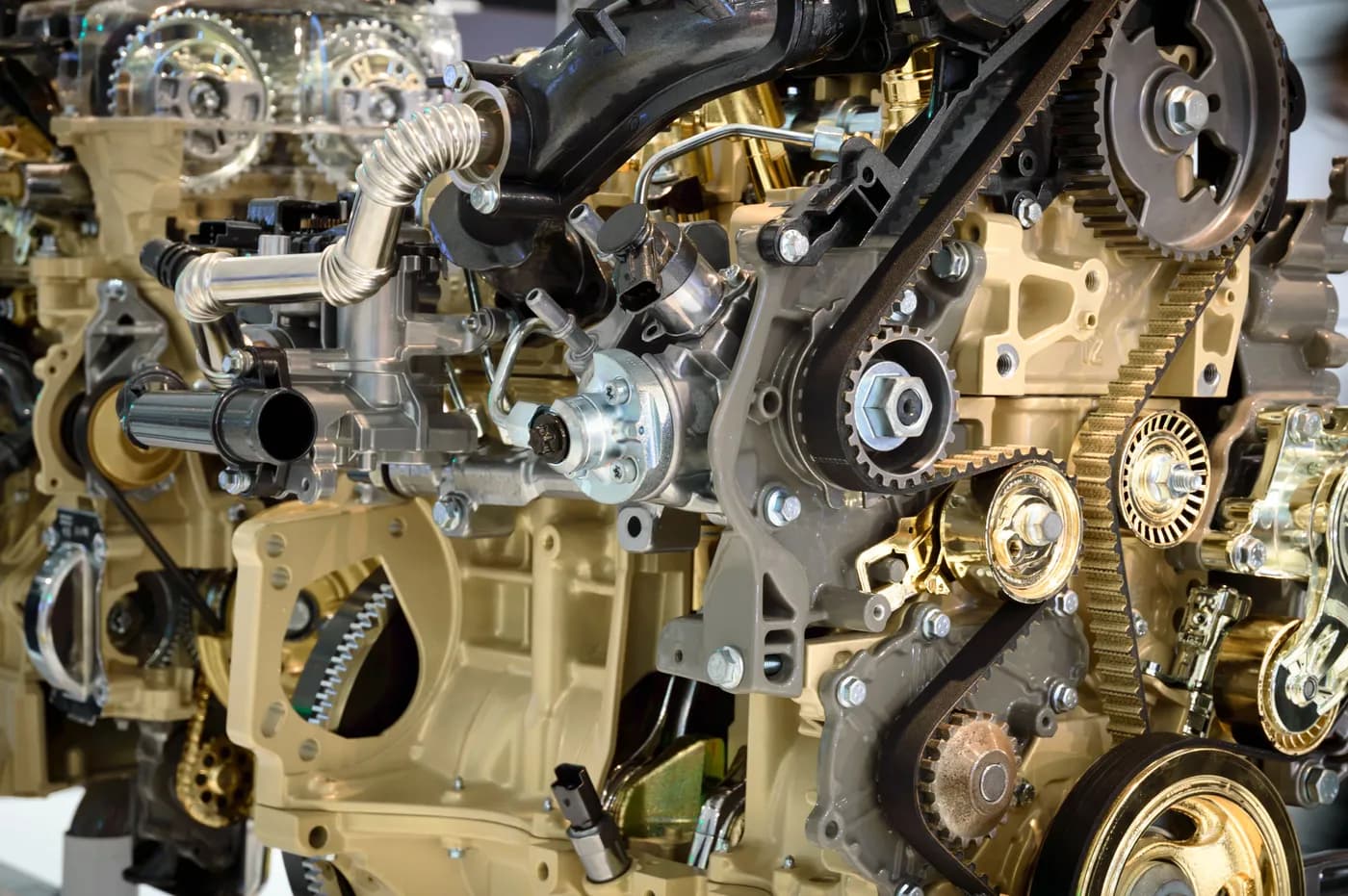
How the failure happens
Hover the diagram — or tap a part below — to see what it does and how it fails.
What it costs to fix
Typical ranges in Canadian dollars — every vehicle is quoted individually.
Fluid and dual-filter service
$350 - $650 CAD
ATF+4 fluid plus both filters — the internal sump filter and the spin-on cooler-return filter. This is maintenance, not repair, but on a neglected truck it is the first step, and cutting open the old spin-on filter tells us a lot about what is happening inside. It will not fix a worn valve body or burnt clutches, and anyone promising a fluid change will cure slipping is guessing.
Solenoid pack replacement
$900 - $1,600 CAD
When diagnosis points at the solenoid pack — erratic shifting and pressure codes with clean fluid and healthy pressures otherwise — replacing it is a pan-off job, typically done together with fresh fluid and filters. Often paired with valve body work since access overlaps.
Valve body — reman or upgraded
$1,500 - $2,800 CAD installed
A remanufactured or aftermarket-improved valve body addresses the cross-leaks and bore wear that cause most early 68RFE trouble. On a transmission caught before the clutches burned, this is the single best-value repair, and upgraded units genuinely fix design weak points rather than just resetting the clock. Only worth doing if fluid condition and pressure testing confirm the clutches are still alive.
Genuine OEM replacement 68RFE (through Eskimo Auto & Truck Parts)
$3,500 - $6,000 CAD installed
A complete genuine OEM transmission from a donor truck, typically $1,500–$3,500 for the unit depending on kilometres and warranty, plus roughly $1,800–$2,500 in labour, fluid, and a cooler flush. Through our sister company, Eskimo Auto & Truck Parts, we supply take-outs with documented donor mileage. The honest trade-off: it is the same factory design with unknown service history, so it suits older trucks better than heavy-tow work trucks.
Rebuild of your transmission
$6,000 - $9,000 CAD
Your unit comes out, gets torn down, and is rebuilt with new clutches, seals, solenoid pack, and a replacement converter, with hard parts replaced as needed — the final bill depends on what the teardown finds. A quality rebuild should always include valve body correction; a rebuild that reuses the worn valve body is set up to fail the same way again.
Remanufactured replacement unit
$8,000 - $12,000 CAD installed
A factory-style reman transmission, exchanged for your core. You pay a premium over a local rebuild for standardized remanufacturing and typically a longer parts-and-labour warranty. Makes sense for newer trucks where preserving warranty coverage and resale value matters.
Built/upgraded 68RFE
$10,000 - $16,000+ CAD
A performance-built unit with a billet triple-disc converter, upgraded valve body, added clutch capacity, and better pressure control. This is the only version of the 68RFE that reliably holds added power or daily maximum-weight towing. Expensive, but for a tuned truck or a hard-working tow rig it is cheaper than rebuilding a stock unit twice.
Repair it, or replace it?
The single most important factor is how early you catch it. A 68RFE with shift complaints, a P0871 code, clean red fluid, and no debris in the spin-on filter is usually saveable with a valve body and solenoid pack — call it $2,000–$3,500 all-in — and an upgraded valve body leaves it better than factory. The same truck driven another six months until the fluid is black typically needs the full $6,000–$9,000 rebuild. When the transmission starts acting differently, the cheapest repair you will ever be offered is the one available right now.
Once the clutches are burnt or a hard part has let go, stop thinking in terms of patching it. Swapping a valve body onto a transmission with cooked clutches wastes the valve body. At that point you are choosing between a rebuild, a reman, and a genuine OEM take-out, and the right answer mostly depends on the truck's value and its job. For a 2008–2012 truck worth maybe $15,000–$25,000 that works for a living, sinking $10,000 into a reman is hard to justify; a genuine OEM take-out with documented kilometres, or a straightforward rebuild, usually makes more sense. For a 2019–2024 truck worth $60,000-plus, the reman or a quality rebuild protects the asset.
Be honest with yourself about what the truck does. If it runs empty or tows a light trailer occasionally, a stock rebuild or a sound genuine OEM take-out will serve fine, especially with the maintenance habits covered below. If it drags a loaded gooseneck through the mountains every week, or it is tuned, a stock-configuration 68RFE — new, reman, rebuilt, or genuine OEM — is going to fail again, because the design margins have not changed. Those trucks need a built unit with a billet converter and upgraded valve body, or a different truck: if you are shopping used Rams for heavy towing, a 2013–2024 3500 High Output with the Aisin AS69RC sidesteps most of this article.
Two things not worth chasing: an Allison or 2025-style eight-speed swap into an older truck is a five-figure science project, not a repair; and "it just needs a fluid change" on a slipping transmission is a $500 delay on the inevitable, one that can turn a rebuildable core into scrap. Get a proper diagnosis — codes read, pressures checked, filter cut open — before anyone, including us, quotes you a fix.
How we fix this in Edmonton
Transmission Repair & Replacement in Edmonton
Transmission trouble comes with the widest range of fixes in the trade — a solenoid and a rebuild look identical from the driver's seat. We find out which one you are looking at, then price every sensible option: a repair, an in-house rebuild, or a matched used genuine OEM unit through Eskimo Auto & Truck Parts.
See the service →Transmission Rebuild in Edmonton
A rebuild is the point where a transmission stops being a repair and starts being a decision. We tear the unit down in-house, replace the torque converter and flush the coolers so the rebuild actually lasts, and we tell you straight when a good used or remanufactured unit — or walking away from the vehicle — is the smarter money.
See the service →Diesel Truck Repair in Edmonton
We fix light-duty diesel pickups — Power Stroke, Duramax and Cummins — and we diagnose them before anyone starts condemning $4,000 parts. Heavy highway trucks belong in a heavy-duty shop and we will tell you so, and we do not hold a CVIP facility licence. Everything else gets tested, quoted in writing, and explained in plain language before we start.
See the service →Vehicle Diagnostics & Check Engine Light in Edmonton
A trouble code tells you what the computer noticed, not what is broken. We read the codes, look at live data, and test the actual circuit before anything gets replaced. Diagnostic time is $120 an hour, quoted before we start, because the most expensive repair is the one that didn't fix the problem.
See the service →The genuine OEM parts option
This is where being tied to one of Edmonton's largest parts operations changes the math. Our sister company, Eskimo Auto & Truck Parts in Edmonton, dismantles Ram diesels regularly, so we can often source a complete genuine OEM 68RFE take-out — or a whole donor drivetrain — with documented donor kilometres and a warranty. For an older work truck, that can be the difference between a repair that makes sense and a truck headed for auction. Eskimo Auto & Truck Parts ships across Canada and the USA, so even if we are not the shop doing your installation, your local mechanic can have a tested genuine OEM transmission, a 6.7L Cummins engine, or the smaller pieces — valve bodies, converters, coolers, wiring — delivered to their door. If you are pricing options, ask for the genuine OEM take-out quote alongside the rebuild quote and compare honestly.
Browse inventory at Eskimo Auto & Truck Parts →How to make yours last longer
- Service the fluid and both filters on the severe schedule or better — the factory severe interval is about 96,000 km, but for a truck that tows regularly, every 50,000–60,000 km with ATF+4 and both filters is cheap insurance, and inspecting the old spin-on filter is a free health check every time.
- Watch transmission temperature. Most of these trucks can display it in the dash menu, or use an OBD gauge. Aim to keep sump temps under about 105°C (220°F) when towing; if you are regularly flirting with the 115°C (240°F) overheat threshold, back off, drop a gear, or upgrade cooling.
- If you tow heavy, deal with the thermal bypass valve — a sticking or late-opening valve keeps fluid out of the cooler, and upgraded valves or cooler improvements are a modest cost next to what heat does to this transmission.
- Use tow/haul mode and manual gear selection on grades so the converter stays locked instead of slipping and generating heat, and let the driveline warm up before loading it hard on cold Alberta mornings.
- Be careful with tuners. Added engine torque without transmission support is the number-one killer of the 68RFE, and a hot tune usually voids any warranty on the truck or a replacement unit.
- Act on the first symptom. Converter shudder, a shift flare, or a single limp-mode event is the transmission telling you it can still be saved cheaply — six more months of driving usually converts a valve body job into a rebuild.
Frequently asked questions
Which Ram trucks have the 68RFE transmission?
Every automatic Ram 2500 with the 6.7L Cummins from mid-2007 through 2024, and Ram 3500 pickups with the standard-output Cummins over the same years. Ram 3500s ordered with the High Output Cummins from 2013 on got the Aisin AS69RC instead, and diesel chassis cab trucks used Aisin units throughout. For 2025 the 68RFE was retired in favour of a new TorqueFlite HD eight-speed.
What does the P0871 code mean on my Ram?
P0871 is an overdrive pressure switch rationality fault — the computer commanded pressure to the overdrive clutch circuit and the switch did not report what it expected. It can be a failed switch or wiring, but on the 68RFE it is very often real pressure loss from valve body wear or a worn overdrive clutch. It typically comes with limp mode, and it deserves proper diagnosis promptly, because the fixable-cheap window does not stay open long.
Why is my truck stuck in third gear?
That is limp mode. When the transmission computer detects a pressure or plausibility fault — commonly P0871, P0868, or P1745 — it locks the 68RFE in third gear to limit further damage. A key cycle sometimes restores normal operation temporarily, but repeated limp events mean the underlying pressure problem is still there and getting worse.
How long does a 68RFE last?
It varies enormously with use. A stock truck that runs light and gets regular fluid service can pass 250,000–300,000 km on the original transmission. The same truck towing heavy, running hot, or tuned can need a transmission before 150,000 km. Duty cycle and heat matter more than the odometer.
Is the Aisin AS69RC better than the 68RFE?
For durability under heavy towing, yes — it is a commercial-grade design, and Ram rated it for far more torque, which is why it backed the High Output engine. The trade-offs are slower, firmer shifting and higher fluid service costs. If you are buying a used Ram specifically to tow heavy, the Aisin-equipped 3500 HO is worth seeking out; for a truck that mostly runs light, a healthy 68RFE is smoother and cheaper to service.
How much does it cost to fix a 68RFE in Canada?
Depending on what failed: a fluid and dual-filter service typically runs $350–$650, a valve body $1,500–$2,800 installed, a genuine OEM take-out transmission roughly $3,500–$6,000 installed, a rebuild $6,000–$9,000, a reman unit $8,000–$12,000 installed, and a performance-built unit $10,000–$16,000 or more. The spread on any given truck comes down to how much internal damage there is, which is why diagnosis comes before quotes.
Can I just replace the valve body instead of rebuilding?
Yes, if you catch it early enough — a large share of 68RFE complaints trace to valve body wear, and an upgraded valve body on a transmission with healthy clutches is the best-value repair there is. But it only works if the clutches have not burned yet, which is why we check fluid condition, cut open the spin-on filter, and verify pressures before recommending it.
Is a genuine OEM transmission a good option for my Ram?
For an older or higher-kilometre truck, often yes — a genuine OEM take-out from a donor at $1,500–$3,500 plus installation can put a truck back to work reliably. The honest caveats: it is the same factory design with the same weak points, and donor history matters, so buy from a supplier that documents mileage and stands behind a warranty. For a heavy-tow work truck, put the money toward a rebuilt or built unit instead.
Will a tuner ruin my 68RFE?
Added torque without transmission support is the most common way these fail early. The stock clutch capacity and line pressure were marginal at factory power, so an extra 100-plus horsepower shortens the transmission's life substantially — and usually voids warranty coverage when it lets go. If you want the power, budget for a built transmission at the same time.
How often should I change the fluid in a 68RFE?
The factory severe-service interval is about 96,000 km, but for a truck that tows or works hard, every 50,000–60,000 km with ATF+4 and both filters — the sump filter and the spin-on cooler-return filter — is what we recommend. Heat-degraded fluid accelerates valve body and solenoid wear, so on this transmission fluid service is genuinely preventive, not just box-ticking.
Dealing with this problem right now?
Edmonton and area: bring it in and we'll confirm the diagnosis before any work. Anywhere else in Canada or the USA: our sister company ships the genuine OEM parts to your shop.