A rebuild is the point where a transmission stops being a repair and starts being a decision. We tear the unit down in-house, replace the torque converter and flush the coolers so the rebuild actually lasts, and we tell you straight when a good used or remanufactured unit — or walking away from the vehicle — is the smarter money.
A transmission rebuild is one of the biggest bills a vehicle will ever hand you, so the first job is making sure you actually need one. Plenty of transmissions get condemned when the real fault is a shift solenoid, a leaking cooler line, a tired valve body, or fluid nobody ever changed — all of which we cover on our broader transmission repair page. This page is the narrower conversation: what a rebuild actually involves, what it costs around Edmonton, and when a rebuild is the wrong answer. We diagnose before anything comes apart. If your unit doesn't need to be opened, you'll pay for a scan and a road test instead of a rebuild, and we'll tell you that plainly.
What a Transmission Rebuild Actually Involves
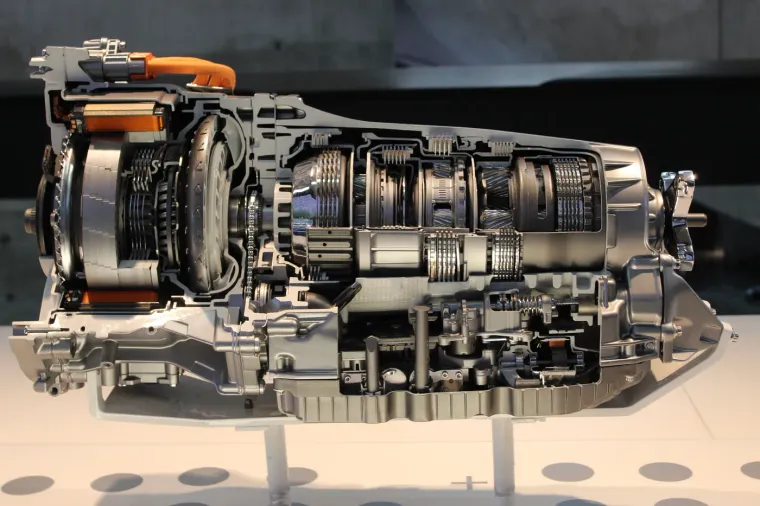
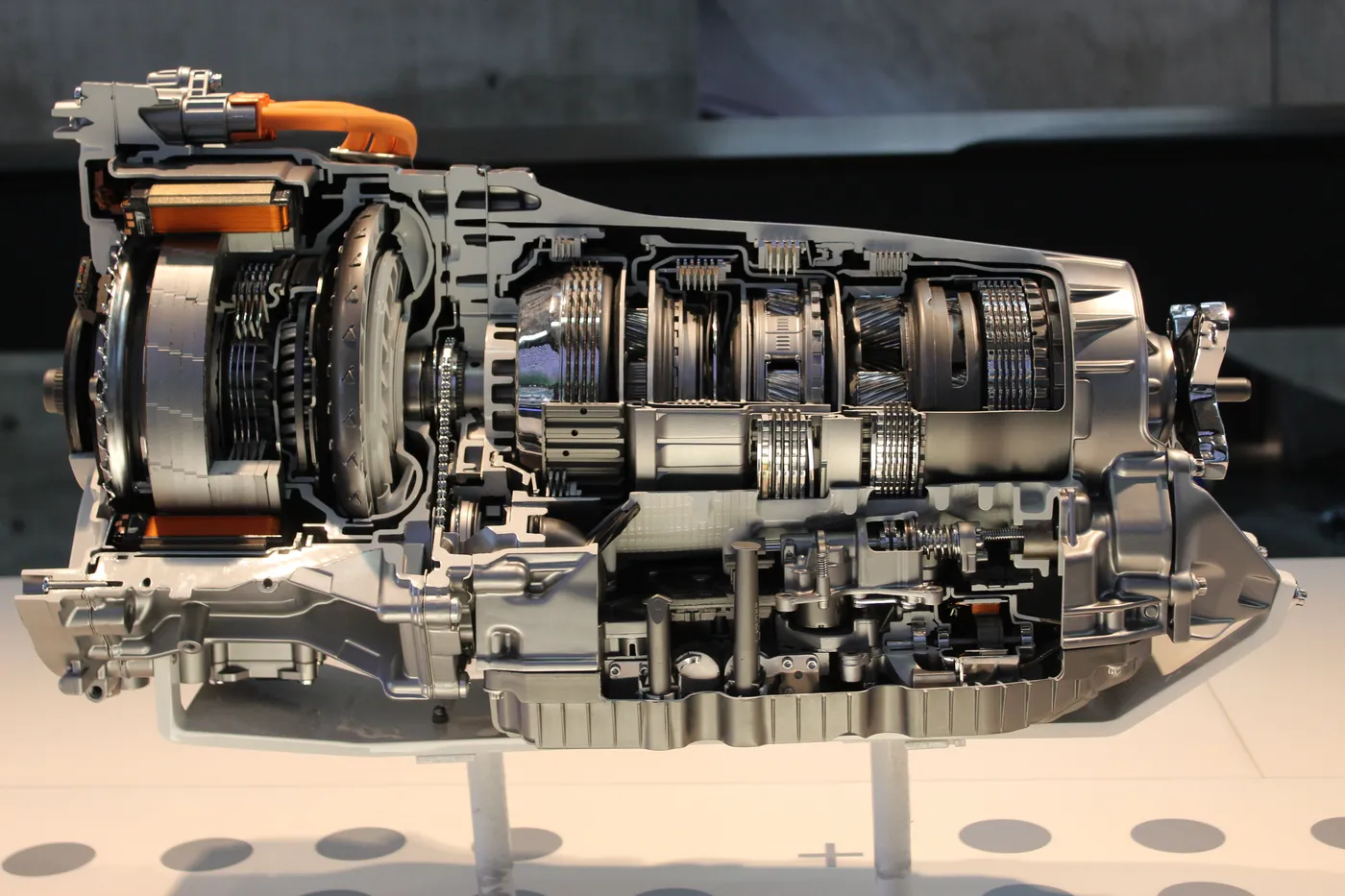
A rebuild means the transmission comes out, comes apart on a bench, and every piece gets inspected — it is not a flush with additives in it. Soft parts always get replaced: clutch frictions and steels, bands, seals, o-rings, sealing rings, gaskets, bushings, thrust washers and the filter. Hard parts are the expensive question — drums, planetary gearsets, the pump, shafts and the case itself. If a clutch drum is cracked or a pump is scored, those are individual parts with individual prices, which is why an honest rebuild quote stays a range until the unit is open. The valve body gets cleaned, checked for bore wear, and rebuilt or replaced. Clutch apply gets air-tested and endplay set with the correct washers before the case closes. Our Red Seal techs do this in-house at 12940 53 Street NW.
Why the Torque Converter and Coolers Decide Whether a Rebuild Lasts
When a transmission fails, it grinds itself into metallic paste, and that debris does not stay in the pan. It gets pumped through the cooler lines into the radiator's internal cooler and any external cooler, and it settles there. Bolt a fresh rebuild to a dirty torque converter and dirty coolers and the new clutches eat that debris within weeks — the most common reason a rebuild dies early, and usually a corner someone cut to win a cheap quote. So the converter gets replaced or properly rebuilt, never just drained. Lines and coolers get flushed and flow-tested, and a cooler that won't come clean gets replaced. In our climate that flow matters twice over — thick fluid on a -35 morning, and towing heat off a gravel highway in July.
Rebuild vs Remanufactured vs Used vs New — and Why CVTs Are Different
Four options, and only one of them is a rebuild. A rebuild keeps your original unit and lets us correct its known weak points during assembly — upgraded frictions, updated valve body parts, the bushing or drum that always fails on that model. A remanufactured unit is built to a fixed spec off-site and swapped in. A good used genuine OEM transmission, VIN-matched with the donor's kilometres on record, is often the best value on an older vehicle, and that's where our sister company earns its keep: Eskimo Auto and Truck Parts is one of Edmonton's largest parts operations, pulling and shipping units across Canada and the USA. New from a dealer is rarely worth the premium. CVTs are the exception to all of it — most Jatco, Honda and Subaru units are replace-not-rebuild, because the belt or chain and the pulley faces are the failure.
Transmission Rebuild Cost in Edmonton, and Whether Your Vehicle Is Worth It
Honest market ranges, not a quote. A simple older four-speed automatic typically runs somewhere between about $2,500 and $3,800 rebuilt and installed, if the hard parts are reusable. Most modern cars and light trucks usually land closer to $3,500 to $6,500 once the torque converter, cooler work and programming are counted. Heavy-duty and diesel units — Allison, 68RFE, 6R140 — run higher again, and CVT replacement often starts around $4,000. Then the math nobody enjoys: if the vehicle is worth $4,000, the rockers are rotting out from ten winters of road salt and the engine is next in line, we'll say so. We'd rather keep you as a customer than sell you a rebuild you'll regret. Financing and fleet accounts are there when the numbers do work.
Signs you need this service
- Metal flake, clutch material or glitter in the pan and on the drain plug magnet
- Slipping under load — the revs flare climbing a hill or towing, but the vehicle doesn't pull
- A gear or reverse is simply gone, or the vehicle only moves in some ranges
- Gear-ratio codes (P0730, P0731–P0736) or limp mode that came back after a solenoid or valve body repair
- Fluid that's dark and smells burnt, and a fluid service that only held for a few weeks
- Converter shudder that a fluid service and a lock-up solenoid check didn't cure
- A hard bang into gear or a long delay engaging Drive, with clutch material already showing in the pan
- Whine, growl or rumble that changes with gear selection rather than with road speed
What's included
- Diagnosis first — scan, live data and road test, so a rebuild is a decision based on evidence, not a guess
- Complete removal, teardown and inspection of every hard part, measured rather than eyeballed
- New soft-parts kit: frictions, steels, bands, bushings, thrust washers, seals, sealing rings, gaskets and filter
- Valve body cleaned, checked for bore wear, and rebuilt or replaced as needed
- Torque converter replaced or professionally rebuilt — never reused as it came out
- Cooler and cooler lines flushed and flow-tested, and replaced if they won't come clean
- Correct fluid to spec, programming and adaptive relearn, then a road test before it comes back to you
- Warranty terms in writing before work begins, plus genuine OEM hard parts or complete units through Eskimo Auto and Truck Parts when they're the better value
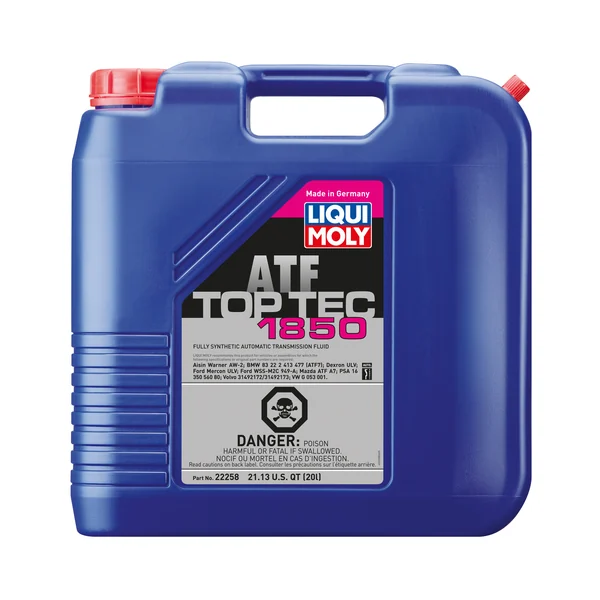
The Liqui Moly we use for transmission rebuild
Every rebuild we hand back goes out filled with fluid to the manufacturer's spec.
A/T Fluid
Top Tec ATF 1850
20 L · $335.40
A/T Fluid
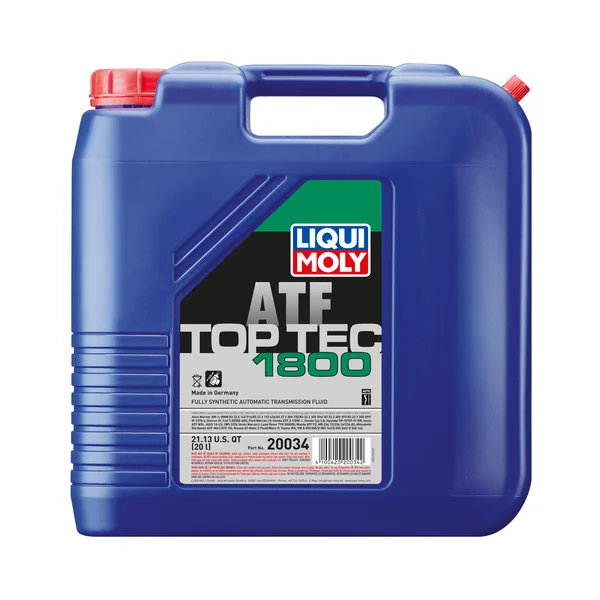
Top Tec ATF 1800
20 L · $286.75
DCT Fluid
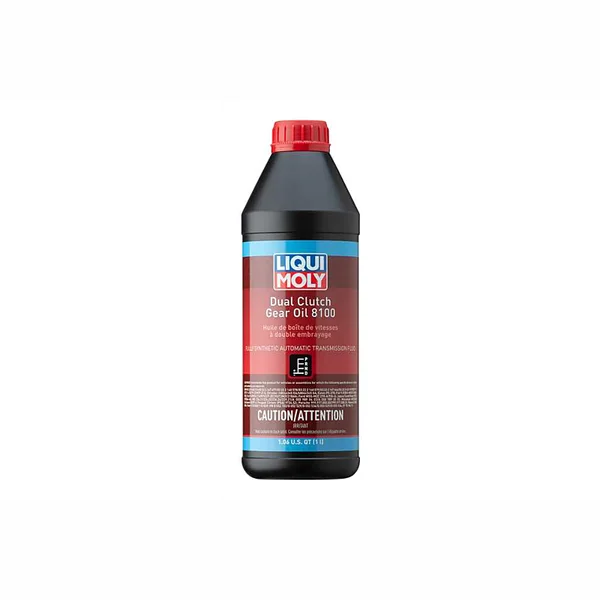
Dual Clutch Gear Oil 8100
1 L · $34.45
Not sure which one your engine needs? Use the oil finder or browse the whole Liqui Moly range. Free pickup in Edmonton, or we ship it.
Frequently asked questions
How much does a transmission rebuild cost in Edmonton?
There is no single number, and a shop that gives you one over the phone is guessing. As general market ranges: a simple older four-speed automatic typically runs somewhere between about $2,500 and $3,800 rebuilt and installed, if the hard parts are reusable. Most modern cars and light trucks usually land closer to $3,500 to $6,500 once the torque converter, cooler work and programming are included. Heavy-duty and diesel units run higher, and CVT replacement often starts around $4,000. We quote your vehicle after diagnosis, with the hard-parts variable spelled out before the unit is opened.
Should I rebuild my transmission or replace it?
It depends on the vehicle and what's available. A rebuild earns its place when your unit has a known design weakness we can correct during assembly, when the vehicle is otherwise solid, or when nothing decent exists to swap in. A VIN-matched genuine OEM transmission through Eskimo Auto and Truck Parts is often cheaper and faster, especially on a ten-year-old vehicle with the donor's kilometres on record. Remanufactured sits in between. We price the sensible options side by side — the rebuild is ours to sell, so we tell you when it isn't the right call.
Can a CVT be rebuilt?
Usually not economically. On most Jatco, Honda and Subaru CVTs the failure is the steel belt or chain and the pulley faces it rides on, and those are not parts you swap on a bench and call it fixed. Valve body and step-motor work can fix some complaints, and a fluid service caught early genuinely helps. But once a CVT is whining, shuddering or slipping under load, replacement is normally the honest answer. If yours is still in the early stages, say so when you call — there's a window where a service is worth trying first.
Does the torque converter really have to be replaced?
Yes, and this is exactly where cheap rebuild quotes hide. A failed transmission loads its own fluid with clutch material and metal, and the converter is a sealed drum that traps it. Reuse it and that debris goes straight into your fresh clutch packs. Same story for the cooler inside your radiator and any external cooler — they get flushed and flow-tested, and replaced if they won't come clean. Skipping this is the number one reason a rebuild fails inside the first year. If a quote looks low, ask what it says about the converter and the coolers.
How long does a transmission rebuild take?
Plan on several days, not an afternoon. Removal and teardown is the first stage, then hard parts have to be measured and ordered where needed, and the unit assembled, installed, filled with the correct fluid and relearned. Parts availability drives the timeline more than labour does, and having Eskimo Auto and Truck Parts in the family helps there more than most shops can manage. We give you a realistic date up front and call you if it moves. We're AMVIC-licensed, warranty terms are in writing before we start, and financing and fleet accounts are available.
Is my vehicle even worth rebuilding?
Sometimes the answer is no, and we'll say it out loud. Run the math with us: what the vehicle is worth, what else it needs in the next year, and how many winters are left in the body. A $5,000 rebuild under a salt-eaten unibody with a tired engine and 320,000 km is money you won't see again. On a clean truck you plan to keep another eight years, it's usually the cheapest way to buy that time. Bring it to 12940 53 Street NW or call (780) 482-2424 and we'll go through it honestly.
Known problems we repair
Deep guides on the failures we see most — symptoms, honest costs, and repair options.
Related services
Book your transmission rebuild
Call for a straight answer on cost and timing, or book online.