
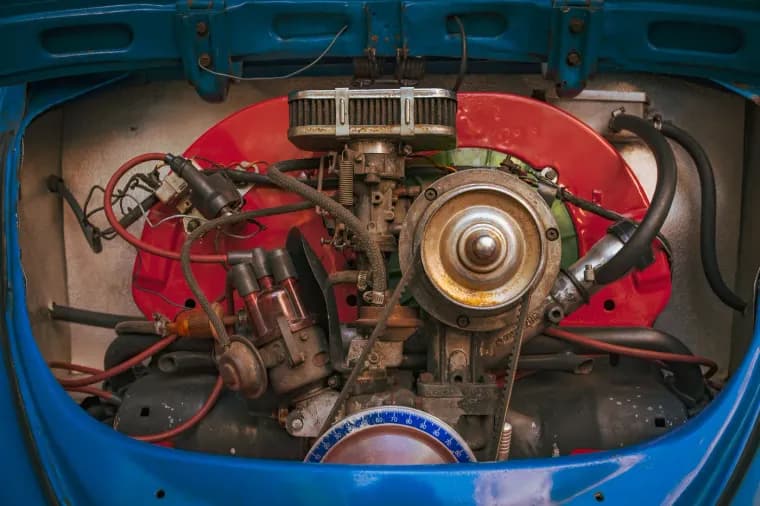
Rough at idle, down on power, or misfiring on a -30 morning. A tune-up here means spark plugs, ignition coils and filters chosen off what a scan and a test show, not a package off a menu. We find out which cylinder and which part before we sell you anything.
People still type tune-up, and what they almost always mean is make it run right again. On a modern engine that is not a package with a fixed parts list. It is finding out which cylinder is down, which part is causing it, and what is genuinely due on your engine. Sometimes that is a full set of plugs and coils. Sometimes it is one coil and a valve cover gasket, and you should hear that instead of a quote for the whole set. Eskimo Auto Repair is at 12940 53 Street NW, we are AMVIC-licensed, and our warranty is in writing. If your vehicle is running rough, down on power or drinking fuel, call (780) 482-2424.
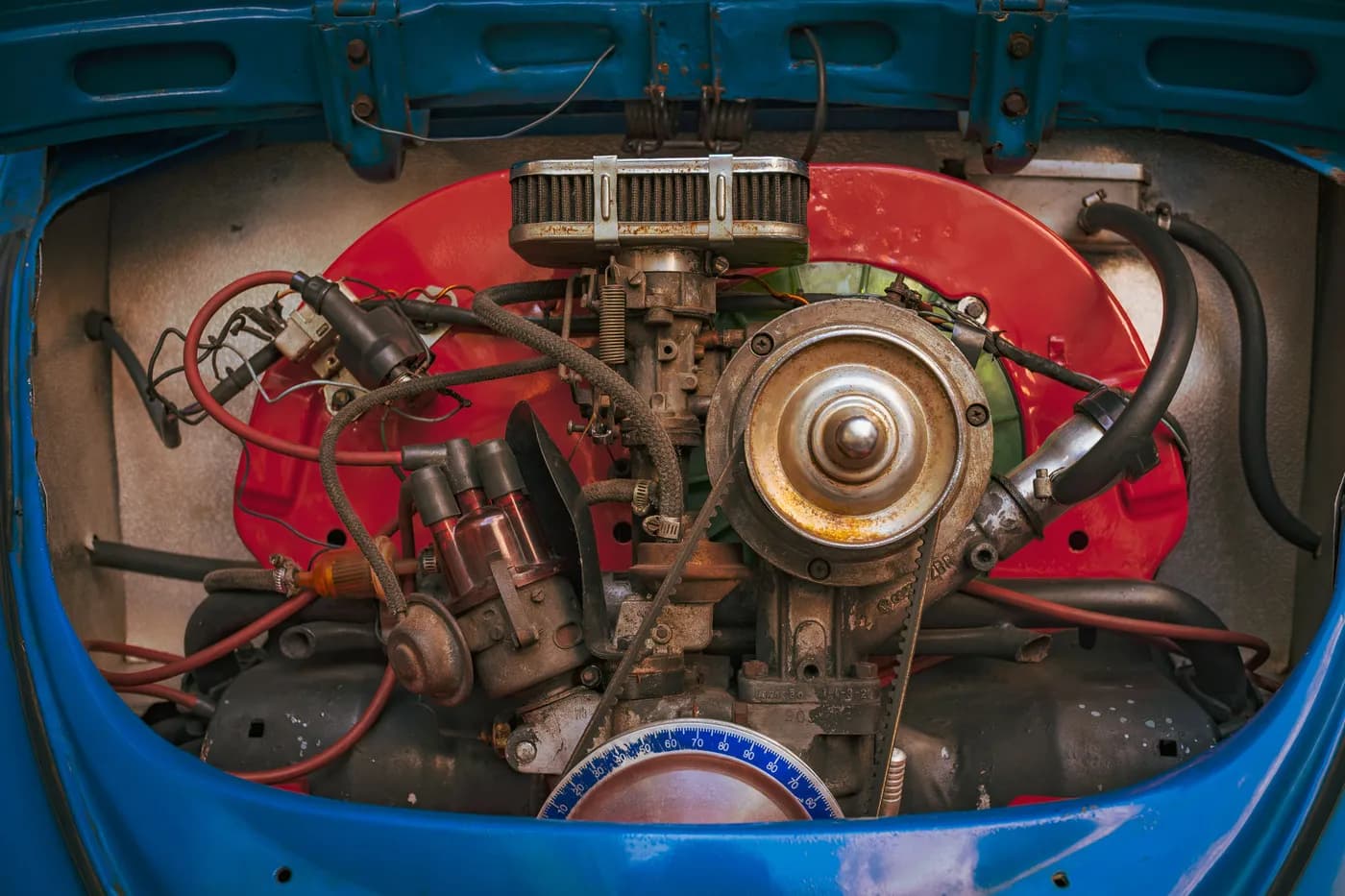
Spark Plug Intervals: Why Turbo and Direct-Injection Engines Come Due Sooner
There is no single spark plug interval, and the spread is wide: from around 50,000 km on some turbo engines to 150,000 km or more on engines with long-life plugs. Pressure and heat explain the gap. Iridium and platinum plugs in a naturally aspirated engine live a comparatively easy life. A boosted engine packs far more air into the same cylinder, and higher pressure means the spark needs more voltage to jump the same distance, so manufacturers spec a tighter gap and pull the interval in. Direct injection adds heat and soot at the tip on top of that. The mechanism is the part worth knowing — a plug does not fail on a date, it erodes. The gap widens a little every year, the coil is asked for more voltage every year to bridge it, and a plug left well past its interval is usually what kills the coil. We fit the correct plug, heat range and gap for your engine, generally NGK, and we go by your manual rather than a fixed shop schedule.
Ignition Coil Failure in Edmonton: Why -30 Mornings Find Them First
The engine computer adapts around a weak cylinder, so a modern engine feels fine long after it stopped being fine, and by the time you feel the shake the part has usually been failing for months. A coil is a fine secondary winding potted in epoxy, and what wears it out here is the temperature swing: -35 overnight to full underhood heat and back, every day, until the insulation cracks and the spark finds an easier path to ground inside the coil than across the plug gap. Three things stack up on a cold start. The engine runs rich until it warms, dense cold air is harder to ionize, and a cold battery cranks at lower voltage. The coil that was already marginal in August is asked for everything it has, and quits. The second cause gets missed constantly. A leaking valve cover gasket fills the spark plug wells with oil, the oil swells and tracks the coil boots, and the spark arcs down the boot instead of jumping the gap. Fit new coils without fixing the leak and you have bought them twice, so we look in a plug well before we quote coils.
Misfire Diagnosis in Edmonton: Finding the Cylinder Before Buying Parts
A misfire code names a cylinder. It does not name a part. We start with cylinder-specific misfire counters and freeze-frame data, so we know which cylinder, when it happens and under what load. Then comes the cheapest test in the trade: move the suspect coil to a different cylinder and see whether the misfire follows it. If it moves, the coil is the fault. If it stays, the coil is innocent and you are looking at the plug, the injector or the cylinder itself. We read live fuel trims on the way through, and when the misfire will not move no matter what we swap, a compression or leak-down test settles whether this is ignition at all. That order matters, because plugs and coils are the parts people buy first and the parts least likely to be wrong on a misfire that has already survived one set. One thing not to sit on: a flashing check engine light means an active misfire, and our diagnostics page explains why that is a stop-driving light.
Air Filters, Fuel Filters and Fuel-System Cleaning: What Helps
A loaded engine air filter restricts airflow and is worth changing. One that still looks like a filter stays in the vehicle, and we will show you yours rather than hold up a dirty one off a shelf. Cabin filters clog faster here than people expect, with gravel dust in spring and cottonwood in June, but that is comfort and defrost rather than engine performance, and we say so when we recommend one. Fuel filters are model-dependent. Plenty of modern vehicles put the filter in the tank with the pump and never publish a service interval, while diesels and many older vehicles have a real one on a schedule, so we check which yours has before quoting it. Fuel-system cleaning does real work on a dirty injector tip, restoring the spray pattern it left the factory with. It earns its place when the symptoms point there — it does not earn a line on every invoice.
Why Your Fuel Economy Dropped, and When Plugs Are Not the Reason
Worn ignition parts do cost fuel. A cylinder that misfires dumps its charge unburned, and the computer richens the mixture to cover what it reads as a weak bank. Before you spend money on plugs, though, rule out the Edmonton answers, because most winter economy complaints are not ignition at all. Winter fuel blends carry less energy per litre. Idling to warm up burns fuel at zero kilometres travelled. Winter tires and cold, under-inflated rubber add rolling resistance. Short trips mean the engine spends most of its running time in warm-up enrichment. A cooling system that never brings the engine up to temperature keeps it there all day, and that is a thermostat rather than a tune-up. A dragging brake or a roof rack left on since summer each take a cut too. We check the dull causes before we sell you the interesting one, and often enough the honest answer is that your fuel economy is doing what an Edmonton January does to it.
What a Tune-Up Will Not Fix: Compression, Carbon and Timing Chains
Plugs and coils are not a cure for a mechanical problem, and this is where money gets spent badly. A fresh set does nothing for worn rings or a burnt valve, and low compression gives itself away because the misfire follows the cylinder no matter which parts you move. It does nothing for a head gasket, a dead injector, a vacuum leak, a stretched timing chain, or carbon on a direct-injection engine's intake valves, which is a physical cleaning job rather than a service item. On a cylinder-deactivation V8, a collapsed lifter reads as a misfire on one cylinder and no ignition part will touch it — our GM 5.3 AFM lifter guide covers that pattern. And the complaint we hear most often described as a misfire is a shake that only shows up at idle and smooths out as soon as you are moving, which is very often worn engine mounts rather than ignition. Our car shaking and vibrating guide walks through telling those apart.
What a Tune-Up Costs in Edmonton
There is no flat rate, and a shop quoting one over the phone is guessing at your engine. Plug count is the obvious part, because four or eight changes both the parts bill and the labour. Access is the real variable. Some engines hand you every plug from the top, while the rear bank of a transverse V6 usually means the intake manifold comes off to reach three of the six. Plug design matters on a few engines too, including the two-piece plugs on some Ford three-valve engines that are known for breaking off in the head, and plugs seized into an aluminum head on an engine that went well past its interval do the same thing — a routine service turns into an extraction. Turbo and direct-injection engines often carry charge piping, cowl trim or a high-pressure fuel pump over the plugs, and all of that comes off first. After that it is only the coils that tested bad and only the filters yours needs. We look at the vehicle, then quote in writing before we start.
Signs you need this service
- It runs rough for the first few minutes on a -30 morning and smooths out once it warms up
- It stumbles or hesitates under load, going up a hill or merging, but feels fine cruising
- Fuel economy has dropped off and nothing about your driving changed
- A steady check engine light with a misfire code, or a flashing one, which means stop driving
- You are past the spark plug interval in your owner's manual, or nobody can tell you when the plugs were last done
- You have already had one ignition coil replaced and now a different cylinder is misfiring
- A raw fuel smell at the tailpipe, or black sooty deposits around it
- The idle drops or shudders when the air conditioning or the defrost kicks in
What's included
- Spark plug replacement with the correct plug, heat range and gap for your exact engine
- Ignition coil testing and replacement, limited to the coils that tested bad rather than the whole set by default
- Cylinder-specific misfire diagnosis: misfire counters, freeze-frame data, coil swap testing and live fuel trims
- Spark plug well and valve cover inspection, because oil in the wells is what destroys coil boots
- Engine air filter and cabin air filter, changed when they are loaded and not before
- Fuel system service where it is warranted, including injector cleaning and the fuel filter on vehicles that have a serviceable one
- Compression or leak-down testing when the misfire turns out not to be ignition at all
- Written findings and a repair quote before we start, with our warranty in writing
The Liqui Moly we use for tune-ups
A tune-up is only as good as the fuel system it leaves behind. These are the cleaners we use.
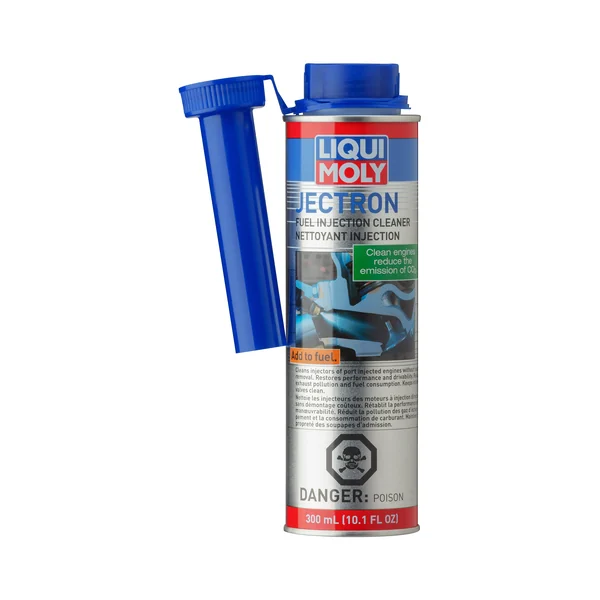
Fuel System Cleaner
Jectron Fuel System Cleaner
$18.50
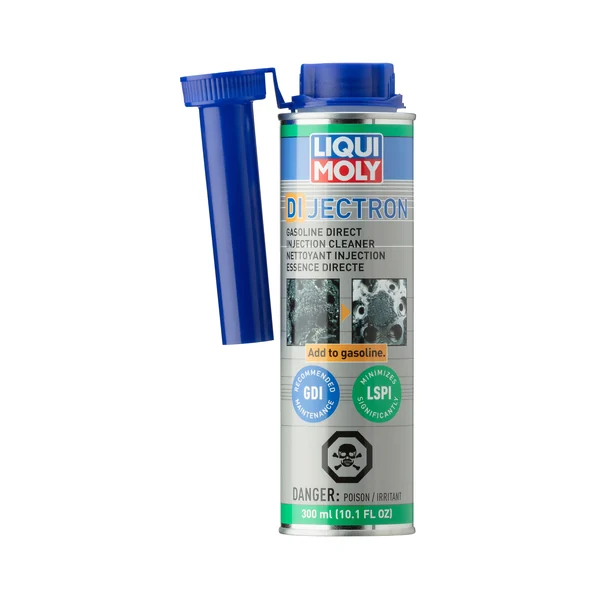
Fuel Additive
DIJectron
300 ml · $31.95
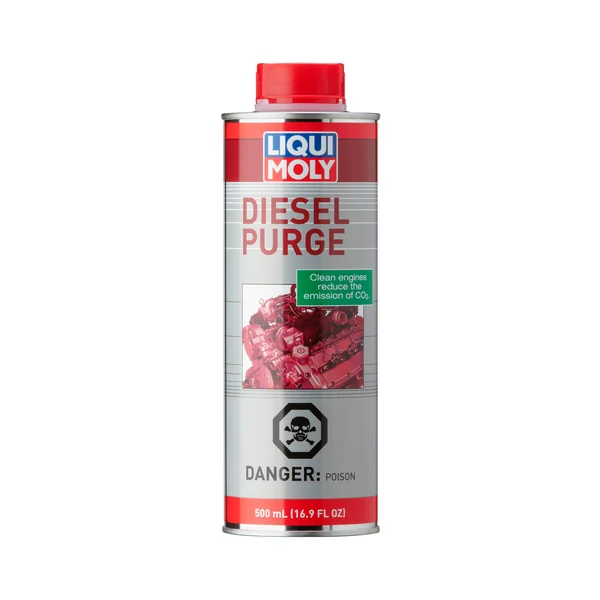
Fuel System Cleaner
Diesel Purge
$23.55
Not sure which one your engine needs? Use the oil finder or browse all our oils & additives. Free pickup in Edmonton, or we ship it.
Frequently asked questions
How do I know when my spark plugs are due?
Look in the maintenance schedule at the back of your owner's manual, under your engine rather than just your model. The same nameplate often sells a naturally aspirated and a turbo version with very different plug intervals. If the manual is gone or the service history is a mystery, bring it in. We can pull one plug and read it — the gap, the colour of the insulator and the wear on the ground strap tell us where that set is in its life, which beats guessing off a sticker.
How much does a tune-up cost in Edmonton?
There is no flat rate, and we will not invent one over the phone. The same work on a four-cylinder and on a transverse V6 with the intake manifold in the way are not the same job. When you call, have the year, make and engine size handy, and say whether the check engine light is on, because that decides whether you are booking a service or a diagnosis. Diagnostic time, when a misfire has to be chased down, is $120 an hour, quoted up front.
Will a tune-up fix my rough idle or misfire?
Often, when the cause is worn plugs or a failing coil, which are two of the most common reasons. But a misfire can also come from a vacuum leak, an injector or a mechanical fault, so we find the cause first and replace the part that is causing it. We are not going to throw parts at it and hope. If a compression test says the cylinder itself is down, no amount of ignition parts fixes it, and you will hear that before you spend anything.
Is it safe to keep driving if it only runs rough when it is cold?
Usually for a while, and that is exactly why people leave it. A single weak coil that clears up once the engine warms is not going to strand you tomorrow. What it costs you is fuel, and a cylinder that misfires long enough washes fuel past the rings and into the oil. The other cost is timing: an intermittent fault is cheaper to chase than the same fault after it has quit for good in a parking lot at -33. A flashing light is the exception, and that one you stop for.
Should I replace all the ignition coils at once?
Not by default, and we will not quote it that way. If one coil failed and the rest test fine at the same age, replacing the failed one is the honest repair. Where doing a set makes sense is a high-kilometre engine well past its plug interval, where every coil has spent years overworked bridging worn gaps and they are all near the end. We will tell you which one yours is, with the test results behind it.
What is the difference between a tune-up and scheduled maintenance?
Scheduled maintenance is the calendar: fluids, filters and inspections done against your factory severe-service schedule so nothing expensive gets missed. That is what our maintenance and oil change pages cover. A tune-up is the symptom: ignition and fuel wear parts replaced because the engine has lost power, economy or smoothness, and what gets replaced is decided by testing rather than by kilometres. Plenty of vehicles need the first and never need the second.
Will a fuel injector cleaner or additive fix a rough idle?
Sometimes, if the cause is a dirty injector tip or deposits in the combustion chamber. A good fuel-system cleaner is cheap and does real work there. What no additive can do is clean the intake valves on a direct-injection engine, because the fuel sprays straight into the cylinder and never washes over the back of the valves the way port injection did. That carbon needs physical cleaning, not a bottle. And nothing poured in the tank fixes a dead coil, so if one cylinder is misfiring, skip the additive aisle.
Known problems we repair
Deep guides on the failures we see most — symptoms, honest costs, and repair options.
Related services
Book your tune-ups
Call for a straight answer on cost and timing, or book online.