
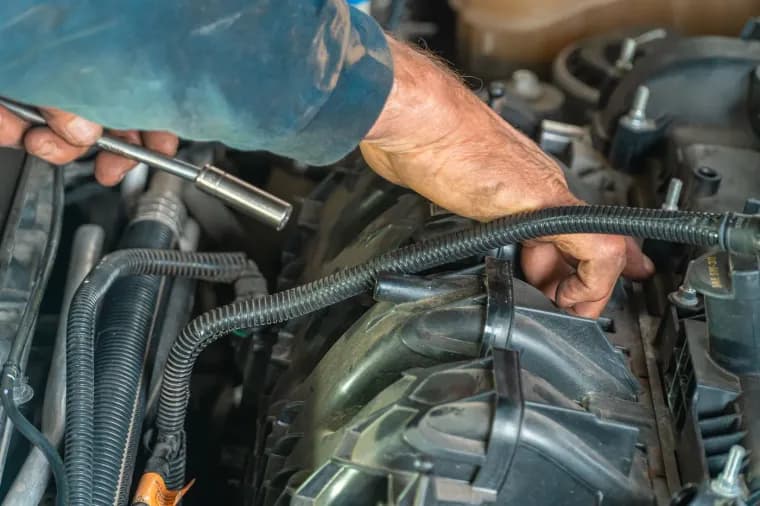
A rebuild is your own engine taken apart, measured, machined back to specification and put together with its weak points corrected. We tear it down first, then give you a firm quote that itemises the work, and an honest answer on whether your vehicle is worth it.
An engine rebuild means what it says: your engine comes apart, gets measured and machined back to specification, and goes back together with new bearings, rings, gaskets and seals, plus any part that measured worn or marginal. Done properly it isn't a patch — it resets the engine's mechanical clock. Nothing gets opened up until the engine has been diagnosed, because a rebuild should be a decision made from measurements rather than from a noise. And the real question is rarely whether your engine can be rebuilt. Almost any engine can. The question is whether a rebuild is the smartest money on this particular vehicle, and that is the conversation we have first.
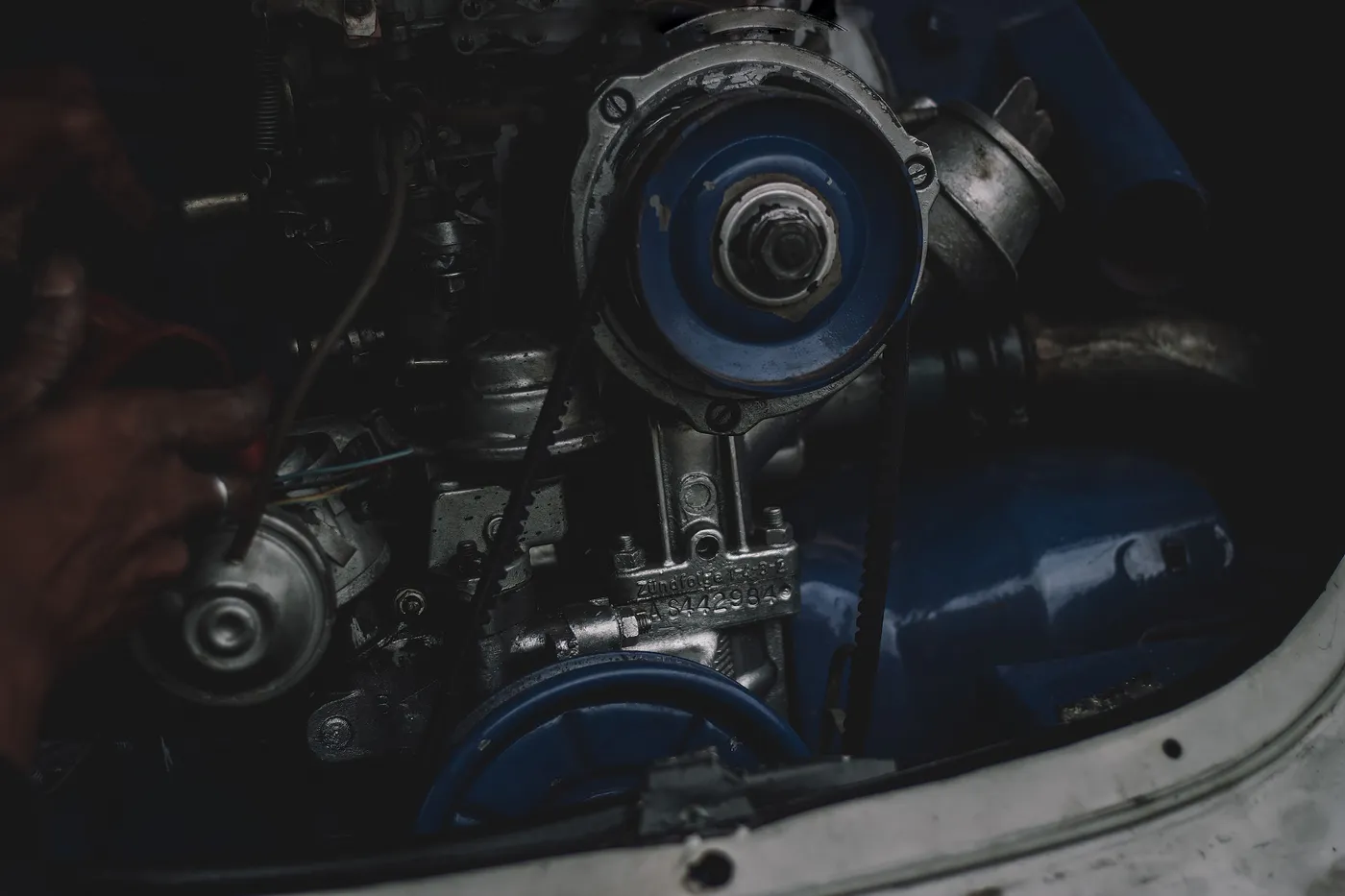
What Gets Measured and Machined in an Engine Rebuild
Machining is the part of a rebuild nobody explains, and it is where a lot of the money goes. Once the block is clean, the bores get measured for taper and out-of-round, because a cylinder worn into an oval will not seal a new ring no matter how good the ring is. Bores past specification are bored and honed oversize to match new pistons; bores that clean up get a fresh hone so the new rings can bed in. The crankshaft journals are measured for wear and taper, then polished if they are good or ground undersize if they are scored, with matching bearings to put the oil clearance back where the factory wanted it. The deck and the cylinder head are checked for flatness, since an aluminum head that has lived through years of heat cycles is rarely true enough to seal a new gasket, and the valves and seats get their turn while the head is off. Machining is done to specification as the measurements require, and the measurements decide it — not a package price.
Why the Quote Comes After the Teardown
Rebuild cost swings more than any other engine job because it depends on what turns up once the engine is open, which is why we don't price one over the phone. The bearing shells are the most useful thing in the parts box: their wear pattern says whether the engine died of oil starvation, debris or detonation, and that changes what has to be replaced beyond the obvious. A crank that polishes up is a different bill from one that has to be ground or replaced, and debris that has travelled the oil galleries pulls the pump and the pickup into the job. Be clear on how this part is billed: the teardown is labour, we quote it before we start, and it is charged whether or not you go ahead with the rebuild. What it buys you is a firm quote after teardown that itemises the work, with used and remanufactured engines priced beside it, so you are choosing between real numbers instead of authorising an open-ended job.
Subaru 2.5 Head Gasket Rebuilds (EJ251 and EJ253)
Some engines are worth opening because the failure has a name. The 1999-2012 SOHC EJ251 and EJ253 in non-turbo Foresters, Legacies, Outbacks, Imprezas and the Baja left the factory with a single-layer composite head gasket whose coating breaks down where it seals the oil and coolant passages at the edge of the block. It weeps rather than blows, usually somewhere between 120,000 and 250,000 km, and that slow progression is the one mercy of the design. The correct repair does both gaskets, never one side, because the other is on the same clock. The heads come off, get checked and resurfaced flat, and updated multi-layer steel gaskets go on — MLS is what Subaru's own turbo engines used all along, and those engines never had this problem. With the front of the engine apart, the timing belt, water pump, thermostat, idlers and seals get done in the same labour. One caveat for nothing: an EJ25 overheated hard more than once is often a replacement engine rather than a gasket job, and Subaru's coolant conditioner slows a seep without ever being a repair.
Toyota 2AZ-FE Oil Consumption and the Hyundai Kia Theta II Exception
The 2.4L 2AZ-FE in the 2007-2009 Camry, 2006-2008 RAV4, Scion tC and xB is the other good candidate. Low-tension oil control rings sit in a piston whose oil-return holes block easily, heat bakes oil into carbon in the ring groove, and the ring seizes and stops scraping. It burns oil with no smoke and no leak, which is why more of these die from being run low than from the rings. Toyota's answer was a redesigned piston assembly, and that updated part is what goes in during a teardown. The line that costs us work: under about a litre every 2,000 km, with the rest of the car sound, disciplined top-ups are a legitimate strategy rather than procrastination. The Theta II in Hyundais and Kias is the flat no — do not pay anyone, us included, to re-bearing the bottom end of a knocking one. The Canadian settlement carries a lifetime short-block warranty with no kilometre cap, provided the knock-sensor software update is done and you can show maintenance records, and coverage is VIN- and model-specific. Confirm yours with Hyundai or Kia Canada before you pay anybody. If they owe you an engine, take the free engine.
GM 5.3 AFM Lifter Failure and the 5.7 HEMI Tick
In Edmonton the half-ton V8 is the engine most likely to land on our hoist, and both common ones fail at the valvetrain. Active Fuel Management on the 5.3 shuts down cylinders 1, 4, 6 and 7 with two-piece lifters that collapse on an oil signal; when one stays collapsed you get a dead cylinder and a misfire code. The 5.7 HEMI's version starts inside the lifter roller: the needle bearings seize, the roller stops turning and skids across the cam lobe until the hardened skin grinds off. The correct repair on either is the camshaft and all sixteen lifters together, because new lifters on a wiped lobe is how the truck comes back, and both heads come off to reach them. What decides repair against replacement is debris: if cam material has been through the bearings and the oil pump, a new cam in a contaminated engine is ticking again inside a year. Before any of that on a 5.7 we check the exhaust manifold bolts: a broken one makes a sharp tick, loudest on a cold start, that fades as the manifold heats and seals. That is a much smaller job, and worth ruling out first.
Rebuild, Reman or Used OEM Engine: What Each Warranty Actually Covers
Four options, and which one fits depends on where your engine stops being worth opening. A targeted repair — a head gasket, a timing set, one bank of lifters — fits when the failure is contained and everything else measures good. A rebuild keeps your original engine and the fitment that belongs to it, and it is the only option that corrects a documented weak point during assembly; its warranty term depends on what the teardown finds, so the term is set on your written quote before work starts. A remanufactured engine is built off site to a fixed specification and carries a 4-year no-fault nationwide warranty included in its price: unlimited kilometres, no deductible, the term starting at installation on proof of professional installation, labour paid to $95/hr on Mitchell remove-and-replace hours, nothing for diagnostic time, fluids, gaskets or towing. No fault means nobody investigates the cause: you call us, we file with ATK, ATK pays. It covers gas, non-commercial engines; diesel and commercial is call for terms. Inquire for lead time. A used genuine OEM engine, through our sister company Eskimo Auto & Truck Parts, is a complete unit with known kilometres and an unknown history.
What an Engine Rebuild Costs, and When Not to Spend It
Most car and light-truck rebuilds land somewhere between about $3,500 and $7,000 all-in including labour, and heavily damaged or performance builds go higher. What moves a vehicle inside that range is access and measurements: how buried the engine is and whether the subframe or cab has to come down, how much machine work the measurements call for, whether the crankshaft is reusable, and the while-in-there parts that are foolish to skip while it's out — oil pump, timing set, water pump, thermostat, seals and the clutch or flexplate. Diesel and European engines sit at the top of the range, and diagnosis beforehand runs $120 per hour. Sometimes the honest answer is that none of it is worth spending: heavy rust in the rockers, rails or jack points after a decade of road salt, a transmission already slipping, a converter plugged by years of burning oil, or 300,000-plus kilometres with repairs already queued behind the engine. A fresh engine in a vehicle failing around it is how people spend more on the engine than the vehicle fetches a year later. Call (780) 482-2424 or bring it to 12940 53 Street NW and we'll do that arithmetic with you first.
Break-In, Warranty and Surviving an Alberta Winter
The first few hundred kilometres decide how a rebuild lasts, and break-in asks something of the driver as well as the shop. Vary the engine speed instead of holding one steady cruise for an hour, don't lug it, don't tow until we release it, and come back for the early oil-and-filter change that gets assembly debris out of the system. Check the level rather than assume it, because a fresh engine is where a small leak is cheapest to catch. Our warranty covers parts and labour on the work we did, and the term is on the written quote you approve — ask for it when you book so it is settled before the work starts. After that it is the Alberta basics that decide how long a rebuild lives: the oil specification your engine actually calls for, changed on time, and a working block heater on a timer below about -15C, set two to four hours before you leave. Cold starts at -30 and -40 are the hardest thing an engine does all year, and a rebuilt engine that is looked after will outlast the rest of the vehicle.
Signs you need this service
- A compression or leak-down test confirms worn rings, cylinders or valves
- The engine knocks under load, or oil pressure falls off at idle once it is warm
- Heavy oil consumption or blue smoke that diagnosis traces to the rings or valve guides
- Metallic glitter in the drained oil or caught in the filter pleats — bearing material is already circulating
- A spun bearing or internal damage after an oil-starvation or overheating event
- Coolant disappearing with no puddle on a Subaru 2.5, past the point a cooling system service can manage it
- A lifter tick on a GM 5.3 or 5.7 HEMI where the cam lobe has gone with it and there is metal in the filter
- The vehicle is otherwise sound and worth keeping, but the engine is mechanically tired
- A good used or remanufactured engine isn't available for your make and model
- You want a known factory weak point corrected so the same failure doesn't repeat
What's included
- Diagnosis first — compression, leak-down and oil-pressure testing before anything comes apart
- Complete teardown and cleaning, including the oil galleries and coolant passages
- Measurement of the bores, crank journals, deck and head against factory specification
- Machining to specification as the measurements require
- New bearings, rings, gaskets and seals, with a new oil pump and timing components where the design calls for them
- Correction of documented factory weak points during assembly
- Reassembly to torque and clearance spec, then installation, oil priming, timing and a road test
- A firm quote after teardown that itemises the work, with the rebuild-versus-replace decision laid out honestly
- Used genuine OEM and remanufactured engines priced alongside the rebuild, with each warranty stated in full
- AMVIC-licensed shop, written warranty on parts and labour, a break-in procedure and a follow-up check
The Liqui Moly we use for engine rebuild
Break-in matters. These are the products we use on a fresh rebuild.
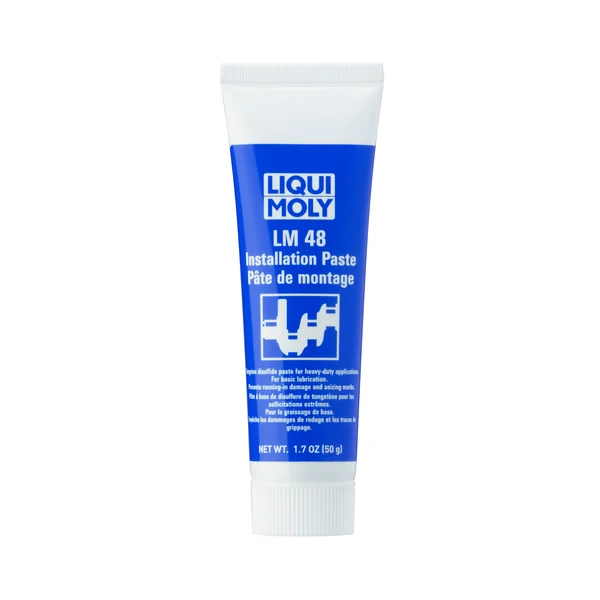
Assembly Paste
Pro-Line Assembly Paste (MoS2)
$16.35
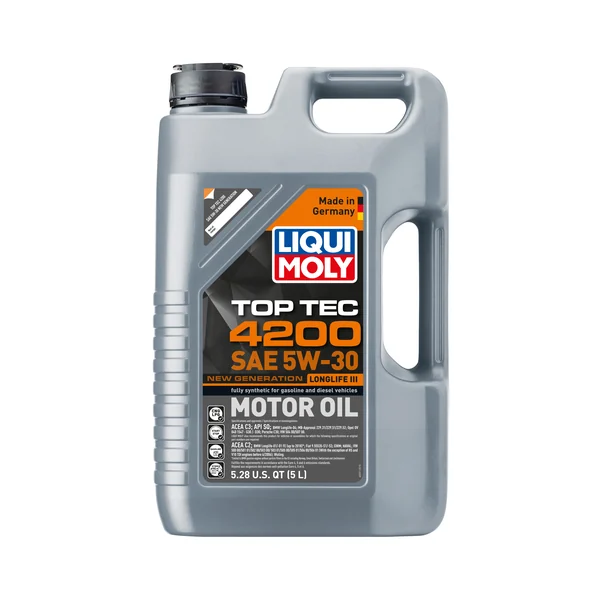
Engine Oil
Top Tec 4200 SAE 5W-30 New Generation
5 L · $92.60
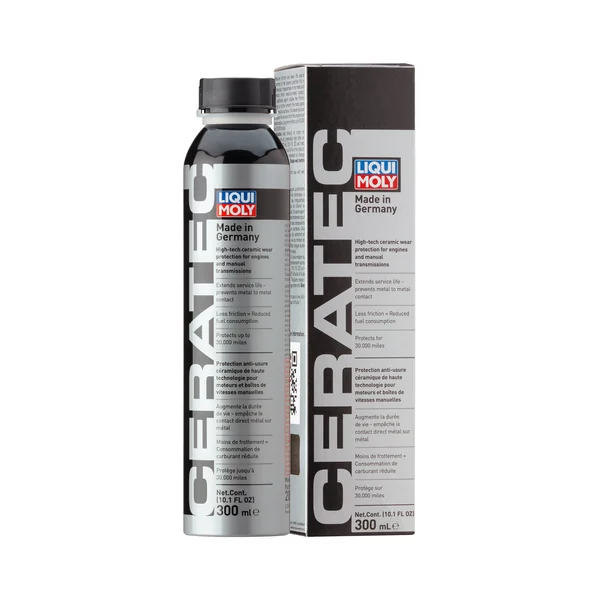
Engine Oil Additive
Cera Tec
300 mL · $54.35
Not sure which one your engine needs? Use the oil finder or browse all our oils & additives. Free pickup in Edmonton, or we ship it.
Frequently asked questions
Do I have to pay for the teardown if I don't go ahead with the rebuild?
Yes. The teardown is labour like any other job, and we quote it before we start so it isn't a surprise on the invoice. What it buys is the only honest answer available: what your bores, journals and bearings actually measure, and a firm quote after teardown that itemises the work. If you decide against the rebuild at that point, we price a used genuine OEM or remanufactured engine beside it — the engine is already out, which is most of the labour either way.
Rebuild, remanufactured or a used engine — which should I choose?
We supply all three, so the recommendation isn't steering you at whichever one we stock. A rebuild wins when your engine has a correctable factory weakness, or when its fitment and accessories matter to you. A remanufactured engine suits a newer vehicle you plan to keep, and it carries the strongest cover of the three, set out above. A used genuine OEM engine suits an older vehicle where a complete unit with known kilometres is better value. A rebuild and a used swap often land close on price, and then it isn't a money decision. Tell us the year and engine and we'll tell you which we'd pick.
Do you rebuild the engine in-house or send it out?
The teardown, the measuring, the assembly and the removal and installation are done here at 12940 53 Street NW by our own techs, so the shop that diagnosed the engine is the shop that answers for it afterward. Machining is done to specification as the measurements require, and the quote itemises the machine work your engine needs. That matters more than an address on an invoice: an engine assembled by someone who never saw how it failed is how the same failure comes back.
How long does an engine rebuild take?
Usually one to two weeks depending on machining and parts, sometimes longer for engines that need specialty work. We won't rush the measurements or the break-in that decide whether the rebuild lasts. You get a realistic timeline with the quote rather than an optimistic one, and if a part or a machine operation pushes it out, you hear about it when we find out, not when you come to pick the vehicle up.
Will a rebuilt engine be as good as new?
A properly rebuilt engine is machined and assembled back to factory clearances with new wear parts, and where a known weak point gets corrected it can be more reliable than the original was. The difference from a brand-new engine is the parts that measured within specification and were reused, which is exactly what a rebuild is for. The measurements are what make that safe, and they are in the quote you approve.
My engine is knocking. Can you just put bearings in it?
Sometimes, and we'll tell you honestly when. A knock caught early, on an engine with clean oil and nothing in the filter, can come back from bearings and a crank polish. A knock that has been driven on for weeks is a different thing: bearing material circulates, the journals score, and a bottom-end refresh over top of that fails again within months. Cutting the oil filter open and looking at what is in the pleats is the cheapest test in the trade, and it is the first thing we do.
What warranty comes with an engine rebuild?
Our warranty covers parts and labour, and the specific term is written on the quote rather than promised at the counter, because how much of the engine gets renewed is not known until the teardown. Ask for it when you book and it is settled before the work starts instead of afterward. If you take the remanufactured route instead, that engine carries its own separate cover, and the full terms are on our remanufactured engines page. Every rebuild also leaves with a break-in procedure and a follow-up check, because those two things do more for how long a rebuilt engine lasts than any wording on a warranty ever will.
Can you rebuild a diesel or a European engine?
Light-duty diesel pickups and European cars, yes — and both sit at the top of the cost range, because the parts cost more and the published labour times are longer. Highway tractors are the line: a Class 8 engine belongs with a specialist set up for it, and we'll say so rather than tie your truck up for a week. Tell us the year and engine when you call and we'll say straight away whether it is a job for us.
Known problems we repair
Deep guides on the failures we see most — symptoms, honest costs, and repair options.
GM 5.3L V8 — Vortec 5300 & EcoTec3 (2007–present)
GM 5.3L V8 AFM/DFM Lifter Failure and Oil Consumption: The Straight Story
Ram / Dodge / Jeep 5.7L HEMI V8 (2009–2024)
The 5.7 HEMI Tick: Lifter and Camshaft Failure in Ram, Dodge and Jeep V8s
Subaru 2.5L flat-four (EJ25 1996–2012, FB25 2011–2014)
Subaru 2.5L Head Gasket Failure and Oil Consumption: What Every Owner Should Know
From our repair blog
Related services
Book your engine rebuild
Call for a straight answer on cost and timing, or book online.