
The short answer
If you own a Subaru built between the mid-1990s and the mid-2010s with the 2.5L flat-four, there are two problems you need to know about: head gaskets that leak on the older EJ25 engine, and piston rings that burn oil on the newer FB25. Both are well documented, both triggered class actions or service campaigns, and both are fixable — the real question is whether to repair the engine you have or swap in a genuine OEM one. Here is the straight version, with honest Canadian prices.
Symptoms, from first warning to failure
Sweet coolant smell after a drive
The classic first sign on 1999–2012 SOHC engines. The head gasket weeps a small amount of coolant at the back of the engine, it drips onto the hot exhaust and vaporizes, and you smell that sweet antifreeze odour at the front of the car after parking. Often there is no puddle at all, because the leak cooks off before it hits the ground.
Coolant level slowly dropping
You find yourself topping up the overflow bottle every few weeks with no obvious leak anywhere. Check the overflow tank, not just the radiator — a slow external head gasket seep typically costs you a small amount of coolant between oil changes, long before anything dramatic happens.
Oil film along the head-to-block seam
On the SOHC EJ25 the gasket often lets oil weep externally before coolant. Look for a wet, dirty stripe along the joint where the cylinder head meets the block, usually low on the driver's side toward the rear. It looks like a minor oil leak, and for a while it behaves like one.
Adding oil between changes (FB25, 2011–2014)
On the newer FB25 engine the complaint is different: no leak, no smoke you can see, just an oil level that keeps dropping. If you are adding a litre or more between regular oil changes, or the low-oil light comes on mid-interval, you likely have the well-documented piston ring problem, not a head gasket.
Temperature gauge creeping up on hills or in traffic
When a leaking gasket starts to affect cooling, the first sign is a gauge that climbs under load — pulling a grade on the Yellowhead, idling in summer traffic with the A/C on — then settles back down. Do not shrug this off. On these engines a creeping gauge is a warning, not a quirk.
Bubbling or burping in the coolant overflow bottle
Combustion gas sneaking past the gasket pressurizes the cooling system. You will see bubbles rising in the overflow tank with the engine running, or coolant that gets pushed out of the bottle after shutdown. A shop can confirm this in minutes with a block test that detects exhaust gases in the coolant.
Heater blowing cold on and off
Air pockets from a leaking gasket collect in the cooling system, and the heater core is usually the first place they show up. Intermittent cold air from the vents in an Edmonton winter is more than a comfort problem — it is a sign the cooling system is losing its ability to do its job.
Overheating, steam, or milky oil
If the gauge pegs, steam comes from under the hood, or the oil on the dipstick looks like milky coffee, stop driving. Coolant and oil are mixing or the engine is running dry of coolant, and every kilometre driven risks warped heads, spun bearings, and a repair bill that jumps from a gasket job to a full engine.
Fast coolant loss with white, sweet-smelling exhaust
Thick white exhaust that smells sweet means the engine is burning coolant internally — the failure mode of the 1996–1999 DOHC engines, and of any 2.5 that has been overheated hard. This does not stabilize or heal. Park it and get it diagnosed before the engine finishes itself off.
Affected models
| Model | Years | Notes |
|---|---|---|
| Subaru Legacy / Outback 2.5 (DOHC EJ25D) | 1996–1999 | First-generation problem: internal head gasket failure. Combustion gas gets into the coolant, coolant can get into the oil, and the engine overheats. More sudden and more destructive than the later external leaks. |
| Subaru Forester (DOHC EJ25D) | 1998 | First-year Forester used the DOHC engine and shares its internal-leak failure. From 1999 the Forester moved to the SOHC engine. |
| Subaru Impreza 2.5 RS (DOHC EJ25D) | 1998 | Same DOHC internal-leak generation. The RS switched to the SOHC EJ251 in 1999. |
| Subaru Forester (SOHC EJ25) | 1999–2010 | Heart of the external-leak era. Slow coolant and oil seepage at the head gaskets, typically showing up around 150,000–200,000 km. Covered by Subaru's WWP-99 coolant conditioner campaign for 1999–2002. FB25 arrived for 2011. |
| Subaru Legacy / Outback 2.5 non-turbo (SOHC EJ251/EJ253) | 2000–2012 | Same external-leak pattern right through 2012, when the FB25 took over for 2013. The 2000–2002 cars were in the WWP-99 campaign; later cars got quiet gasket revisions but failures remained common. |
| Subaru Impreza 2.5 non-turbo (SOHC EJ251/EJ253) | 1999–2011 | 2.5 RS, TS, Outback Sport, and 2.5i models. Same external-leak gasket design; 1999–2002 cars were in WWP-99. The 2012 Impreza moved to the 2.0L FB20. |
| Subaru Baja (non-turbo EJ253) | 2003–2006 | Same SOHC engine, same external leak pattern as the Legacy and Outback of those years. |
| Subaru Forester 2.5i (FB25) | 2011–2014 (2015 with manual transmission also covered) | Oil consumption from defective low-tension piston rings. These model years — plus manual-transmission 2015 cars — were covered by the US class action settled in 2016 and by Subaru Canada's extension; warranty extensions (8 years / 160,000 km in Canada) have now expired. Scattered complaints continued into 2015–2017 cars. |
| Subaru Legacy / Outback 2.5i (FB25) | 2013–2014 | First FB25 years for these models; the 2013–2014 cars were covered by both the US settlement and Subaru Canada's extension. Consumer groups also logged oil consumption reports on some 2015 cars. |
| Subaru Impreza 2.0i / XV Crosstrek (FB20) | 2012–2013 | The 2.0L version of the same engine family, with the same piston ring defect, was included in the same class actions. Worth knowing if you cross-shop the smaller cars. |
| Turbo models: WRX, STI, Forester XT, Legacy GT, Outback XT | 2002–2014 | Largely NOT affected by the external-leak problem — the turbo engines came from the factory with multi-layer steel gaskets. They have their own issues, but chronic head gasket seepage is not one of them. |
What actually goes wrong
Subaru's flat-four "boxer" engine lays its cylinders flat, so the head gaskets sit vertically at each side of the engine, sandwiched between an aluminum block and aluminum heads that expand and contract with every heat cycle. That layout is why Subarus handle so well in the snow — the engine sits low — but it also means any gasket weep runs down the side of the block or drips straight onto the exhaust. Two separate problems get lumped together under "Subaru 2.5 engine trouble": head gasket failure on the older EJ25 engine (roughly 1996 through 2012 in non-turbo cars), and oil consumption from piston rings on the newer FB25 (2011 through 2014, with stragglers after). They have different causes, different symptoms, and different fixes, so it is worth keeping them straight.
The first generation of trouble was the 1996–1999 DOHC EJ25D, used in the Legacy, Outback, first-year Forester, and 1998 Impreza 2.5 RS. Its gaskets failed internally, between the combustion chamber and the coolant and oil passages. Combustion gas pushes into the cooling system, coolant disappears, oil and coolant can mix, and the engine overheats — sometimes with little warning. An internal failure is the more destructive kind, because by the time you notice it the engine may already have been cooked. Subaru dropped this cylinder head design after 1999, which tells you what they thought of it.
The second and far more common generation is the SOHC EJ251/EJ253 used in non-turbo Foresters (1999–2010), Legacies and Outbacks (2000–2012), Imprezas (1999–2011), and the Baja. Subaru fitted these engines with a single-layer composite gasket whose coating slowly breaks down where it seals the oil and coolant passages at the edge of the block. The result is the famous external leak: a slow weep of coolant at the back of the engine that vaporizes on the exhaust, and an oil seep along the head-to-block seam. It usually shows up somewhere between 120,000 and 250,000 km — most commonly around 150,000 to 200,000 — and it progresses slowly, which is the one mercy of this design. Subaru's official response was service campaign WWP-99, sent to hundreds of thousands of owners of 1999–2002 Foresters and Imprezas and 2000–2002 Legacies and Outbacks: a dealer added a bottle of Subaru Cooling System Conditioner — essentially a factory-blessed stop-leak — and the head gasket warranty was extended to 8 years or 100,000 miles for external coolant leaks. That extension expired many years ago. The conditioner slows the seep; it has never been a repair.
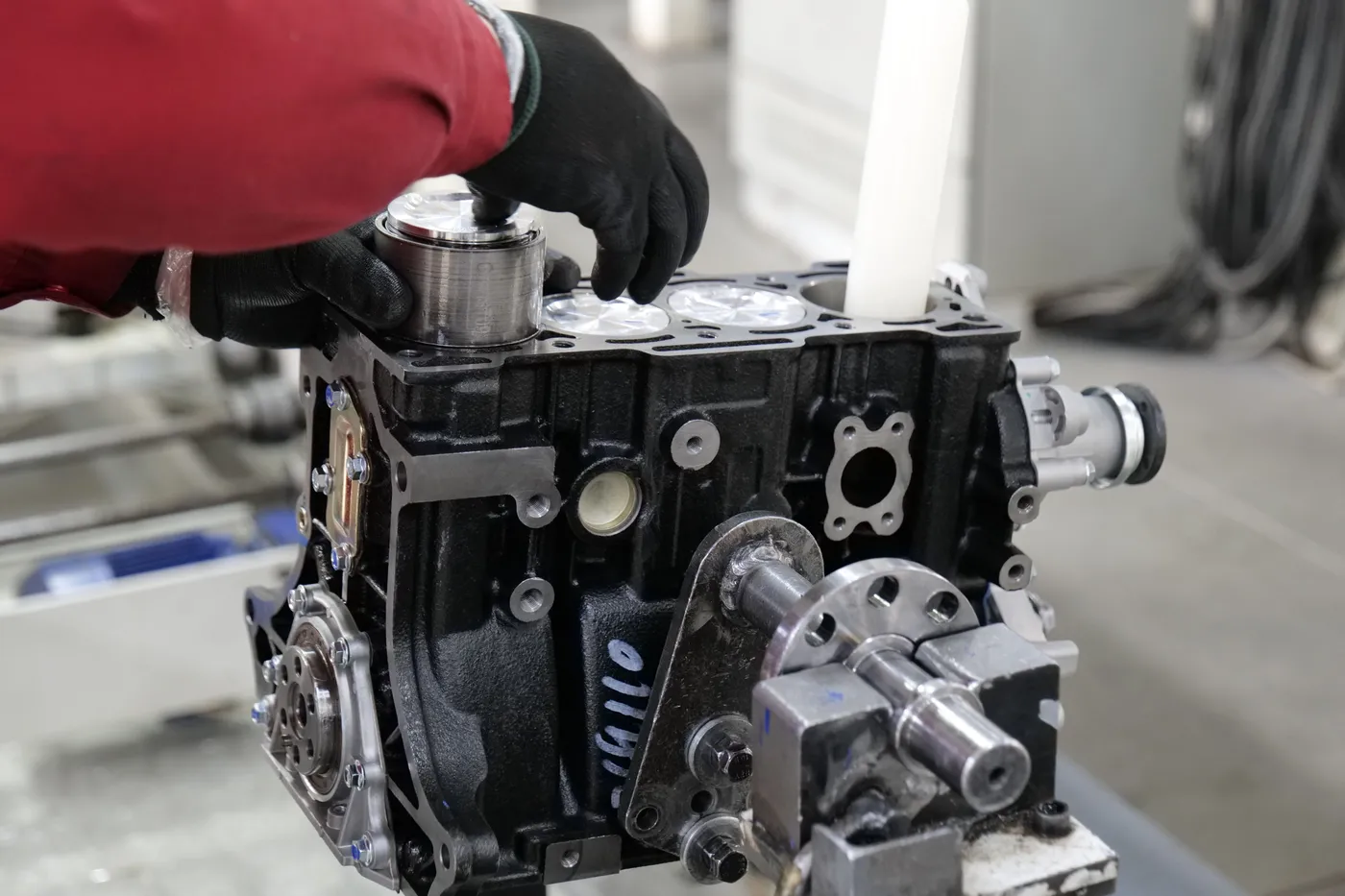
The proper repair is well understood by now, and it is why quotes look big. Both gaskets get replaced — never just one side, because the other is on the same clock. The heads come off and go to a machine shop to be checked and resurfaced flat, since an aluminum head that has been through years of heat cycles (or one overheat) is rarely true enough to seal a new gasket. Good shops use updated multi-layer steel (MLS) gaskets rather than the original single-layer style — MLS is what Subaru's own turbo engines used all along, and those engines never had this problem. And because the front of the engine is already apart, this is the time to do the timing belt, water pump, thermostat, idler pulleys, and cam and crank seals. Skipping them saves a few hundred dollars today and throws away over a thousand dollars of labour when the water pump lets go two winters later. Done properly with MLS gaskets and machined heads, this is a once-in-the-car's-life repair.
The FB25 that replaced the EJ25 — Forester in 2011, Legacy and Outback in 2013 — fixed the head gasket problem and introduced a new one. To chase fuel economy, Subaru fitted low-tension piston rings, and on many engines those rings let oil past into the combustion chamber. The car burns it invisibly — no leak, no blue smoke you would notice, just a litre or more of oil gone between changes. A US class action (Yaeger v. Subaru of America) covering the 2011–2014 Forester 2.5, 2013 Legacy and Outback, 2012–2013 Impreza 2.0, and 2013 Crosstrek settled in 2016 with warranty extensions to 8 years or 100,000 miles plus reimbursements. In Canada, a Quebec class action was filed in late 2015 and a parallel Ontario action covering owners outside Quebec followed in April 2016; Subaru Canada responded by extending oil-consumption coverage on affected 2011–2015 vehicles to 8 years or 160,000 km, which resolved the Ontario claim without a court-approved settlement. The fix under warranty was new piston rings — often a whole new short block — which is an engine-out job. Subaru revised the rings partway through production and complaints tapered off after about 2015, though the Automobile Protection Association continued to log occasional reports on 2016–2017 cars.
Where does that leave you in 2026? Every one of those warranty extensions has expired — the newest covered cars aged out years ago — so whatever your Subaru needs now, you are paying for it yourself. The good news is that these are known problems with known fixes and a healthy supply of genuine OEM engines, so you have real choices. The rest of this guide is about making that choice with clear eyes.
How the failure happens
Hover the diagram — or tap a part below — to see what it does and how it fails.
What it costs to fix
Typical ranges in Canadian dollars — every vehicle is quoted individually.
Proper diagnosis
$80–$250 CAD
A cooling system pressure test and a block test (which detects combustion gas in the coolant) will confirm a head gasket problem and tell you whether it is leaking externally or internally. For a suspected FB25 oil burner, the equivalent is a documented oil consumption test — oil changed, level marked, and rechecked after a set distance. Cheap insurance before anyone quotes you thousands.
Coolant conditioner and cooling system service
$50–$200 CAD
For a small external seep on an EJ25, a cooling system service with Subaru's conditioner (or an equivalent) can slow the leak and buy you months or even a couple of years. Be honest with yourself about what this is: a stop-gap that manages the symptom, not a repair. It does nothing for internal leaks or oil consumption.
Head gasket replacement done right (EJ25)
typically $2,500–$4,500 CAD at an independent shop
Both gaskets, heads resurfaced at a machine shop, updated MLS gaskets, plus timing belt, water pump, thermostat, and idlers while everything is apart. Dealer quotes typically run higher, sometimes $5,000-plus. Anyone quoting far below this range is probably reusing unmachined heads or skipping the timing service — which is how you pay for the job twice.
Overheat damage add-ons
$500–$1,500+ CAD on top
If the engine was overheated before repair, budget for extras: a valve job if the heads need more than a skim, plus a radiator, hoses, or a rad cap that the overheat took with it. This is why catching the leak early matters — the base repair is the same, but the add-ons are avoidable.
Genuine OEM replacement engine (through Eskimo Auto & Truck Parts)
typically $2,500–$5,000 CAD all-in
A tested genuine OEM EJ25 or FB25 typically runs $800–$2,500 depending on kilometres and year, plus roughly $1,500–$2,500 to install. On a higher-km car, or an engine that has been overheated or is burning oil, this is often the smartest move — you get a complete running engine instead of rebuilding a tired one. Our sister company, Eskimo Auto & Truck Parts here in Edmonton, stocks tested genuine OEM Subaru engines and ships across Canada and the USA.
FB25 piston ring repair or remanufactured engine
typically $3,500–$7,000+ CAD
Fixing FB25 oil consumption properly means the engine comes out for new rings or a new short block — most of the cost is labour and machine work. A remanufactured engine installed usually lands at the top of this range or beyond. This is exactly the price point where a genuine OEM engine, or living with measured top-ups, deserves a hard look.
Repair it, or replace it?
Start with the arithmetic, not the emotion. A typical Alberta driver puts on 18,000–25,000 km a year, and a healthy Subaru drivetrain is good for 350,000 km or more. If the car is otherwise solid, a $3,500 repair that buys five-plus years of driving is cheaper than almost any replacement vehicle you can buy in 2026.
An EJ25 with an external leak that has never overheated is the best case for repair. The leak is slow, the rest of the engine is usually healthy, and a proper MLS gasket job with machined heads is a one-time fix. Under about 250,000 km, fix it and drive on.
An engine that has been overheated — especially more than once — changes the math. Warped heads, tired bearings, and glazed cylinders mean you can spend head-gasket money and still have a weak engine. That is when a tested genuine OEM engine at similar or lower cost is the better bet.
For an FB25 burning oil, measure before you spend. Log consumption over 2,000 km with a marked dipstick. If it is around a litre per 2,000 km and the car is otherwise good, disciplined top-ups cost you maybe $60–$100 a year in oil — many owners run these engines for years that way. Spend the $4,000–$7,000 on rings only if the body, CVT, and the rest of the car justify it.
When a repair quote crosses roughly $4,000 on a car worth $6,000–$8,000, put a genuine OEM engine quote beside it before you decide. Ask any parts supplier for compression or leak-down results and the donor's kilometres — a good supplier will have them.
Know when to walk away: heavy rust, a CVT or transmission with symptoms, 300,000-plus km, or a list of other needed repairs. Putting a fresh engine in a car that is failing around it is how people spend $5,000 to sell a car for $4,000 a year later.
How we fix this in Edmonton
Engine Repair & Replacement in Edmonton
A bad engine doesn't automatically mean a new vehicle. We diagnose before we condemn — and then we can fix it every way there is: rebuild it in-house, install a remanufactured ATK engine, or fit a genuine OEM engine sourced through our sister company, Eskimo Auto & Truck Parts.
See the service →Heating, Cooling & A/C in Edmonton
In Edmonton a working heater is safety equipment — it's what keeps your windshield clear at -30. We fix the whole climate system: cabin heat, engine cooling and A/C, with the diagnosis done before the parts go on.
See the service →Engine Rebuild in Edmonton
A rebuild is your own engine taken apart, measured, machined back to specification and put together with its weak points corrected. We tear it down first, then give you a firm quote that itemises the work, and an honest answer on whether your vehicle is worth it.
See the service →The genuine OEM parts option
If the numbers point toward a genuine OEM engine, that is exactly what our sister company does. Eskimo Auto & Truck Parts is one of Edmonton's largest parts operations, specializing in genuine OEM parts, with tested EJ25 and FB25 engines regularly in stock — plus the cylinder heads, radiators, coolant bottles, and cooling fans that head gasket and overheat jobs tend to need. Every engine comes from a documented donor vehicle, so you know the kilometres you are getting, and a genuine OEM engine is the exact factory unit your car was built with. Local customers can arrange pickup in Edmonton, and everything ships across Canada and the USA. Tell them the year, model, and engine code, and they can tell you what is on the shelf.
Browse inventory at Eskimo Auto & Truck Parts →How to make yours last longer
- Check the coolant overflow bottle monthly, cold, on level ground. A slow drop with no puddle is the earliest and cheapest warning you will get on an EJ25.
- Deal with small leaks before winter. Running low on coolant at -30 is a double risk in Edmonton: overheating on the highway and a diluted mix that no longer protects against freezing.
- On EJ25 engines, use proper Subaru-spec coolant and add a bottle of Subaru Cooling System Conditioner at every coolant change — Subaru themselves made this a permanent requirement under the WWP-99 campaign.
- Never drive through a rising temperature gauge. Pull over, let it cool, and get it towed if it will not hold temperature. One hard overheat is the difference between a gasket job and a whole engine.
- If you have a 2011–2014 FB25 (or any direct relative), check the oil at every second fuel fill and keep a litre of the correct oil in the car. Burning oil does not warn you; an oil light on a boxer engine can mean bearing damage is already underway.
- Change oil on time with the correct viscosity — 0W-20 for the FB25, 5W-30 for most EJ25s — and keep records. On the FB25, long intervals with a low level accelerate ring and bearing wear.
- Do the timing belt on schedule on EJ25 engines (every 168,000 km). If head gaskets are starting to weep as the belt comes due, doing both together saves you paying the same labour twice.
Frequently asked questions
Which Subaru years have head gasket problems?
Two distinct groups. The 1996–1999 DOHC 2.5 (Legacy, Outback, 1998 Forester and Impreza 2.5 RS) failed internally, causing overheating and coolant-oil mixing. The bigger group is the 1999–2012 SOHC 2.5 in non-turbo Foresters (1999–2010), Legacies and Outbacks (2000–2012), Imprezas (1999–2011), and the Baja, which develops slow external coolant and oil leaks at the gaskets, usually between about 120,000 and 250,000 km. Turbo models like the WRX and Forester XT came with multi-layer steel gaskets and largely avoided the problem.
What Subaru years burn oil?
The FB-series engines from the early 2010s: the 2.5L in the 2011–2014 Forester and 2013 Legacy and Outback, and the 2.0L in the 2012–2013 Impreza and 2013 Crosstrek. Defective low-tension piston rings let oil into the combustion chamber, where it burns invisibly. These model years were covered by class actions in both the US and Canada; Subaru revised the rings and complaints dropped off after about 2015, though some 2015–2017 owners still reported it.
How much does a Subaru head gasket job cost in Canada?
At an independent shop, a proper job — both gaskets, heads machined, MLS gaskets, plus timing belt and water pump while it is apart — typically runs $2,500 to $4,500 CAD depending on the car and what else it needs. Dealers usually quote more, sometimes over $5,000. Be wary of quotes far below that range; they usually mean the heads are not being machined or the timing service is being skipped, and both shortcuts tend to cost you the whole job again later.
Can I keep driving with a leaking head gasket?
With a small external leak on a SOHC EJ25 — yes, cautiously, for a while. Many owners drive months or longer topping up coolant and watching the gauge. But you are on borrowed time: if the coolant runs low or the leak progresses, you overheat, and an overheat turns a gasket job into an engine replacement. Internal leaks (bubbling overflow, white sweet exhaust, milky oil) are different — stop driving and get it looked at.
Does head gasket sealer or Subaru's coolant conditioner actually work?
Subaru's Cooling System Conditioner is a stop-leak, and for the specific slow external seep on SOHC engines it genuinely can slow or temporarily stop the loss — Subaru shipped it to hundreds of thousands of owners under the WWP-99 campaign. What it cannot do is fix the gasket, and it does nothing for internal leaks. Aggressive aftermarket "permanent" sealers are riskier; they can clog heater cores and radiators. Treat any bottle as a way to buy time until a real repair, not as the repair.
Did Subaru ever permanently fix the head gasket problem?
Effectively yes, in two steps. Updated multi-layer steel gaskets — the style the turbo engines always had — solve it on repaired EJ25 engines, which is why a properly done gasket job does not come back. And the FB25 engine that replaced the EJ25 (Forester in 2011, Legacy and Outback in 2013) does not have a chronic head gasket problem at all. It traded it for the piston ring oil consumption issue in its early years instead.
How much oil consumption is normal on an FB25?
All engines use some oil, but as a practical matter, if you are adding more than about a litre between normal oil changes you should start logging it. During the class action era, Subaru's dealer oil consumption test (TSB 02-157-14R) failed an engine that used more than a third of a quart — about 0.3 L — in 1,200 miles (roughly 1,900 km); Subaru's owner's manual separately said consumption "may be as high as" one quart per 1,200 miles, a figure many owners reasonably felt was too generous. The engine will tolerate measured top-ups fine; what it will not tolerate is running low, so check it every second fuel fill.
Is it better to fix the head gaskets or put in a genuine OEM engine?
If the engine has never overheated and the kilometres are moderate, fix it — a proper MLS gasket job is a one-time repair on an otherwise durable engine. If it has been overheated, is burning oil, or has high kilometres, a tested genuine OEM engine often costs about the same installed ($2,500–$5,000 all-in, typically) and resets the whole engine, not just the gaskets. Get both quotes and compare; on FB25 oil burners especially, a genuine OEM engine frequently beats a $5,000-plus ring job.
Was there a Canadian class action, and can I still claim anything?
Yes — after the US suit (Yaeger v. Subaru of America) settled in 2016 with an 8-year/100,000-mile warranty extension, a Quebec class action was filed in late 2015 and a parallel Ontario action covering owners outside Quebec followed in April 2016. Subaru Canada responded by extending oil consumption coverage on affected 2011–2015 vehicles to 8 years or 160,000 km, resolving the Ontario claim without a court-approved settlement. Those windows have all closed — the newest covered cars aged out around 2023 — so in 2026 there is nothing left to claim, and any repair is out of pocket.
Are turbo Subarus like the WRX or Forester XT affected by these problems?
Mostly no. The turbocharged 2.0 and 2.5 engines used multi-layer steel head gaskets from the factory, so the chronic external-leak problem largely skipped them, and they predate the FB ring issue. They have their own well-known concerns — ringland failure on abused engines, oil starvation, turbo wear — but if you are avoiding a used Subaru specifically over head gaskets, the turbo models are not the ones to worry about.
Dealing with this problem right now?
Edmonton and area: bring it in and we'll confirm the diagnosis before any work. Anywhere else in Canada or the USA: our sister company ships the genuine OEM parts to your shop.