The short answer
Not every ticking 5.7 HEMI is dying. Many are just leaking exhaust past broken manifold bolts — annoying, cheap-ish to fix, and harmless to the engine. But a tick that stays after warm-up can be a failing roller lifter grinding your camshaft flat, and that one turns into a four- or five-figure repair the longer you drive on it. Here is how to tell the two apart, what the fix honestly costs in Canada, and when a genuine OEM engine beats repairing the one you have.
Symptoms, from first warning to failure
Tick on cold start that fades as the engine warms
This is usually the harmless tick: an exhaust manifold leak, most often from broken manifold bolts at the back of the cylinder head. The manifold expands as it heats up and partially seals the leak, so the noise dies down after five to ten minutes. It still needs fixing eventually, but it is not eating your engine.
Exhaust smell or black soot near the manifold
A leaking manifold pushes exhaust gas into the engine bay. You may smell it at idle with the hood open, or see soot streaks around the manifold flange or gasket. Another sign it is the manifold tick, not the lifter tick.
A metallic tick that stays after full warm-up
A tick that persists when the engine is hot — steady, rhythmic, roughly half engine speed because the camshaft turns at half crank speed — is the one to worry about. That rhythm is the signature of a lifter whose roller has stopped spinning and is starting to skid on its cam lobe.
Tick getting louder over weeks, especially at idle
Once a lifter roller seizes, the noise generally does not plateau. As the roller grinds the hardened surface off the cam lobe, the clearance grows and the tick gets louder and harder-edged. If the noise is clearly progressing, stop treating it as a quirk.
Check engine light with a single-cylinder misfire code
As the cam lobe wears down, that cylinder's valve no longer opens fully and the cylinder starts to misfire — typically a P0300-series code pointing at one cylinder. A persistent tick plus a misfire on one cylinder is close to a textbook lifter-and-cam diagnosis on a 5.7.
Rough idle, surging, or a noticeable loss of power
A wiping cam lobe robs one cylinder of airflow, and the engine management fights to compensate. Owners often describe a shudder at idle, hesitation under light throttle, or the truck simply feeling down on power, particularly towing.
Metal flakes in the oil or oil filter
Cut open the old filter at your next oil change, or ask your shop to. Fine ferrous glitter or visible metal flakes mean the cam and lifter are shedding hardened steel into the oil system. At this point every kilometre circulates abrasive debris through the bearings and oil pump.
Loud knocking, a dead miss, or a lifter collapse
When the lobe is fully wiped or a lifter comes apart, the tick becomes a knock or clatter and the engine runs on seven cylinders. Driving it further risks pushrod, rocker and valve damage and packs more debris into the bottom end. Have it towed rather than driven.
Affected models
| Model | Years | Notes |
|---|---|---|
| Ram 1500 | 2009–2024 | The highest-volume 5.7 application and where most failures are seen, simply because of the numbers on the road. The 2009 'Eagle' engine added variable valve timing; MDS came on automatic trucks. Failure reports are heaviest on 2009–2016 builds and continue, less frequently, into eTorque trucks (2019+). The 5.7 was dropped for 2025 and returned for 2026. |
| Dodge Charger R/T | 2009–2023 | Same Eagle 5.7 with MDS on all automatic cars, which was all of them. Same lifter roller failure pattern as the trucks. |
| Dodge Challenger R/T | 2009–2023 | Notable because manual-transmission Challengers have no MDS at all, yet still suffer lifter roller and cam lobe failures — strong evidence the root problem is the lifters themselves, not just cylinder deactivation. |
| Chrysler 300 (5.7) | 2009–2023 | Same LX/LD-platform engine as the Charger. Same failure mode, same diagnosis. |
| Dodge Durango (5.7) | 2011–2025 | Optional 5.7 with MDS through the current generation. Durangos that tow heavily seem no more or less prone — the failure does not track neatly with workload. |
| Jeep Grand Cherokee (5.7) | 2009–2021 | WK and WK2 with the optional 5.7. The three-row Grand Cherokee L (WL) carried the 5.7 (with MDS, but no eTorque — that hybrid system was on its V6 and on the Wagoneer's V8) from 2021 until the V8 was quietly dropped during 2024. |
| Jeep Wagoneer | 2022–2023 | Launched with the 5.7 eTorque before the turbocharged Hurricane inline-six took over. Late-revision lifters, so reported failures are fewer, but it is the same basic valvetrain. |
| Earlier 5.7 HEMIs (Ram, 300C, Magnum, Durango, Grand Cherokee, Aspen, Commander) | 2003–2008 | Pre-Eagle engines, many with early MDS from 2005–2006. Cam and lifter wipes happen but are reported far less often than on 2009+ engines. Broken exhaust manifold bolts, on the other hand, are common across every generation. |
What actually goes wrong
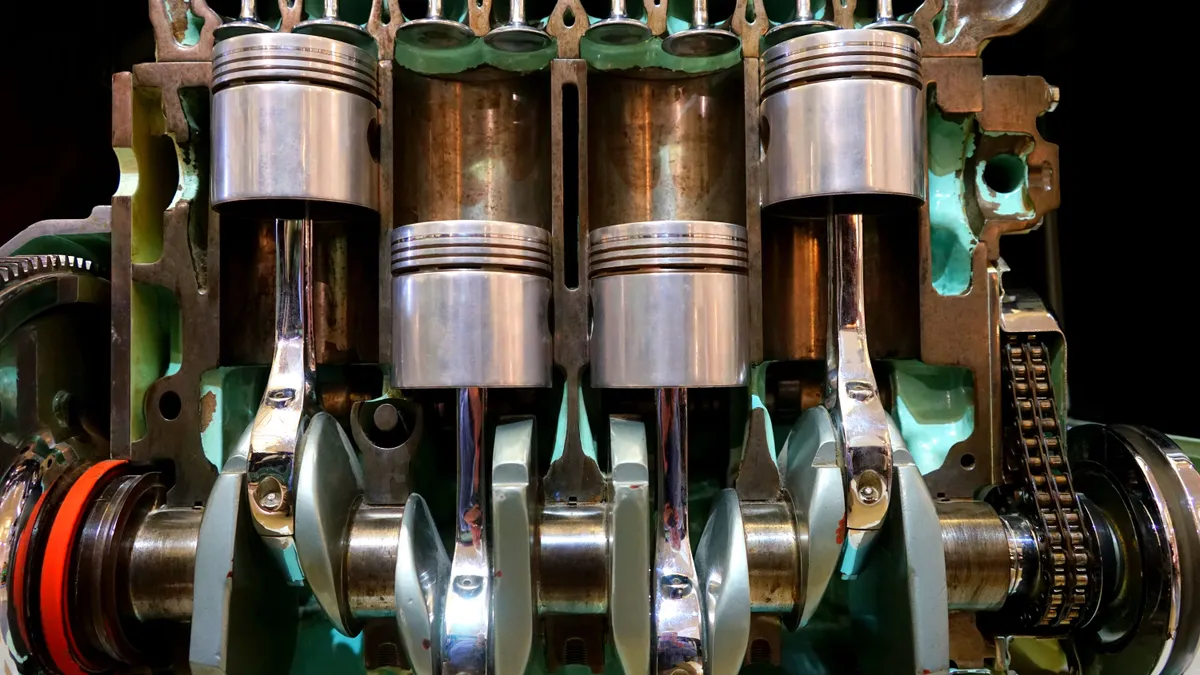
The 5.7 HEMI is a traditional pushrod V8: one camshaft sitting low in the block, sixteen hydraulic lifters riding on it, pushrods and rockers opening the valves. Each lifter has a small hardened-steel roller on its foot, and that roller spins on a set of needle bearings so it can follow the cam lobe with almost no friction. It is a proven, simple layout — right up until one of those needle bearings gives up.
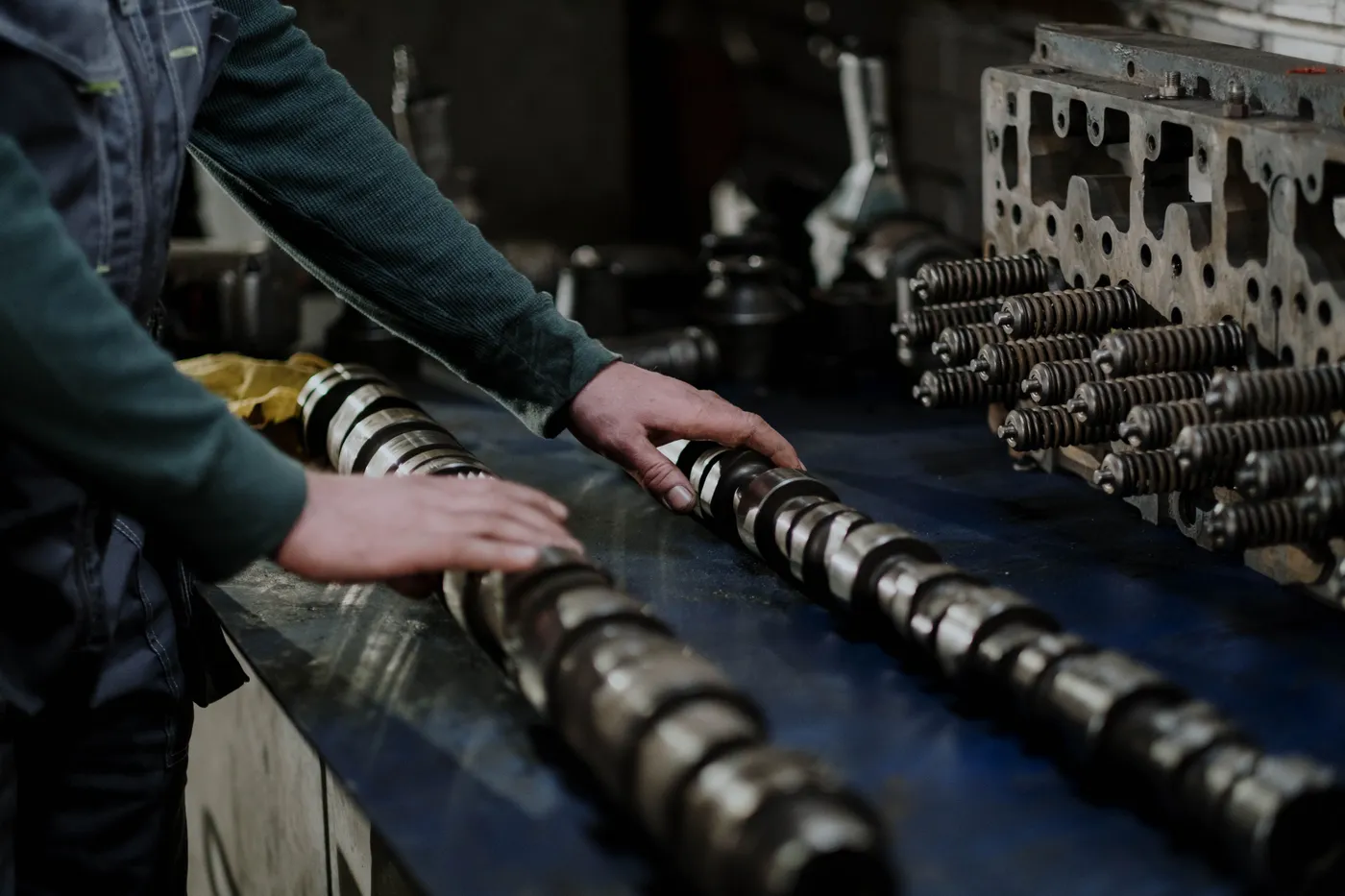
The genuine 'HEMI tick' failure starts inside the lifter roller. The needle bearings wear, skew or seize, and the roller stops spinning. Instead of rolling over the cam lobe thousands of times a minute, it skids across it like a locked tire. Two hardened surfaces grinding against each other strips the case-hardened skin off the cam lobe, and once that skin is gone the lobe wears down shockingly fast — owners go from 'slight tick' to 'dead misfire' in a few thousand kilometres. All of that ground-off steel goes straight into the engine oil, where the pump happily distributes it through the crank bearings, timing gear, oil galleries and, on MDS engines, the deactivation solenoids.
MDS — Chrysler's Multi-Displacement System — gets most of the blame, and it is a fair suspect. On automatic-equipped 5.7s it collapses the lifters on four cylinders (1, 4, 6 and 7) to shut them down at cruise, which means those lifters are more complicated and see unusual duty. Plenty of failures do land on MDS cylinders. But here is the honest complication: wiped lobes also show up on non-MDS cylinders, and on manual Challengers that have no MDS hardware at all. The pattern points at the lifters themselves — bearing quality and metallurgy — rather than cylinder deactivation alone. That matters when someone tries to sell you an 'MDS delete' as a guaranteed cure. It is not one.
Now the other tick, the one that spares you an unnecessary engine repair if you identify it correctly. The 5.7 is notorious for snapping exhaust manifold bolts, usually at the rear of the head where the engine runs hottest. A broken bolt lets the manifold lift slightly off the head, and escaping exhaust pulses make a sharp tick that sounds alarmingly like a valvetrain problem. The tell is temperature: a manifold tick is loudest on cold start and fades or vanishes as the manifold heats up, expands and seals itself against the head. A lifter tick does not care about temperature — if anything it gets more distinct once the oil is hot and thin. A shop confirms the difference in under an hour with a stethoscope, a smoke or soot check around the manifold flange, a scan for single-cylinder misfires, and by cutting open the oil filter to look for metal. Insist on that diagnosis before authorizing anything expensive.
Which engines does this hit? The failure-prone era starts with the 2009 'Eagle' 5.7, which added variable valve timing, and runs across Ram 1500, Charger, Challenger, 300, Durango, Grand Cherokee and later the Wagoneer. Reports are heaviest on roughly 2009–2016 engines; revised lifters with larger needle bearings appeared around 2016–2017 and failure rates dropped noticeably, but complaints continue on trucks and cars built into the 2020s. There is no reliable mileage threshold — documented failures range from under 100,000 km to well past 300,000 km, and plenty of hard-worked HEMIs never tick at all. A U.S. class action over 5.7 and 6.4 valvetrain failures was filed against FCA in 2022 (Petro v. FCA US LLC), but in September 2024 the court dismissed the nationwide class allegations (the plaintiffs lacked standing to sue for consumers in other states), and as of mid-2026 there has been no recall and no settlement covering this failure. Nobody is coming to pay for your cam.
The reason this problem so often ends in engine replacement rather than repair comes down to the debris. Replacing the cam and sixteen lifters on a 5.7 already means pulling both cylinder heads — the lifters are not accessible otherwise — which is why it is a 12-to-20-hour job. But if the engine ran for weeks with a wiping lobe, that metal has been through the crank and rod bearings, the oil pump and the pickup screen. A shop can install a beautiful new cam in a contaminated engine and hand it back ticking again — or knocking — six months later. That is the point where a healthy genuine OEM engine with documented kilometres stops being the fallback and starts being the correct one.
How the failure happens
Hover the diagram — or tap a part below — to see what it does and how it fails.
What it costs to fix
Typical ranges in Canadian dollars — every vehicle is quoted individually.
Proper diagnosis
$0–$250 CAD
Cold-start and warm listen, stethoscope on the manifold and valve covers, scan for misfire codes, and cutting open the oil filter to check for metal. Cheap insurance against paying for a cam job when all you had was a $600 manifold leak — or worse, patching a manifold while a lifter quietly eats your cam.
Exhaust manifold bolts and gaskets (the harmless tick)
typically $300–$800 per side, $800–$1,500+ with broken studs
If the bolts come out clean, this is a straightforward gasket-and-hardware job. The price climbs when studs have snapped flush with the head and need extraction — heat, left-hand drills, sometimes machine-shop time. A genuine OEM replacement manifold through Eskimo Auto & Truck Parts is an easy swap if yours is warped or cracked.
Camshaft and lifter replacement
typically $4,000–$8,000 at an independent shop; dealer quotes in Canada commonly run $5,000–$11,000
New cam, all sixteen lifters, gaskets, and usually timing components while everything is apart. Both heads come off, which is where the labour goes. Only worth doing on an engine that was caught early — the shop should inspect the bottom end and oil pump for debris before promising you a fixed engine.
Genuine OEM replacement engine (through Eskimo Auto & Truck Parts)
engine typically $1,500–$4,500; roughly $5,000–$9,000 installed
A tested, lower-kilometre genuine OEM 5.7 from a donor vehicle, swapped complete. Often costs about the same as a dealer cam-and-lifter job on your contaminated engine, while resetting the clock on every wear item at once. Our sister company, Eskimo Auto & Truck Parts, stocks genuine OEM 5.7 HEMI engines in Edmonton and ships across Canada and the USA.
Remanufactured or new crate engine
typically $6,000–$8,500 for the engine; $10,000–$14,000 installed
Reman long blocks come with strong warranties (commonly 3 years/160,000 km) and updated lifters. The right call for a newer, high-value truck you plan to keep for years — hard to justify on a $12,000 vehicle.
Repair it, or replace it?
Caught genuinely early — tick only, no misfire, no metal in the filter, cam lobes confirmed intact or barely marked — a cam and lifter job is a legitimate repair. The engine keeps its history, you know what you have, and the new-revision lifters are better parts than what came out.
Caught late — misfire codes, glitter in the oil, a lobe worn visibly flat — the math changes. That debris has been through the bearings and oil pump, and a $6,000 cam job on a contaminated engine is a gamble the shop cannot warranty with a straight face. This is where a genuine OEM engine usually wins.
Run the numbers the way we would: a 2012 Ram 1500 with 260,000 km and a wiped cam is looking at $5,000–$8,000 for a cam job on a tired engine, versus a similar spend for a tested genuine OEM 5.7 with half the kilometres installed. One option fixes a component; the other replaces the whole risk.
Weigh the repair against the vehicle, not just the engine. A dealer-quoted $10,000 valvetrain repair makes little sense on a truck worth $12,000 — but a $6,000 genuine OEM engine swap that buys another eight years of Alberta winters often does, especially compared to financing a replacement truck at today's prices.
At typical Alberta mileage — 20,000 to 25,000 km a year, lots of highway — a healthy 5.7 is not a worn-out engine at 200,000 km. That cuts both ways: it justifies fixing a good truck properly, and it means a genuine OEM engine with 100,000–150,000 km still has plenty of life to give.
Whatever you choose, avoid the half-fix. Replacing only the noisy lifter, or lifters without inspecting the cam, or a cam without cleaning the oil pump and pickup, is how this repair gets paid for twice. If the repair cannot be done to a proper standard, that is another argument for the genuine OEM engine route.
How we fix this in Edmonton
Engine Repair & Replacement in Edmonton
A bad engine doesn't automatically mean a new vehicle. We diagnose before we condemn — and then we can fix it every way there is: rebuild it in-house, install a remanufactured ATK engine, or fit a genuine OEM engine sourced through our sister company, Eskimo Auto & Truck Parts.
See the service →Engine Rebuild in Edmonton
A rebuild is your own engine taken apart, measured, machined back to specification and put together with its weak points corrected. We tear it down first, then give you a firm quote that itemises the work, and an honest answer on whether your vehicle is worth it.
See the service →Vehicle Diagnostics & Check Engine Light in Edmonton
A trouble code tells you what the computer noticed, not what is broken. We read the codes, look at live data, and test the actual circuit before anything gets replaced. Diagnostic time is $120 an hour, quoted before we start, because the most expensive repair is the one that didn't fix the problem.
See the service →The genuine OEM parts option
If the verdict is a wiped cam and a debris-filled engine, the repair bill is mostly about where the replacement engine comes from. Our sister company, Eskimo Auto & Truck Parts, is one of Edmonton's largest parts operations and stocks genuine OEM 5.7 HEMI engines from tested donor Rams, Chargers, Challengers, Durangos and Grand Cherokees — typically $1,500–$4,500 depending on year and kilometres. They can match the engine to your exact year and configuration, including the VVT and eTorque differences that matter, and also carry the supporting parts for this job: exhaust manifolds to replace a warped or cracked one, transmissions, and accessories. Local customers can have the engine installed at our shop; everyone else can have it shipped anywhere in Canada. One phone call gets you a straight answer on what is in stock and what it will cost delivered.
Browse inventory at Eskimo Auto & Truck Parts →How to make yours last longer
- Change the oil on time or early — every 8,000 km or so with the correct 5W-20 and a quality filter. Clean oil will not fix a bad bearing, but marginal oil and stretched intervals give a marginal lifter every excuse to fail.
- Cut open your old oil filter once in a while, or ask your shop to. Ferrous glitter in the pleats is the earliest hard evidence of cam and lifter wear you can get without pulling parts.
- Take any new tick seriously within days, not months. The gap between 'lifter starting to skid' and 'cam lobe gone plus debris everywhere' can be a few thousand kilometres, and it is the difference between a repairable engine and a replacement.
- Let the engine warm up before working it, especially in an Edmonton winter. Plug in the block heater below about -15°C — warm oil reaches the lifters faster on start-up, which is exactly when they are most vulnerable.
- Do not lug the engine at very low RPM under load; steady low-speed grinding is the least friendly duty for the valvetrain. Tow in the transmission's tow/haul mode, which also keeps MDS from cycling constantly.
- Be honest about MDS deletes: disabling cylinder deactivation with a tuner may reduce lifter cycling, but manual cars without MDS still lose cams, so it is not a guarantee — and it can affect emissions compliance and warranty coverage. If the engine is already apart for a cam job, a non-MDS cam and lifter kit is a more defensible time to make that choice.
- On a high-kilometre engine you plan to keep, a $40–$60 oil analysis at each change will flag rising iron levels long before your ear picks up the tick.
Frequently asked questions
How do I tell if my HEMI tick is the exhaust manifold or a lifter?
Temperature is the quickest tell. Start the engine cold and listen: a manifold leak ticks sharply at start-up and fades or disappears after five to ten minutes as the hot manifold expands and seals itself. A lifter tick stays — or gets more distinct — once the engine is fully warm, and it runs at a steady rhythm of roughly half engine speed. Exhaust smell or soot around the manifold points to bolts; a single-cylinder misfire code or metal in the oil filter points to the lifter. A shop can confirm it with a stethoscope in under an hour, and that hour is worth paying for before anyone quotes you a big repair.
Can I keep driving with a lifter tick?
Not for long. Once a lifter roller seizes, every kilometre grinds more hardened steel off the cam lobe and pumps the shavings through your bearings and oil pump. Owners who park it at the first persistent tick often get away with a cam and lifter job; owners who drive it for months usually end up buying an engine. If the tick fades when warm — the manifold-bolt version — the engine itself is in no danger, though the leak should still be fixed before it warps the manifold or burns the gasket surface.
Which 5.7 HEMI years are worst for lifter failure?
Reports are heaviest on the 2009–2016 'Eagle' engines across Ram 1500, Charger, Challenger, 300, Durango and Grand Cherokee. Revised lifters with larger needle bearings arrived around 2016–2017 and failure rates dropped, but failures are still reported on engines built into the 2020s. The 2003–2008 engines are much less prone to wiped cams, though they share the broken-manifold-bolt problem. No year is immune, and there is no reliable mileage threshold — we have seen failures under 100,000 km and healthy original valvetrains past 400,000 km.
Is there a recall or class action for the HEMI tick?
There is no recall — Stellantis has never issued one for 5.7 cam and lifter failures, so there is no free fix waiting at the dealer. A U.S. class action covering 5.7 and 6.4 HEMI valvetrain failures was filed against FCA in 2022 (Petro v. FCA US LLC), but in September 2024 the court dismissed the nationwide class allegations (the plaintiffs lacked standing to sue for consumers in other states), and as of mid-2026 there is no settlement. In practice, your options are factory or extended warranty if you are still covered, a goodwill request backed by complete service records, or paying for the repair yourself.
How much does it cost to fix the HEMI tick in Canada?
It depends entirely on which tick you have. Broken exhaust manifold bolts typically run $300–$800 per side, more if studs snapped flush and need extraction. A proper cam and lifter replacement typically lands between $4,000 and $8,000 at an independent shop — Canadian dealer quotes of $7,000–$11,000 are common because both cylinder heads have to come off. If the engine ran long enough to contaminate the oil system, a tested genuine OEM engine installed for roughly $5,000–$9,000 is often the smarter spend than repairing the damaged one.
Will thicker oil or an additive fix the HEMI tick?
No. A seized lifter roller and a worn cam lobe are mechanical damage — no bottle fixes metal that is already gone. An additive or heavier oil may quiet the noise slightly, which is arguably worse because it hides a failure that is still progressing. Stick with the specified 5W-20 and spend the additive money on a proper diagnosis instead. The one thing oil genuinely buys you is prevention: clean, correct-grade oil changed on time gives the lifters their best chance.
Does deleting MDS prevent lifter failure?
The evidence is mixed, and we would rather tell you that than sell you certainty. MDS lifters are more complex and many failures do occur on MDS cylinders — but non-MDS cylinders wipe lobes too, and manual Challengers with no MDS hardware at all still suffer the same failure. A tuner that disables MDS stops the deactivation cycling but leaves the original lifters in place. The more meaningful version is a non-MDS cam and lifter kit installed during a repair, when the engine is already open. Factor in warranty and emissions implications before tuning anything.
Is a genuine OEM engine a smart fix for a failed HEMI?
Very often, yes — particularly when the failure was caught late and debris has circulated. A cam job on a contaminated engine can fail again; a tested genuine OEM engine replaces the whole risk, usually for similar money. Buy smart: match the engine to your year (the 2009+ VVT engines differ from earlier ones, and eTorque trucks have their own details), ask how the donor engine was tested, and get a warranty in writing. Our sister company, Eskimo Auto & Truck Parts in Edmonton, stocks genuine OEM 5.7 HEMI engines and ships across Canada and the USA.
Are the newer eTorque HEMIs (2019–2024) affected too?
They use the later-revision lifters, and failure rates on 2019+ trucks appear meaningfully lower than the 2009–2016 peak. But the basic valvetrain — cam-in-block, roller lifters, MDS on most trucks — is the same, and ticking complaints on eTorque trucks do exist. Treat a persistent warm tick on a 2019+ truck exactly as seriously as on an older one, especially if the factory powertrain warranty (5 years/100,000 km in Canada) is close to expiring. Get it documented at a dealer before the coverage runs out.
The HEMI is back in the 2026 Ram — does it have the same problem?
Ram brought the 5.7 eTorque back for the 2026 Ram 1500 after a one-year absence, rated at 395 horsepower. It is fundamentally the same engine family with the current lifter revisions, which have a much better record than the 2009–2016 parts. Whether the problem is fully behind it, nobody can honestly say yet — the failures on older engines often took 100,000 km or more to show up. What we can say is that the same diagnosis logic and the same maintenance habits apply on day one.
Real job from our shop
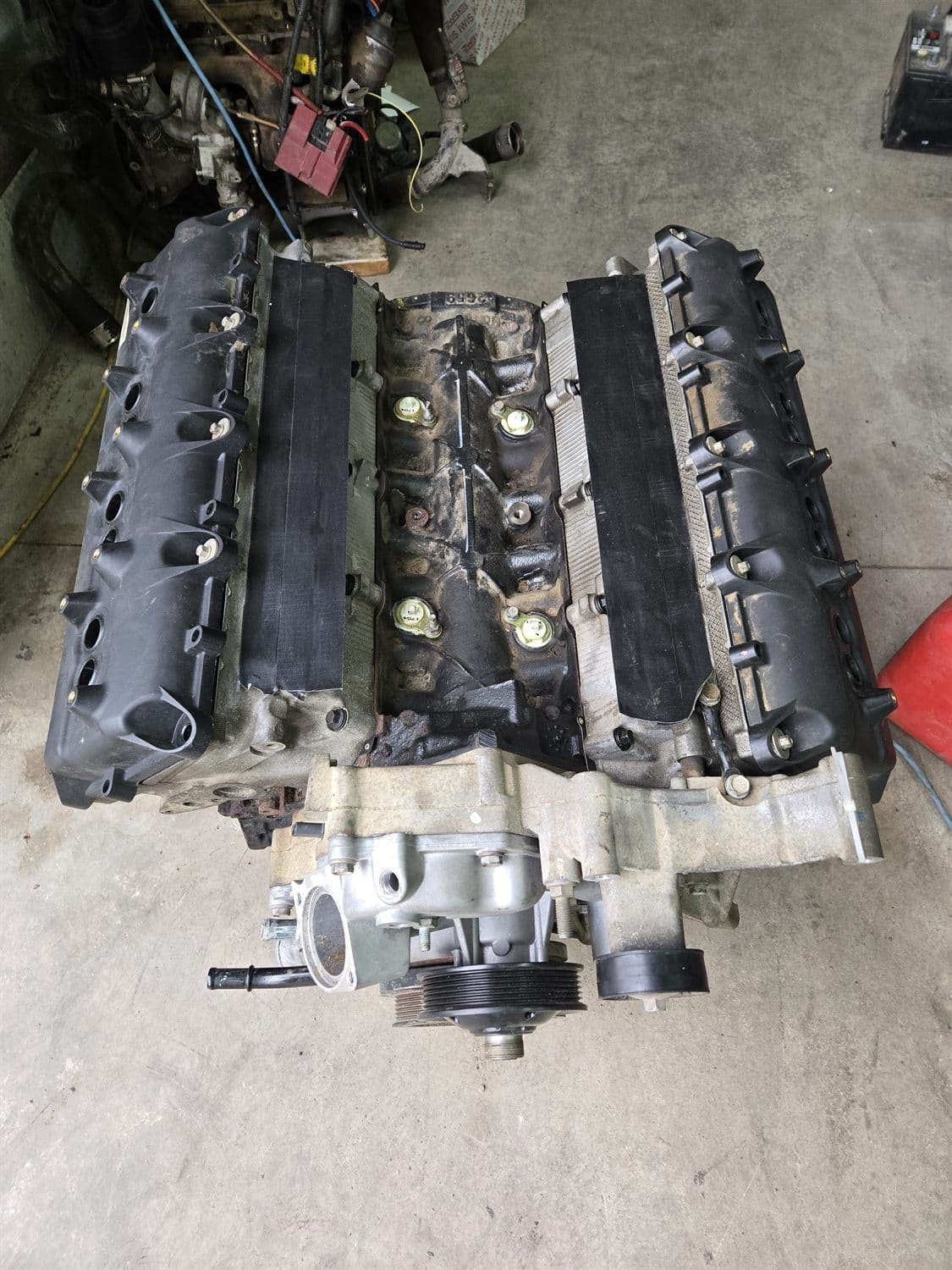
5.7 HEMI rebuild + MDS delete — 2018 Ram 1500 Classic
- Came in:
- The classic HEMI tick with a misfire — the signature of the 5.7's well-known MDS lifter failure, which often ends in a dead cylinder.
- We found:
- A failed MDS lifter had stopped controlling oil pressure the way it should and hammered its camshaft lobe flat. Rebuilding with the same MDS hardware would leave the engine open to failing the exact same way again.
- Result:
- An engine with no cylinder deactivation and none of the failure-prone MDS lifters — the 'fix it so it doesn't come back' call we can make because we rebuild in-house, and a sensible upgrade for an owner keeping the truck.
Dealing with this problem right now?
Edmonton and area: bring it in and we'll confirm the diagnosis before any work. Anywhere else in Canada or the USA: our sister company ships the genuine OEM parts to your shop.