Edmonton potholes and washboard gravel are a suspension torture test. If your vehicle clunks over bumps, wanders on the highway or chews through tires, we put it on the hoist, shake down every joint by hand, and show you the worn part before we quote the repair.
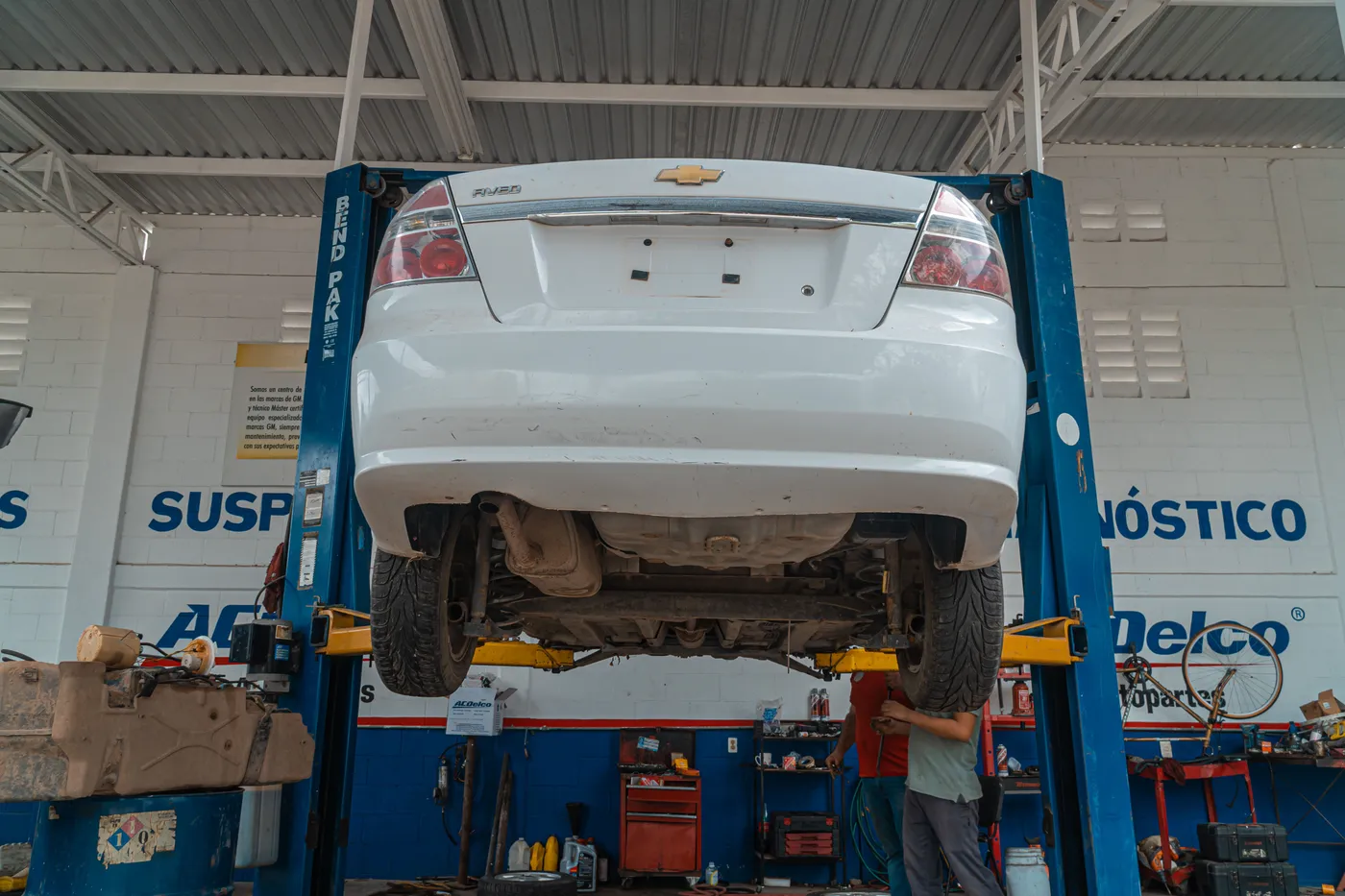
Edmonton suspensions live a harder life than almost anywhere: washboard gravel hammers anything driven outside the city, and salt rusts every fastener solid. The parts that take that beating are all wear items — ball joints, tie rod ends, sway bar links, struts, wheel bearings, control arm bushings — and all of them warn you first. Some of those warnings are safety-critical. A ball joint that lets go folds a front wheel under the vehicle, and a failing bearing can seize. So we start with a proper inspection at 12940 53 Street NW: wheels off the ground, every joint shaken down by hand, bushings, springs and mounts checked. If a part has play, you will see the play. If everything is tight and the real problem is alignment or tires, that is what we will tell you. Eskimo Auto Repair is AMVIC-licensed and puts its warranty in writing. Call (780) 482-2424.
Pothole Damage to Suspension: Bent Tie Rods, Control Arms and Struts
One hard edge-on strike at speed does its damage in a predictable order: a bent rim first, then a tweaked tie rod, a bent control arm, a blown strut, or a steering wheel that sits crooked while you drive straight. Most hits do nothing at all, and we will say so rather than invent a repair. The ones that do something tell you inside a day — a new pull, a crooked wheel, a new clunk over bumps, a new shake at highway speed. Come in while you still remember which corner took it. Inspection time is billed as diagnostic time, $120 an hour, quoted before we start, and most front-end shakedowns are done inside the hour. Catching a bent tie rod there saves the pair of tires a bad alignment would scrub off by fall.
Struts vs Shocks, Why They Go in Pairs, and the Alignment That Follows
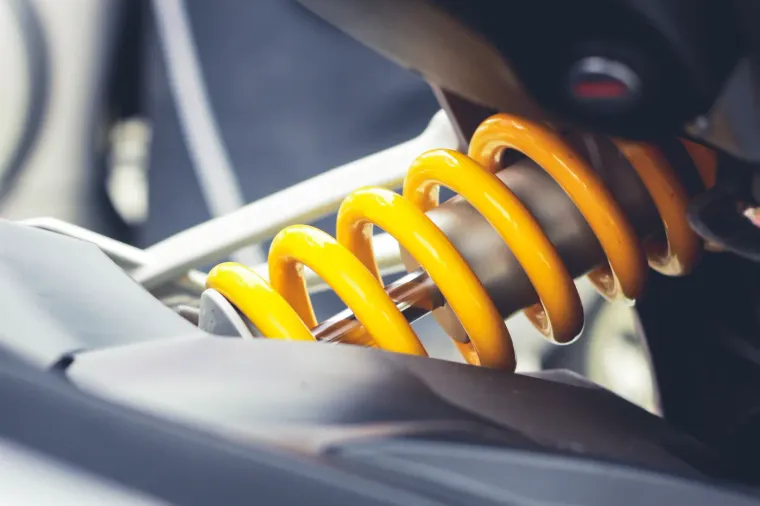
A shock is a damper and nothing else: it bolts on top and bottom and controls how fast the spring moves. A strut is structural. It carries the coil spring and locates the top of the wheel, which is why pulling one out moves the angles that wheel sits at, and why the alignment afterward is not optional the way it is after a shock swap. Worn damping reads the same on both — the vehicle keeps bouncing after a bump instead of settling once, the nose dives under braking, and wet stopping distances stretch. It also prints itself into your tires: a tired damper stops holding the tread down, so the tire skips a fraction at a time over rough pavement and wears into shallow waves you can feel with a hand. That cupping never comes back out, and a set of winter tires costs more than most of the repairs on this page. Both go in pairs, per axle, so one fresh corner is not left fighting a tired one.
Control Arm Bushings and Ball Joints — Clunks, Vague Steering and Tire Wear
The clunk over a driveway approach is usually a torn control arm bushing, the rubber sleeve that locates the arm and soaks up impact. Deep cold makes that rubber hard and brittle, grit works into the sleeve, and potholes finish the job. With the clunk comes a dull thud braking from speed, vague steering, and tire wear that returns a few weeks after an alignment because the arm is still moving under load. A ball joint fails differently. It is the pivot the whole corner turns on, so play there reads as a knock at low speed and, at the far end, as a wheel folding under the vehicle. What decides the bill is how the part is sold: on some vehicles the bushing presses out on its own and the joint presses into the knuckle, on others either one comes only as a complete arm.
Sway Bar Link Noise: Clunking and Rattling Over Bumps
This is the cheap one, and it gets mistaken for the expensive ones constantly. The sway bar ties the left and right sides of the suspension together so the body stays flat through a corner, and it reaches each side through a link — a short rod with a small ball socket at either end. When those sockets wear, the bar knocks against the suspension instead of pushing on it, and you get a rattle or clunk over rough pavement, speed humps and driveway approaches. It is loudest at low speed and often gone on smooth road, which is why people live with it for months, and why it gets called struts or ball joints by anyone listening from the driver's seat. A worn link is a far smaller bill than either one.
Wheel Bearing Noise — the Hum That Grows With Speed
Start with the noise, because a bearing identifies itself. It hums, growls or drones, the pitch rises with road speed rather than engine speed, and it is still there when you coast in neutral, which is what separates it from a driveline or engine noise. Later stages add a wobble and play you can feel at the top of the tire. On the road test we confirm it by loading each side in turn with a gentle swerve: the noise swells when the bad side takes the weight and fades when it comes off. Then it goes on the hoist, because a dragging brake pad and a worn CV joint each imitate part of that. Most vehicles now use a sealed hub that comes off as one bolted unit, bearing, flange and ABS sensor ring together; older and heavier vehicles still run bearings that get pressed and packed.
Tie Rod Ends, Steering Racks and Power Steering Leaks
Steering that wanders is a toe problem before it is anything else, and the tie rod end is where toe is held. It is the last joint between the rack and the wheel, so once it develops play the setting changes every time the wheel moves, and a fresh alignment set over a loose tie rod is money spent on a number that will not hold. Expect constant small corrections on the highway, a shimmy that comes and goes, and a clunk turning at low speed. A rack announces itself differently: a bellows boot heavy with fluid means the rack is leaking past its inner seals rather than a hose weeping onto it, and a groan at full lock and a puddle where you park fill in the rest. Electric-assist steering has no pump and no fluid, so that job starts as diagnosis. We will tell you whether it is the rack, the assist motor or the circuit feeding it before any part is ordered.
Towing, Payload and What They Do to Rear Suspension
Put a loaded trailer on the hitch and the weight does not just sit on the rear axle, it levers load off the front one. Rear shocks and springs fade first, rear bushings work loose, and a truck that squats nose-high steers light at the front and aims its headlights into oncoming traffic. Watch for a truck sitting low at the back or on one side even unloaded, porpoising after a bump with the trailer on, and rear tires wearing their inside edges. If you pull a seasonal trailer out to lake country or run a work truck around Nisku, Refinery Row and the QEII all week, that is the pattern. It is also where a good shock earns its money, because heat is what kills a damper and a loaded truck on washboard makes heat all day.
Suspension and Steering Repair Cost in Edmonton — Struts, Ball Joints and Bearings
On parts we carry what we would put on our own trucks, including Bilstein shocks and struts on anything that tows or runs gravel. General ranges, not quotes: front struts land at $700–$1,200 for the pair, installed, on most cars and SUVs. Ball joints typically run $250–$500 each installed, depending on whether they press out on their own or come with the control arm; wheel bearings typically $350–$650 per corner. Tie rod ends are the cheapest of the steering joints, and what moves that number is the boot and clamp and how hard the jam nut fights. Trucks and European vehicles trend higher. Links, bushings, racks and shocks-only jobs are quoted per vehicle, because access and rusted hardware decide the labour. Two things pull a bill down, and we raise both: replacing the joint that is actually worn rather than the whole assembly where the vehicle allows it, and grouping repairs that share a teardown, since a ball joint and the bearing behind the same knuckle cost less together than a month apart. Discontinued control arms, knuckles and racks come through Eskimo Auto & Truck Parts next door, usually in days. You get the number in writing first.
Signs you need this service
- Clunking or knocking over bumps and driveway approaches, loudest at low speed and gone on smooth road
- Steering that wanders and needs constant small corrections on the highway
- The steering wheel sits off-centre after a pothole or curb strike
- A hum or growl that rises with speed and is still there when you coast in neutral
- The vehicle keeps bouncing after a bump instead of settling once
- Nose-dive under braking, or a floaty ride that never quite settles
- Inside tire edges feathering, one shoulder worn bald, or cupping you can feel by hand
- A squeak or groan over slow bumps in deep cold, worst on the first drive of the day
- One corner sits lower than the others, or the truck sits low at the back after a summer of towing
- A groan at full lock, a power steering reservoir that keeps dropping, or a puddle where you park
What's included
- Full suspension and steering inspection, wheels off the ground and every joint shaken down by hand, billed as diagnostic time at $120 an hour and quoted first
- Strut and shock replacement in pairs per axle, with Bilstein on the shelf for trucks and anyone who tows
- Ball joints, control arms and control arm bushings, pressed individually or replaced as a complete arm
- Tie rod ends and steering linkage repair, with the alignment afterward so the settings hold
- Wheel bearing and sealed hub assembly replacement, including pressed bearings on older and heavier vehicles
- Sway bar links and bushings, Edmonton's most common clunk and one of the cheapest fixes here
- Power steering racks, pumps, lines and leaking boots, with diagnosis first on electric-assist systems
- Rear shocks and rear suspension bushings on trucks that tow or carry weight
- Coil springs, strut mounts and bearing plates, often what is rattling when the strut itself is fine
- A written quote after the inspection, and the worn part shown to you before anything is ordered
Frequently asked questions
I hit a big pothole. What should I have checked?
Start with the rim and tire on the corner that took the hit, then the alignment readings, then a hand shakedown of the tie rod, ball joint and strut on that side. It is an hour of diagnostic time, quoted before we start. Bring it in even if it drives fine — a slowly leaking rim and a weeping strut both hide behind a normal drive.
Do struts really have to be replaced in pairs?
Per axle, yes, and the reason is matching. Damping fades gradually, so a new strut beside a three-year-old one leaves the front corners behaving differently over the same bump. Shocks are more forgiving: if only one is leaking and the rest are recent, replacing that one alone is defensible. Struts are not, and pulling one moves the wheel angles, so the alignment is part of the job.
How much does strut replacement cost?
A pair of front struts installed typically runs $700–$1,200 on most cars and SUVs, plus the alignment. What pushes a job to the top of that range is a loaded assembly with a new spring and mount rather than a bare strut, a truck or European make, and strut bolts that have spent ten winters in road salt. We quote after the inspection, not over the phone.
What causes a clunking noise over bumps?
Four parts make close to the same noise from the driver's seat: a sway bar link, a torn control arm bushing, a worn ball joint and a failed strut mount. Those are very different bills, so we separate them on the hoist rather than by ear: a pry bar on each joint, a hand on the bushing while it loads and unloads, a listen at the strut top through full lock.
Can I keep driving with a humming wheel bearing?
For a short while, but do not stretch it. A bearing that is noisy is a bearing that is breaking down, and the end stage is heat, wobble and in the worst case a wheel that locks or separates. The noise does not tell you how much is left, so we will not put a number of weeks on one. Book it, and do not take a long highway trip on it first.
My power steering fluid keeps dropping. Is the rack leaking?
Not always, and the cheaper possibilities get ruled out first. Pressure and return hoses, the pump shaft seal and a cracked reservoir all lose fluid for a fraction of what a rack costs. We clean everything off, run it, and find the actual source before quoting. What you should not do is keep topping it up: a pump run low whines, then fails.
My truck wanders on gravel. Alignment, tires or worn parts?
Could be any of the three, and washboard exaggerates all of them. We check in order of cost: play in the steering linkages and ball joints first, then tire condition and pressures, then the alignment. Gravel wears steering parts faster than pavement does, so a truck that lives on lease roads needs this inspection more often than the same truck in the city.
How do I read my own tires for suspension wear?
Look at all four at every changeover, because the wear pattern names the part more reliably than the noise does. Feathered inside edges point at toe and the joints that hold it. One shoulder worn bald on a vehicle that tracks straight is camber. Shallow scalloped waves you can feel by hand are cupping, and cupping is a damper problem, not a tire problem. Bring us a photo of the tread if you are not sure what you are looking at.
Is suspension work worth it on an older vehicle?
Sometimes it is not, and we will say so before you spend. The question is how many of these parts are due at once. One ball joint on an otherwise tight front end is worth doing. Struts, both lower ball joints, a rack and an alignment on a rusty unit at 320,000 km can be most of what the vehicle is worth, and next winter will find something else.
Known problems we repair
Deep guides on the failures we see most — symptoms, honest costs, and repair options.
Related services
Book your suspension & steering
Call for a straight answer on cost and timing, or book online.