
A real job from our Edmonton shop
5.7 HEMI rebuild + MDS delete — 2018 Ram 1500 Classic
2018 Ram 1500 Classic · 5.7L HEMI V8
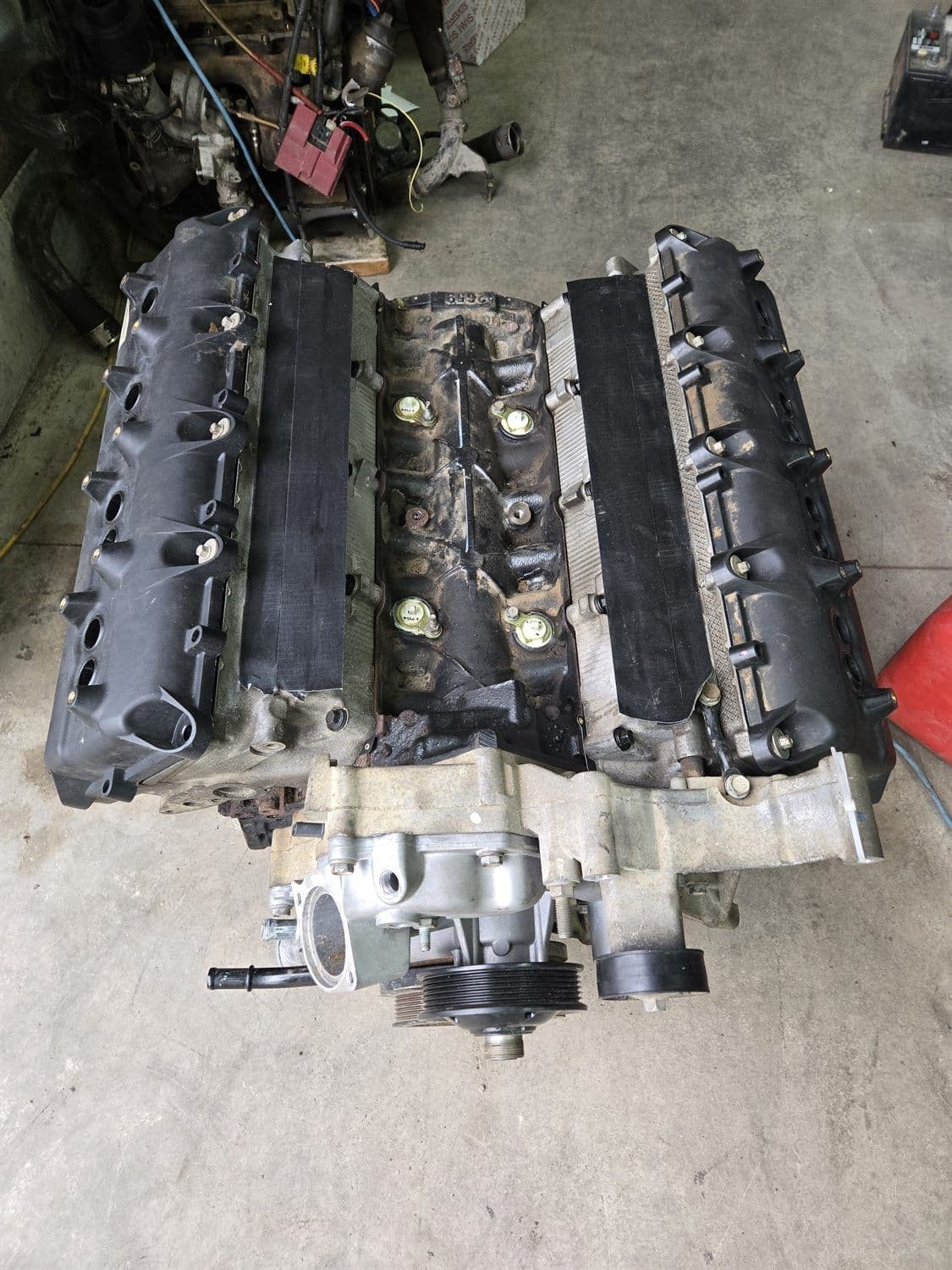
What came in
The classic HEMI tick with a misfire — the signature of the 5.7's well-known MDS lifter failure, which often ends in a dead cylinder.
What we found
A failed MDS lifter had stopped controlling oil pressure the way it should and hammered its camshaft lobe flat. Rebuilding with the same MDS hardware would leave the engine open to failing the exact same way again.
What we did
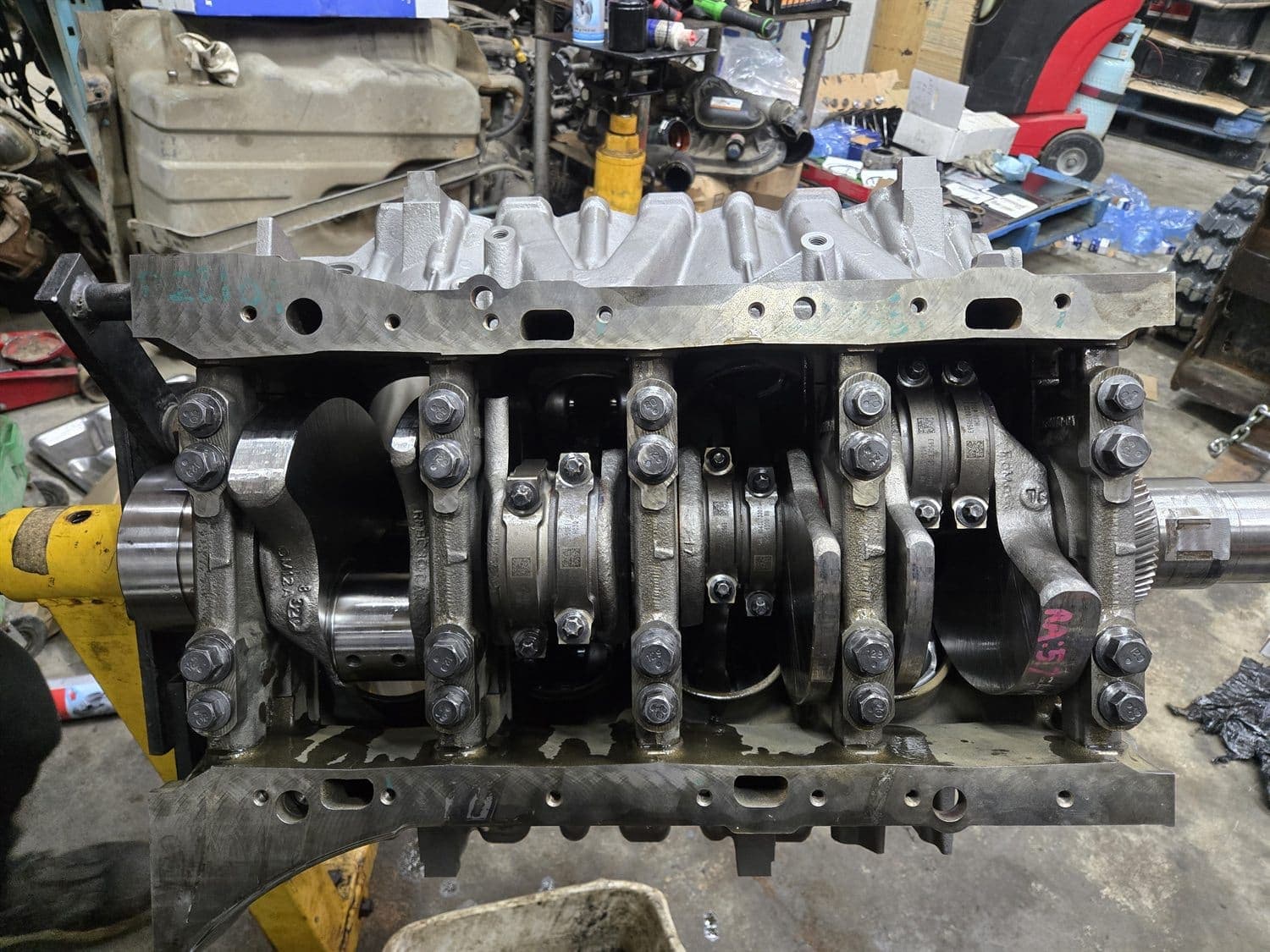
Full rebuild with a Melling MDK100 MDS delete kit: a non-MDS delete camshaft, 16 standard hydraulic roller lifters, the correct non-MDS lifter guides, and MDS solenoid block-off plugs. Reprogrammed the PCM to turn MDS off in software, and checked pushrod length on assembly so the valvetrain geometry was right.
The outcome
An engine with no cylinder deactivation and none of the failure-prone MDS lifters — the 'fix it so it doesn't come back' call we can make because we rebuild in-house, and a sensible upgrade for an owner keeping the truck.
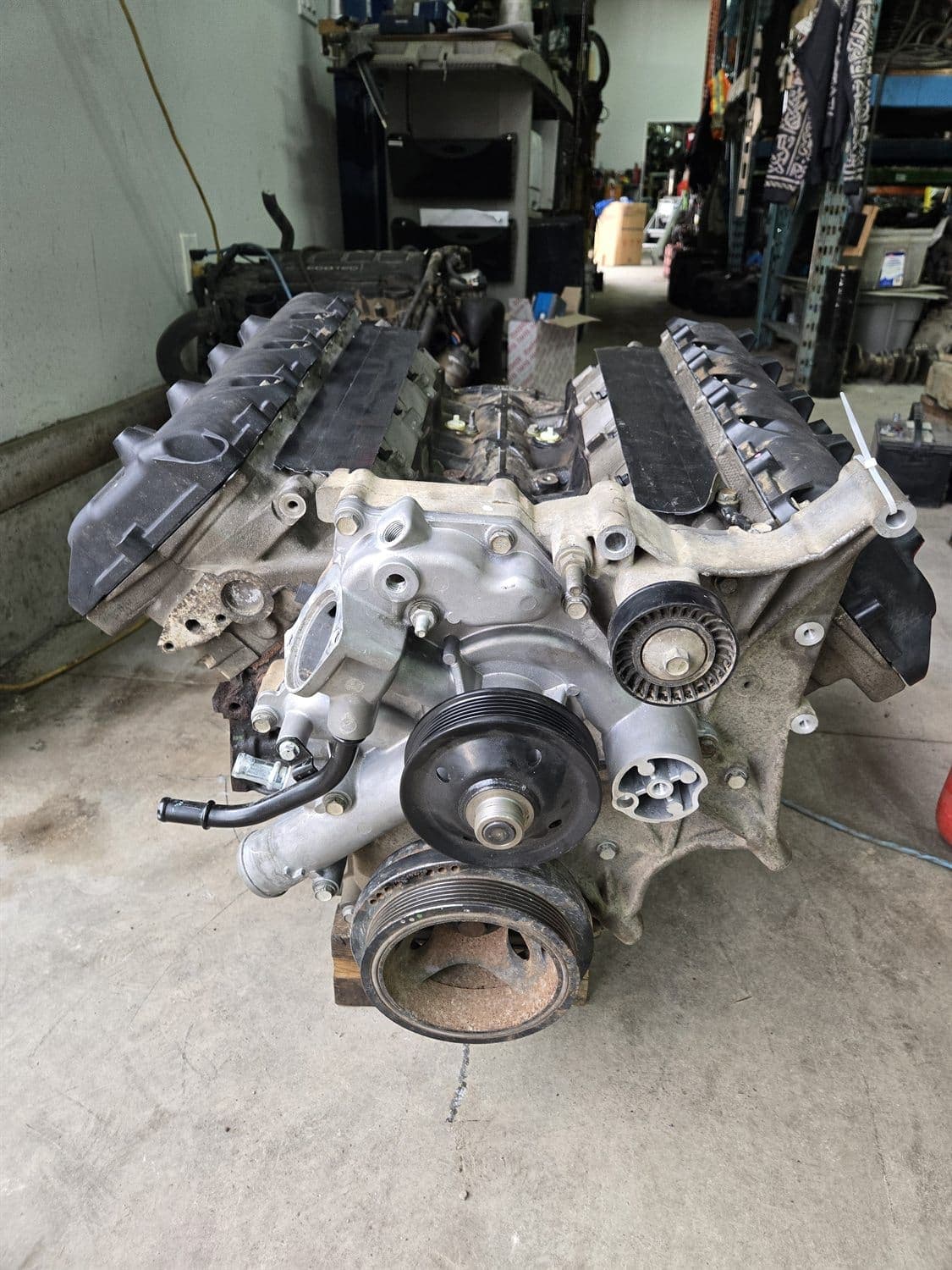
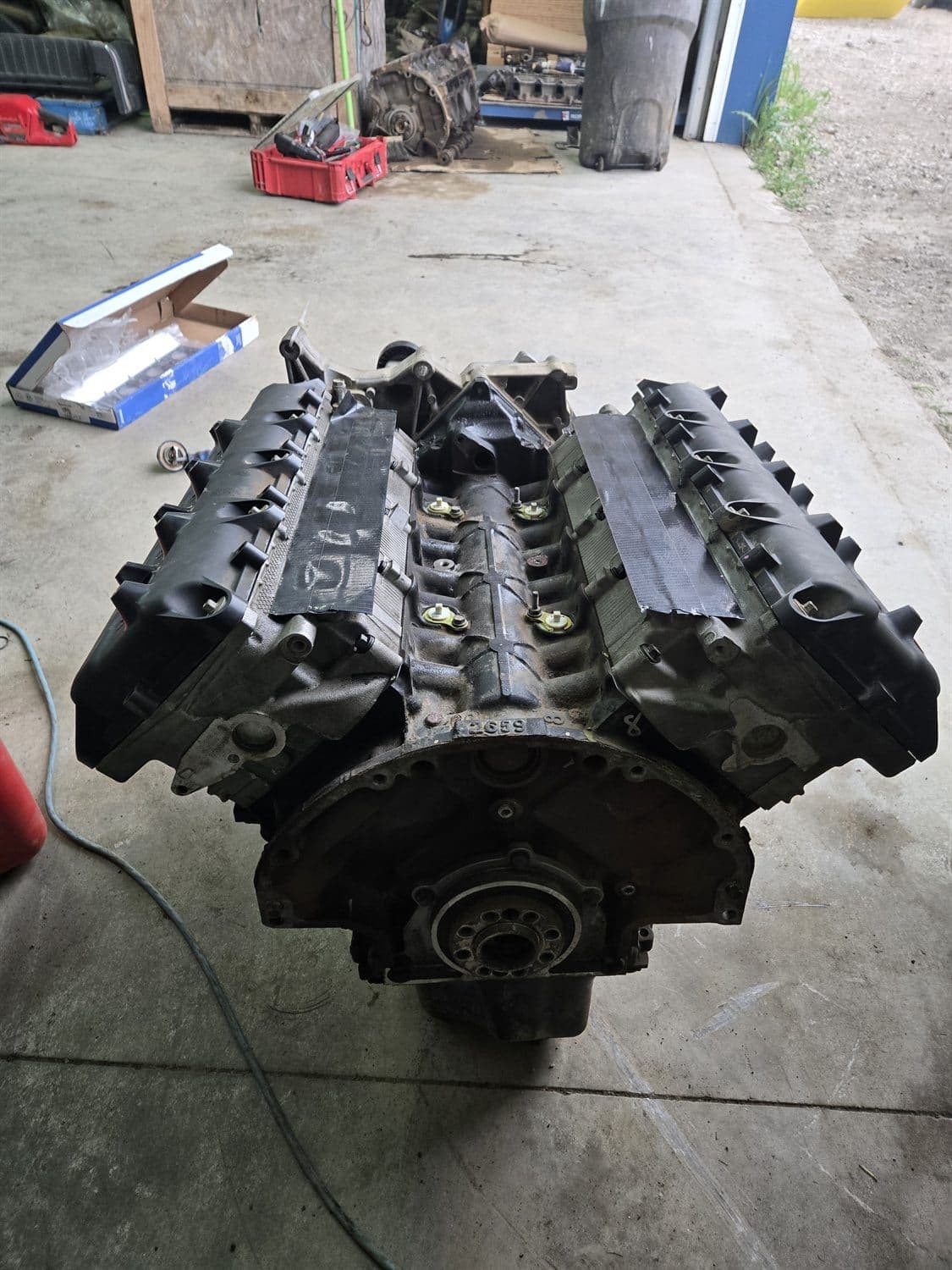
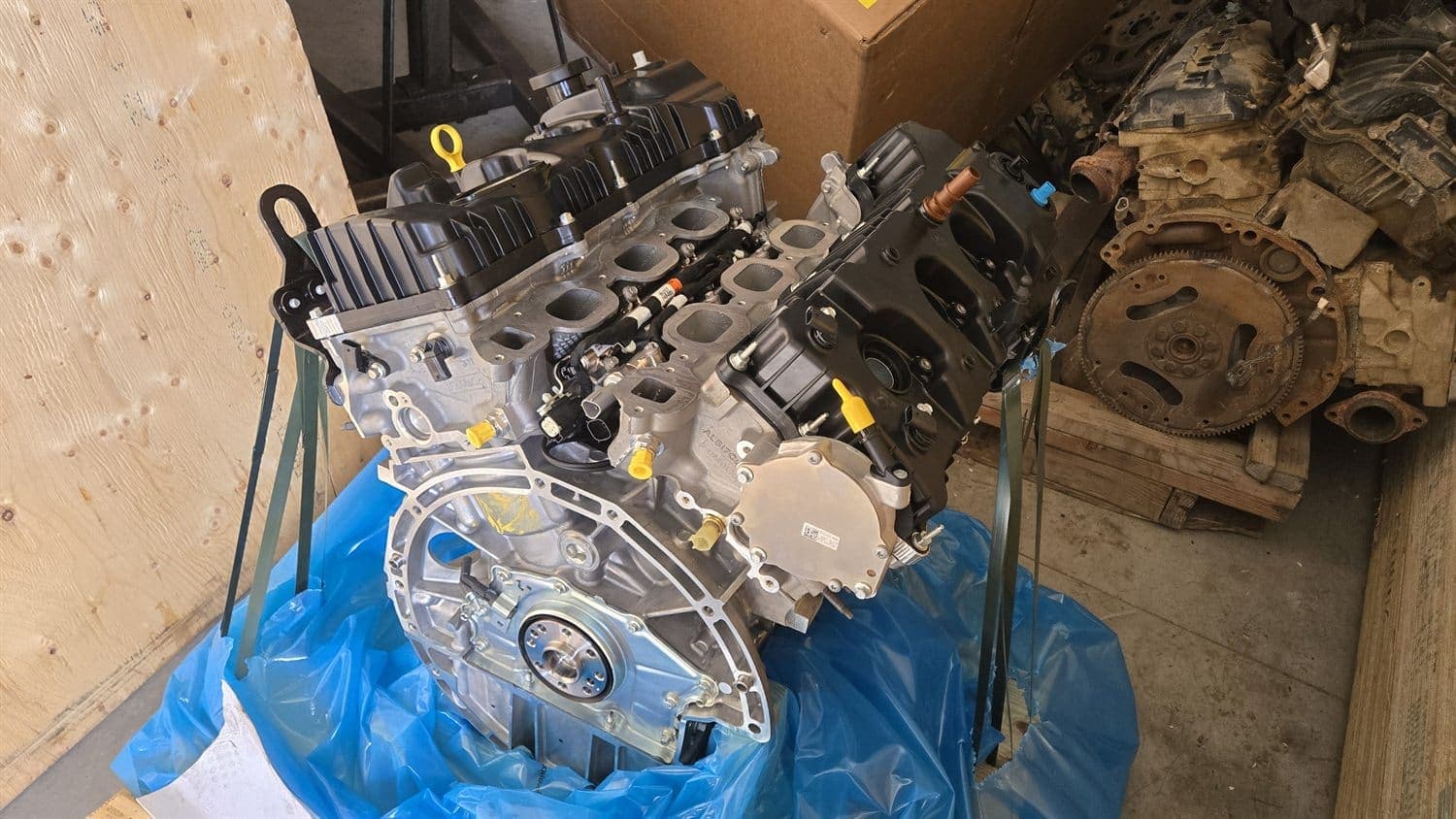
Photos from the job
Our own bays, our own bench — no stock photography.
Background
What to know about the 5.7L HEMI V8
General background on this engine family — not findings from the job above.
How MDS cylinder deactivation works on the 5.7 HEMI
The 5.7 HEMI is a cam-in-block pushrod V8 with two valves per cylinder, which means sixteen valves and sixteen lifters, and on automatic-transmission trucks MDS rides on top of that simple layout rather than replacing it. Eight of those sixteen lifters, the intake and exhaust pair on each of cylinders 1, 4, 6 and 7, are two-stage units: an outer body that follows the camshaft lobe, an inner body that pushes the pushrod, and a locking mechanism that holds the two together. Oil pressure is the switch. Four solenoids sit in the engine valley, one for each deactivated cylinder, and each one feeds the pair of lifter bores on its cylinder from a dedicated gallery. When the lock releases, the inner body floats, the lobe's motion is absorbed inside the lifter, and the pushrod never moves. Both valves on that cylinder stay shut, fuel delivery to it is cut, and the trapped air acts as a spring so the piston gives back most of what it takes. The whole switch happens in a fraction of a second, and only when the engine is up to temperature, the load is light and road speed is steady.
What makes an MDS lifter different from a plain HEMI lifter
A two-stage lifter has to do everything a plain one does and fit the same bore. The locking mechanism, the bore it works in, its return spring and the oil passage that drives it all share space with the roller and its bearing, so clearances are tighter and passages are smaller. Small passages are the first thing to suffer when oil is sheared, fuel-diluted or left in too long, and the whole deactivation circuit is pressure-operated, which makes it only as good as the oil feeding it. The solenoids that switch it sit in the valley under the intake manifold behind fine screens; varnish on a screen makes a solenoid lazy or late, and that shows up as a rough transition long before it shows up as anything mechanical. One thing worth being honest about: wiped camshaft lobes also turn up on cylinders that never deactivate, and on 5.7s built with no MDS hardware at all. That points at the lifter bearings themselves as much as at deactivation, which is why removing MDS is a durability choice rather than a guarantee. Our 5.7 HEMI tick guide works through the full argument.
What you notice when MDS starts behaving differently on a Ram 1500
MDS is designed to be invisible, so most of what you notice is the system working normally. The cluster shows ECO or Fuel Saver when four cylinders are off, the exhaust note deepens slightly, and some trucks develop a faint drone at steady highway throttle. Transitions are meant to be close to imperceptible, and a faint change in feel as the mode switches is not unusual, nor is the indicator flickering in and out on rolling terrain. What is worth your attention is change. An indicator that used to appear on every highway run and now never does, a transition that has turned into a lurch, a hunt at light steady throttle, or a brief stumble as the cylinders re-fire all point at the deactivation circuit, the oil feeding it, or the engine management deciding conditions no longer qualify. None of those transition symptoms is an emergency by itself. A tick that stays after full warm-up, or a misfire on one cylinder, is a different conversation and should not wait. A scan tool can watch commanded MDS state against what the engine actually does, which is the quickest way to tell a control-side problem from a mechanical one.
MDS delete or keep the factory lifters: deciding while the engine is open
Cylinder deactivation is not a bolt-on accessory you can take off later. It is built into the camshaft, the two-stage lifters and their retention, the oil circuit in the valley, and the PCM calibration, and change one and the rest has to agree. That is why the decision really only exists at one moment, while the engine is already apart. Converting away from deactivation touches the camshaft, every lifter, the guides and the engine management at once, which is nearly free during a rebuild and a second teardown once the engine is back together. The failures come from half-measures. A tuner that switches deactivation off in software leaves the original two-stage lifters in the engine. Going the other way, changing the hardware and leaving the calibration alone, leaves the computer commanding a circuit that is no longer there. The oil feed that used to drive the solenoids has to be sealed, or the gallery bleeds pressure that belongs somewhere else. A different camshaft also moves valvetrain geometry, so the parts have to be specified as a matched set rather than mixed from whatever fits the bore. What you give up is the small fuel saving at steady cruise.
What Edmonton winters, gravel dust and road salt do to a 5.7 HEMI
Edmonton works the 5.7 HEMI from both ends of the calendar. In winter, oil is thick at -30, and the deactivation circuit runs through the smallest passages and finest screens in the engine, so it is slow to move anything until the oil thins. That is part of why it will not engage until the engine is up to temperature, and a truck doing six-kilometre trips in January may spend the season in eight-cylinder mode while those trips leave fuel and moisture in the oil. Remote starting compounds it, because idle hours age oil without showing on the odometer. Summer sends gravel dust past a tired air filter into the oil, and an oil-switched lifter is the valvetrain part least tolerant of dirt. Road salt is the other half, though not in the way owners expect. It does not so much seize a 5.7's exhaust manifold bolts as decide how much of a broken one is left to extract: what snaps them is years of heat cycling between an iron manifold and an aluminum head that grow at different rates. Either way, fastener condition is worth raising before any job that opens the top end.
If you run one of these
- If your ECO light used to appear on every highway run and now never does, have the oil and solenoids checked.
- Count idle hours, not just kilometres — a remote-started truck ages its oil faster than the odometer shows.
- A tick that stays after the engine is fully warm is not an MDS quirk — have it looked at within days.
- If the engine is coming apart anyway, that is the cheapest moment to decide whether cylinder deactivation stays or goes.
- Hardware and calibration have to agree — changing one without the other leaves the computer and the engine out of step.
- Removing cylinder deactivation changes what the engine was certified with — confirm emissions and any remaining powertrain coverage before ordering parts.
The background on this failure
The 5.7 HEMI Tick: Lifter and Camshaft Failure in Ram, Dodge and Jeep V8s
Read the full guide — symptoms, causes and what it costs →More jobs from our bays
See every job →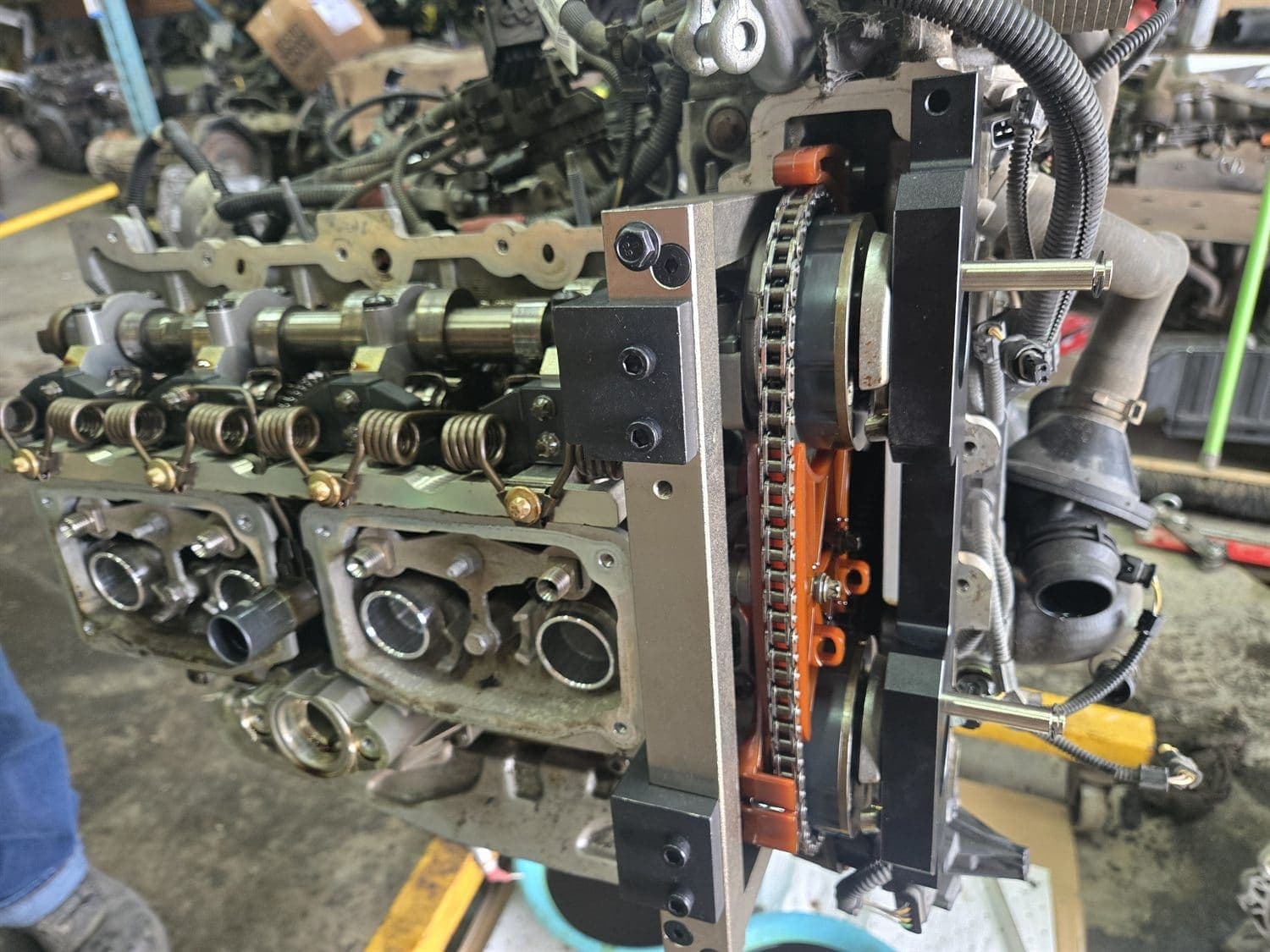
Got a job like this one?
Engine or transmission trouble — call (780) 482-2424 for a straight answer, or send us the details.