A real job from our Edmonton shop
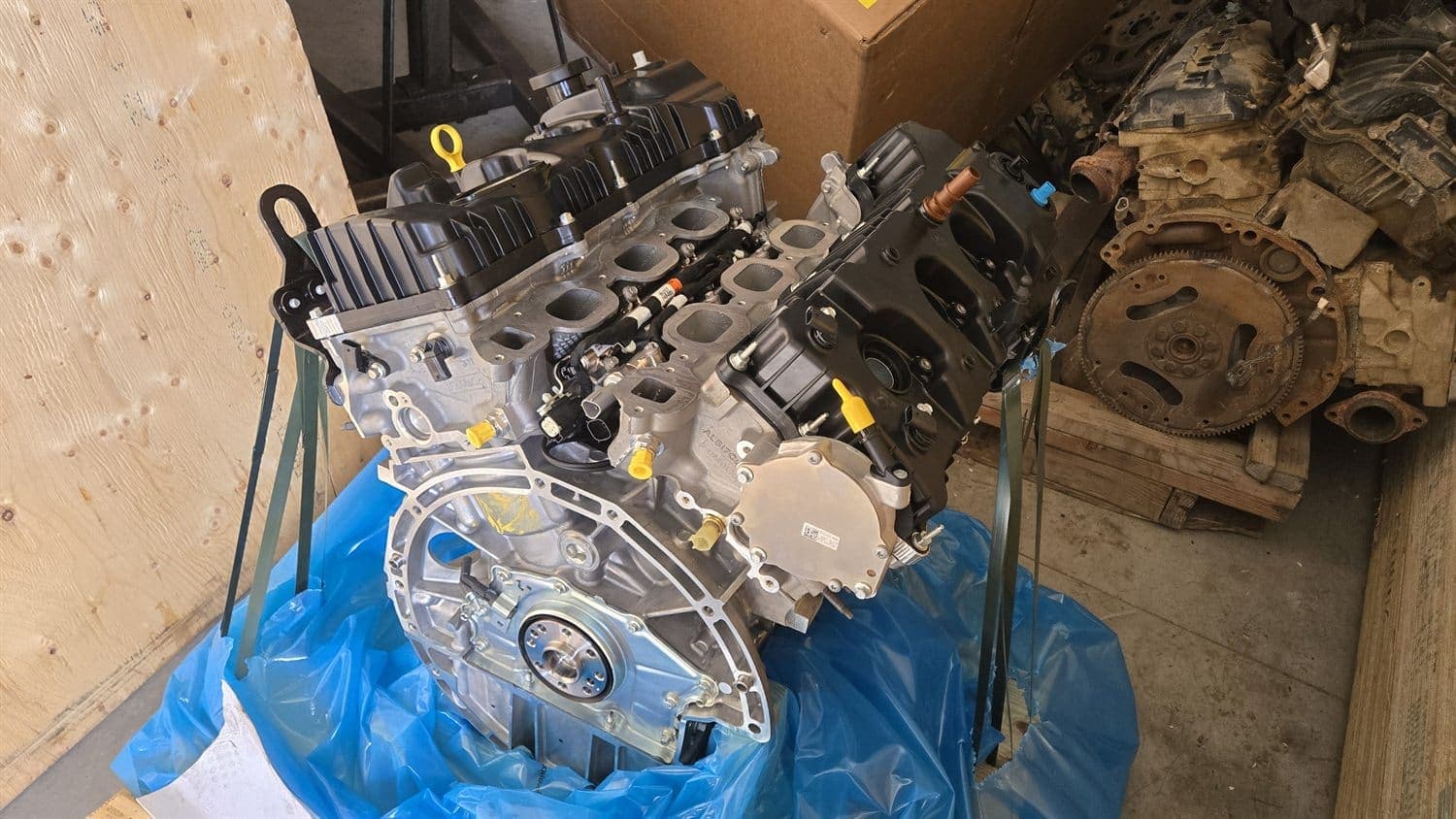
New OEM 3.5 EcoBoost engine — 2018 Ford Transit 350
2018 Ford Transit 350 · 3.5L EcoBoost V6
What came in
A 2018 Transit 350 that earns its living needed an engine — and a van like that has to stay on the road.
What we found
With the numbers on the table, the right call here wasn't a genuine OEM engine or a rebuild — it was a brand-new one, with factory-new internals and no unknowns.
What we did
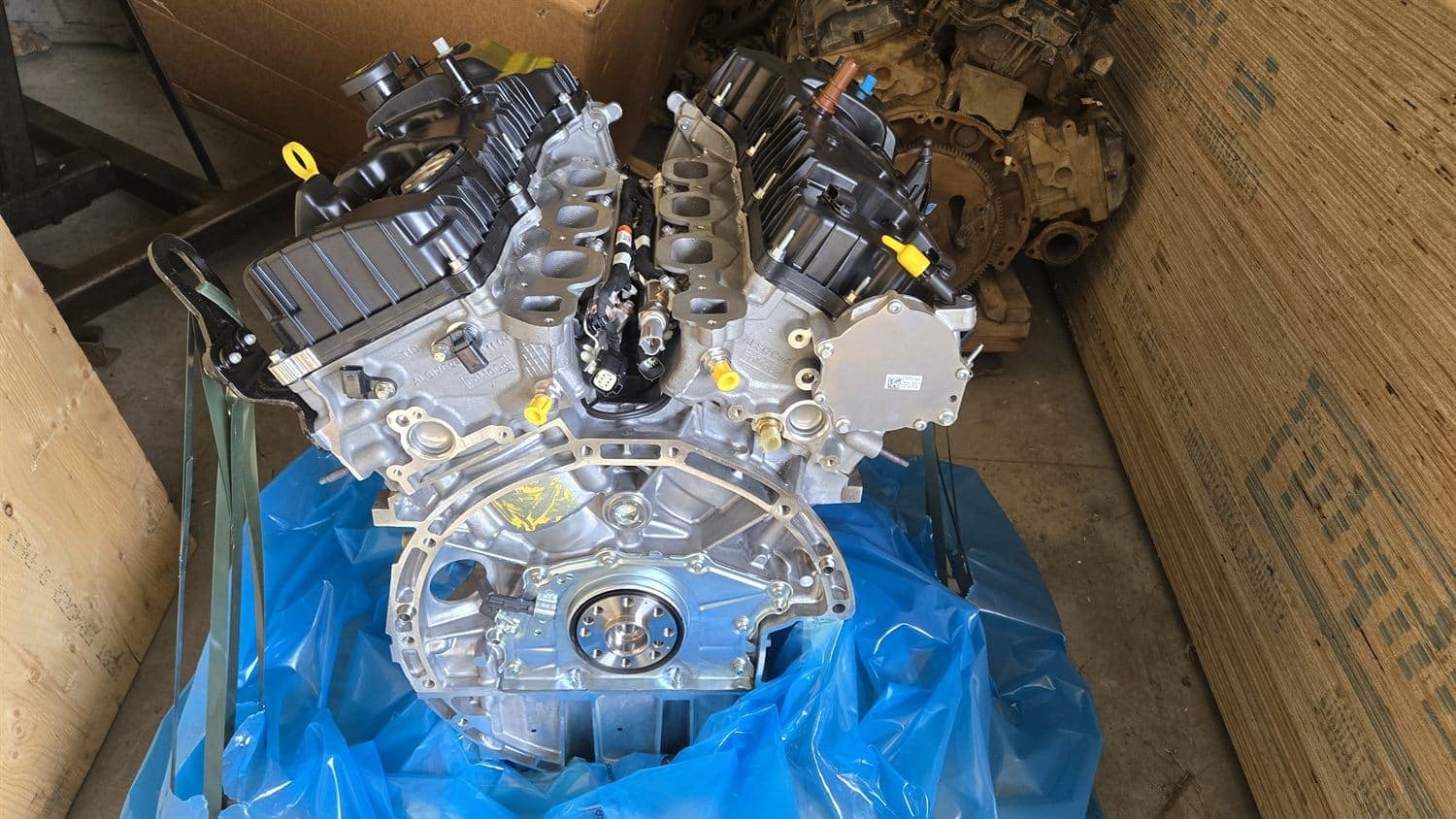
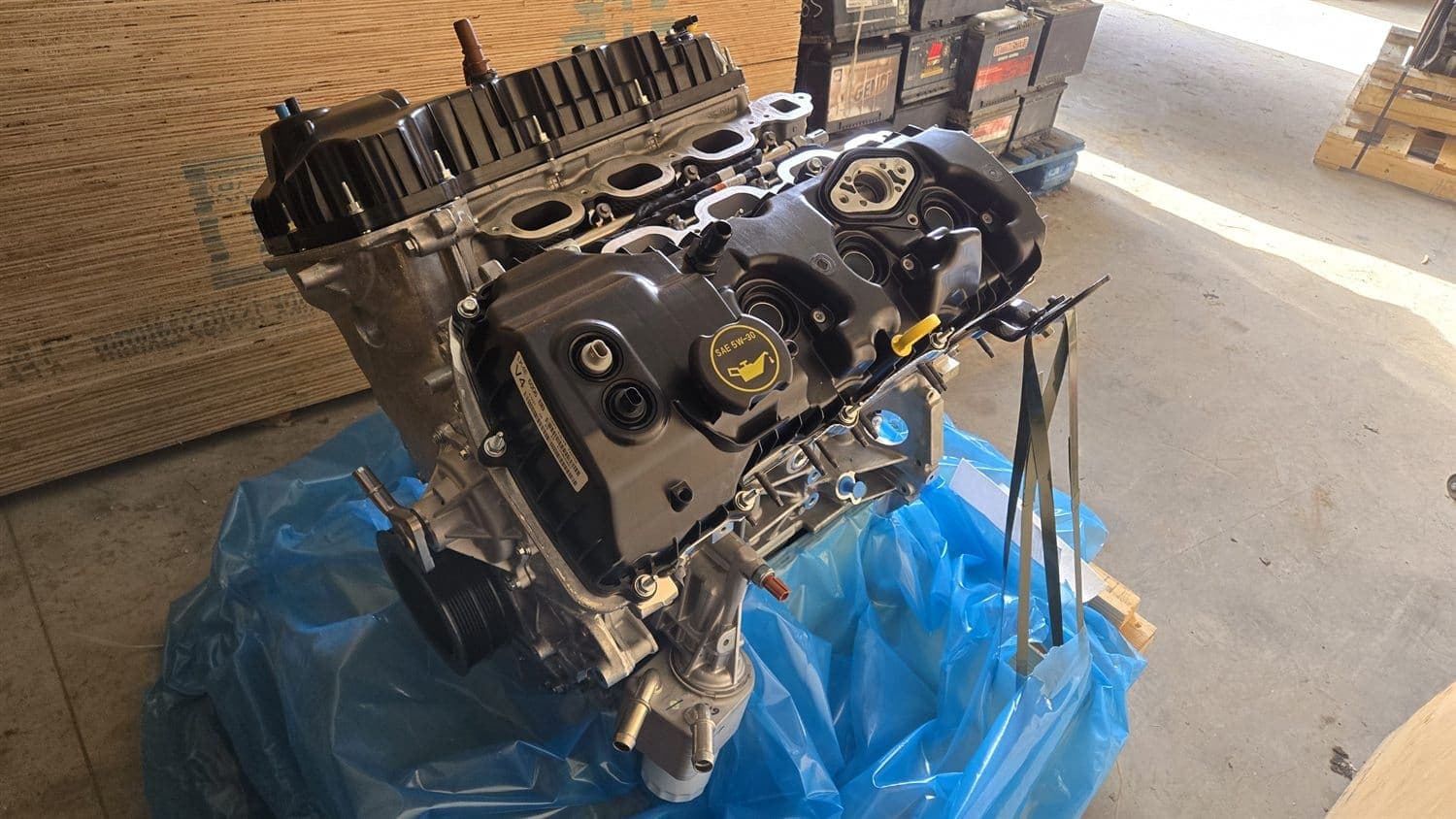
Sourced a new OEM 3.5L EcoBoost V6 directly from Ford and installed it, handling everything from sourcing to the road test.
The outcome
Factory-fresh, factory-backed power for a work van. Brand-new is the fourth option we always put on the table alongside genuine OEM, an in-house rebuild, and remanufactured — used when the numbers make sense.
Photos from the job
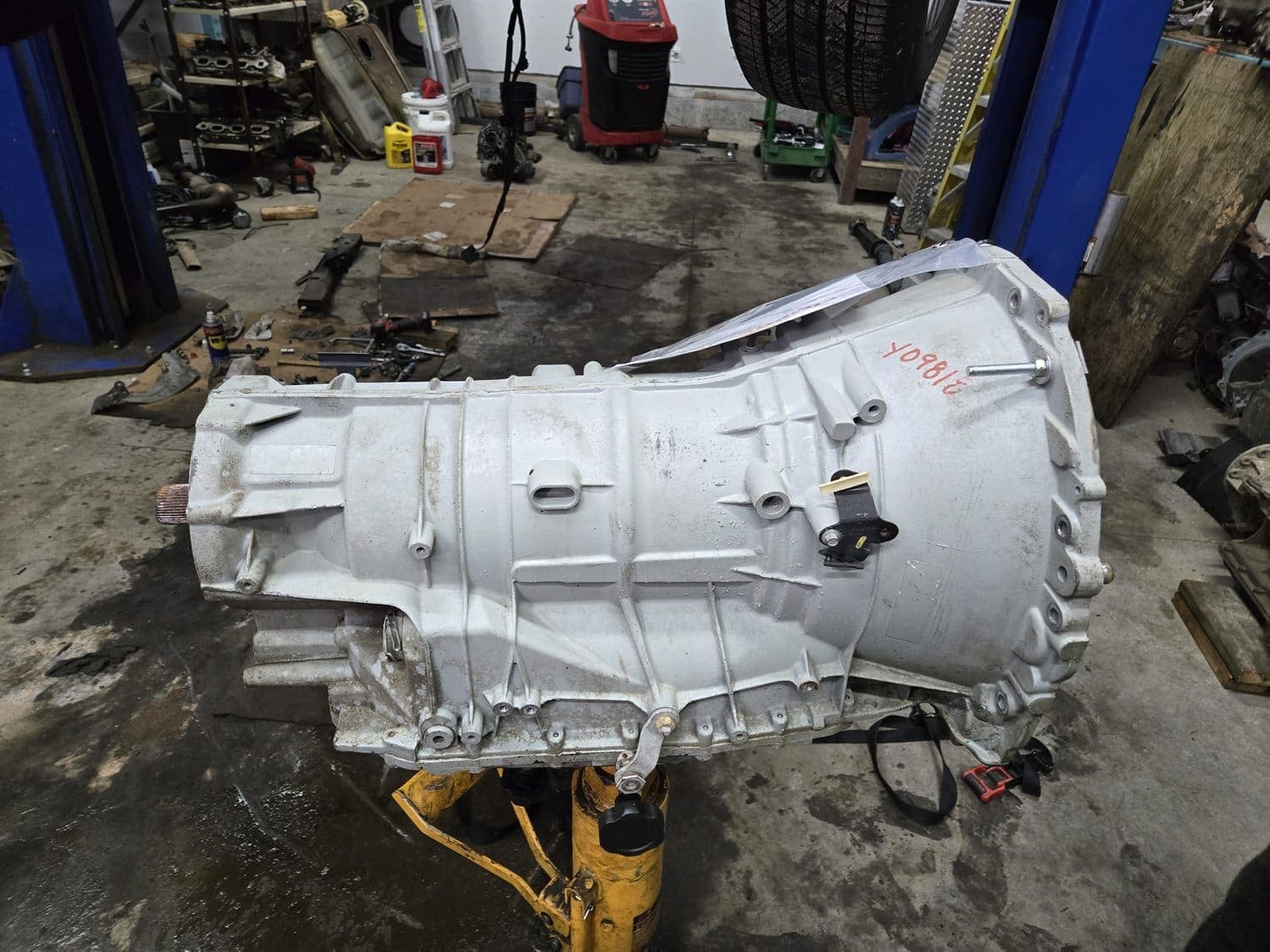
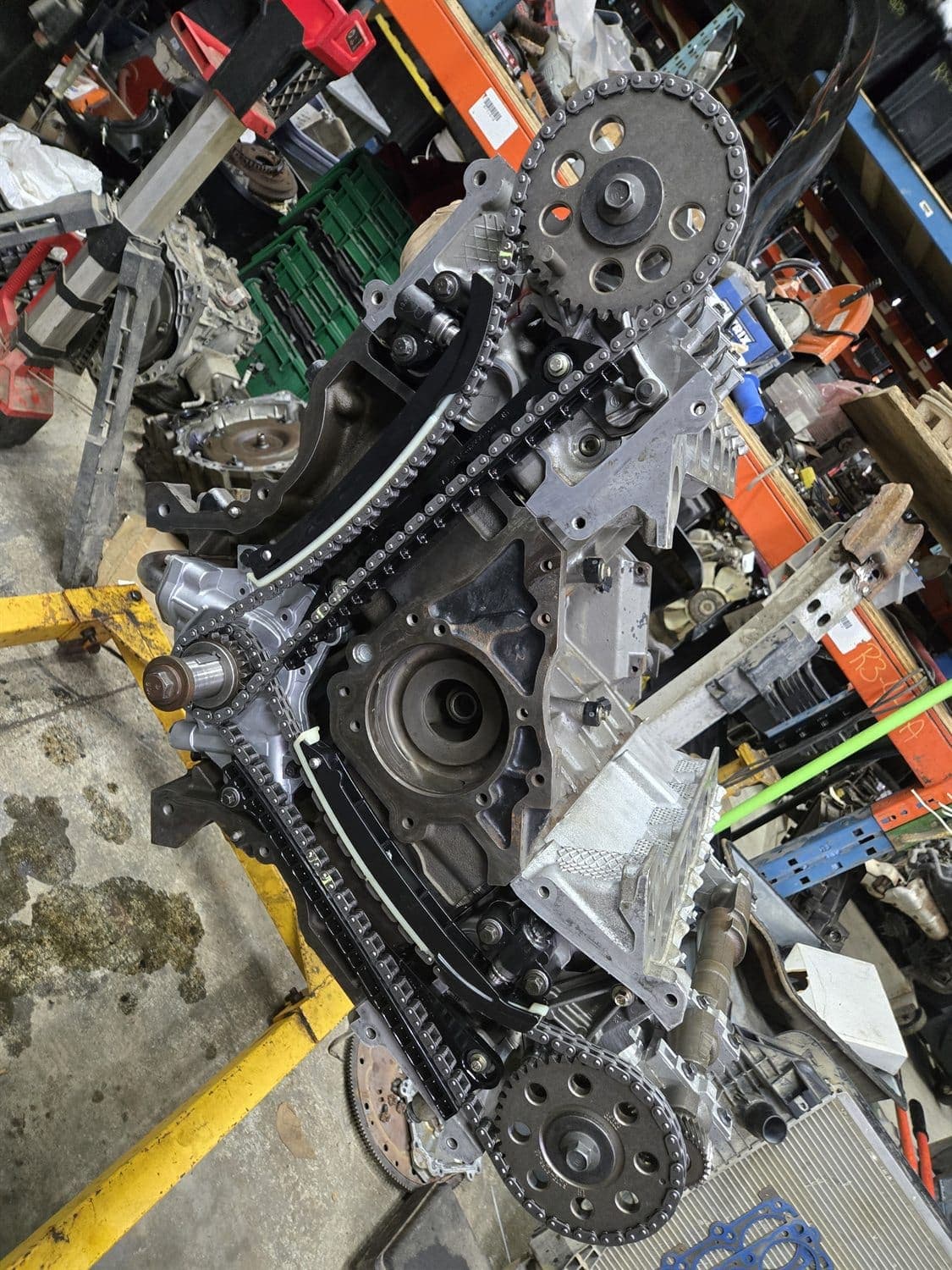
Our own bays, our own bench — no stock photography.
Background
What to know about the 3.5L EcoBoost V6
General background on this engine family — not findings from the job above.
What a loaded work-van duty cycle does to a 3.5 EcoBoost
The 3.5 EcoBoost is a twin-turbo V6, and it makes its torque with boost. That matters in a cargo van, because vans in this work typically carry shelving, tools and stock, and a loaded van asks for boost on every pull away from a stop: often loaded, often near the top of its rating, right through the working day. Time under boost is time at high cylinder pressure and high exhaust temperature, and the oil is what pays for it. It oxidizes, shears and thins faster under sustained load than it ever does on a highway cruise, and it carries that heat where nothing else is cooling things at all, at the turbocharger bearings. Then add the hours a work van idles, at a job site, at a loading dock, warming up on a winter morning. Those are real running hours that the distance reading never shows, which is why a van's kilometres read lower than its actual service. Engine hours are recorded by the powertrain module and a shop can read them with a scan tool, and many of these vans will also display them for you.
Why the first-generation 3.5 EcoBoost cokes up its intake valves
The first-generation 3.5 EcoBoost, the architecture in the Transit's EcoBoost option, sprays fuel straight into the cylinder rather than into the intake port. That removes what used to keep intake valves clean: a constant wash of gasoline across the back of the valve. Instead, oil vapour from the crankcase ventilation system settles on hot valve stems and bakes into hard carbon. Every direct-injected engine does this; van duty makes it worse, because short trips and long idles never get hot enough to shed anything. You notice it slowly: a rougher idle on a cold morning, a hesitation off the line, fuel economy sliding each year, eventually a misfire code. Those symptoms have more than one cause on the 3.5 EcoBoost, so carbon is worth ruling in or out alongside cam timing rather than instead of it. It will not show up on a chain inspection either, which is how it gets missed. The fix is mechanical cleaning with the intake off, not a bottle in the tank. The second-generation engine, in the 2017-onward F-150 and the 2018-onward Expedition and Navigator, added port injectors alongside the direct ones, which puts fuel back across the valves; the van application stayed direct-injection only.
Turbochargers, charge pipes and boost leaks on a 3.5 EcoBoost
Two turbochargers feed the 3.5 EcoBoost, and everything between them and the intake manifold is a pressure system that has to stay sealed. Across the fleet, what gives out there is rarely dramatic: a charge pipe coupler that works loose or splits, a cracked intercooler end tank, a wastegate actuator that sticks, a corroded sensor connector. They all show up the same way. Your van pulls fine empty and goes flat when it is loaded or climbing a grade, usually with a boost-related code stored. That is worth knowing, because a leak on the boost side feels exactly like a tired engine from the driver's seat and is far cheaper to find than to assume. Air-to-air intercoolers also collect condensation in cold, damp weather, and at full throttle that water can be drawn in as a slug, so the van stumbles or briefly misfires and then clears. That comes from the layout rather than a broken part, but Ford has addressed the condition on these engines with calibration and charge-air-cooler changes, so a van that keeps doing it is worth asking about rather than living with.
What Edmonton winters and gravel roads do to a 3.5 EcoBoost van
Winter works on these vans in specific ways. The turbochargers spin on an oil film, and that film is thinnest in the first seconds after a cold start, which is the argument for the correct cold-weather grade rather than whatever was in it last summer. A work van is also the vehicle least likely to be plugged in, since it parks in driveways, at job sites and in yards with no posts, so the defence that travels with it is the oil grade, chosen for the coldest start it will really get. The rubber and plastic in the charge air plumbing goes hard and shrinks in deep cold, which is why couplers that held all summer start leaking in January. Multi-stop routes are the other half: dozens of starts in a shift and never one full warm cycle, so the oil never gets hot enough to drive off what collects in it. Salt then reaches the parts nobody inspects: sensor connectors, charge piping, cooler fins, exhaust hardware. Gravel sandblasts the front of the cooling stack, where the air conditioning condenser and charge air cooler sit ahead of the radiator and lose capacity too gradually for anyone to notice.
Repair, rebuild, remanufactured or new: choosing on a working van
When a 3.5 EcoBoost needs serious engine work, the decision is not purely mechanical. Downtime carries a price per day, and a van on a hoist is revenue not earned, which changes arithmetic that would look different on a personal truck. Rule out a targeted repair first, because a boost leak, a solenoid or a cleaning job costs a fraction of engine work and is the cheapest answer when it is the right one. Past that, the four paths Eskimo Auto Repair puts on the table are an in-house rebuild, a remanufactured long block, a genuine OEM engine sourced through Eskimo Auto & Truck Parts, the separate recycling and parts company that shares the shop's address, or a brand-new engine from the manufacturer. What moves you along that list is how much else on the engine is tired, how long you intend to keep the van, and what the wait is worth to you. Warranty is not uniform across those paths, and coverage on a remanufactured engine differs between gas, diesel and commercial use, so the terms are worth confirming before you price an option rather than after.
If you run one of these
- Engine hours tell you more than kilometres on a work van, and a shop can read them with a scan tool.
- Rough idle and sliding fuel economy can be intake carbon, cam timing, or both, so scan before you choose.
- If your van pulls fine empty but goes flat loaded, check the boost plumbing before condemning the engine.
- Pick the oil grade for the coldest start the van will actually get, not for a plugged-in one.
- Rinse salt and gravel dust out of the condenser and charge air cooler every spring.
- Price the downtime, not just the parts, because on a work van how fast it returns often decides the option.
The background on this failure
Ford 3.5L EcoBoost Timing Chain and Cam Phaser Problems: Symptoms, Affected Years, and Repair Costs in Canada
Read the full guide — symptoms, causes and what it costs →More jobs from our bays
See every job →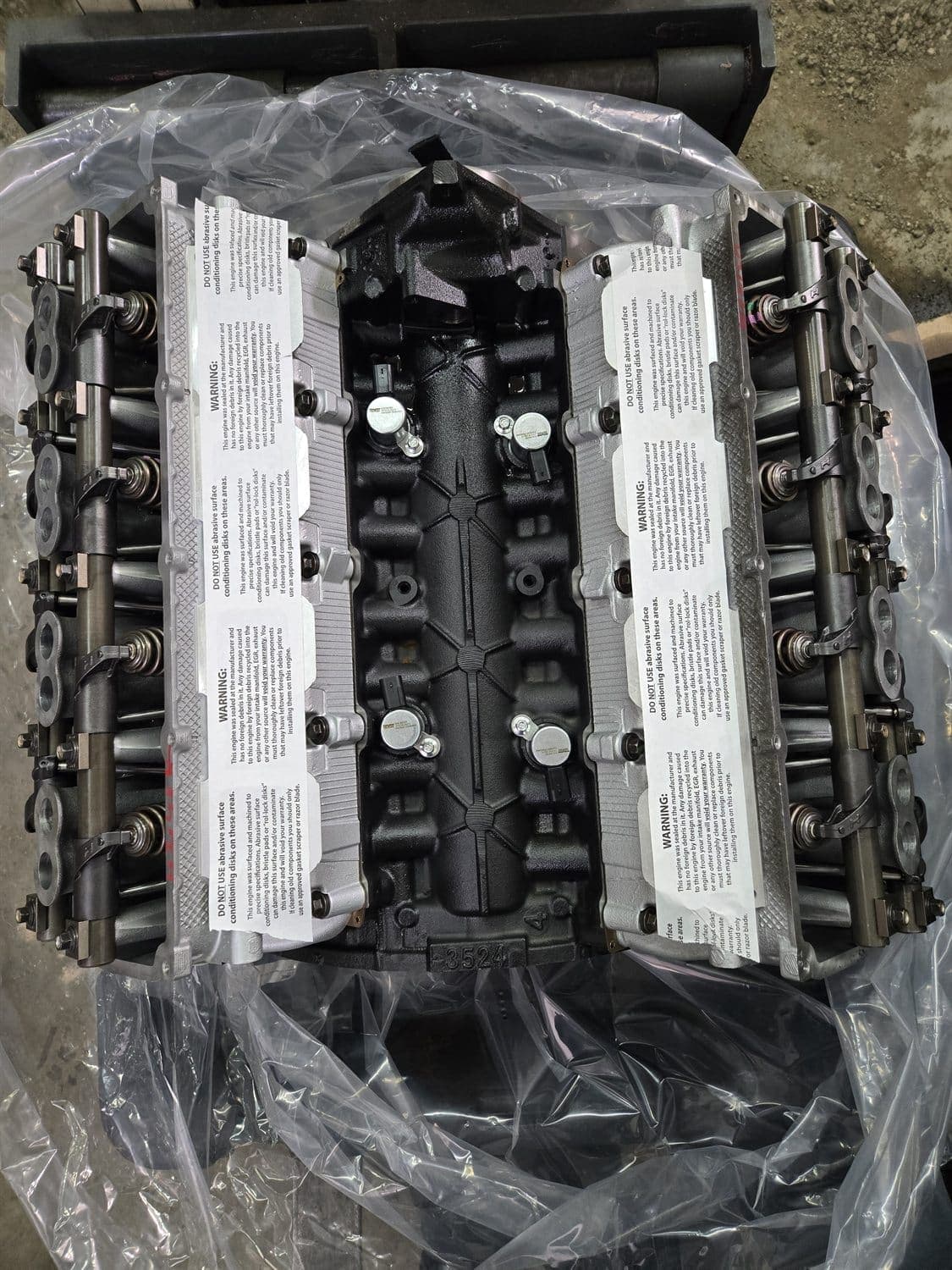
Got a job like this one?
Engine or transmission trouble — call (780) 482-2424 for a straight answer, or send us the details.