
A real job from our Edmonton shop
6.7 Power Stroke rebuild — 2018 Ford F-350
2018 Ford F-350 · 6.7L Power Stroke V8 Turbo Diesel
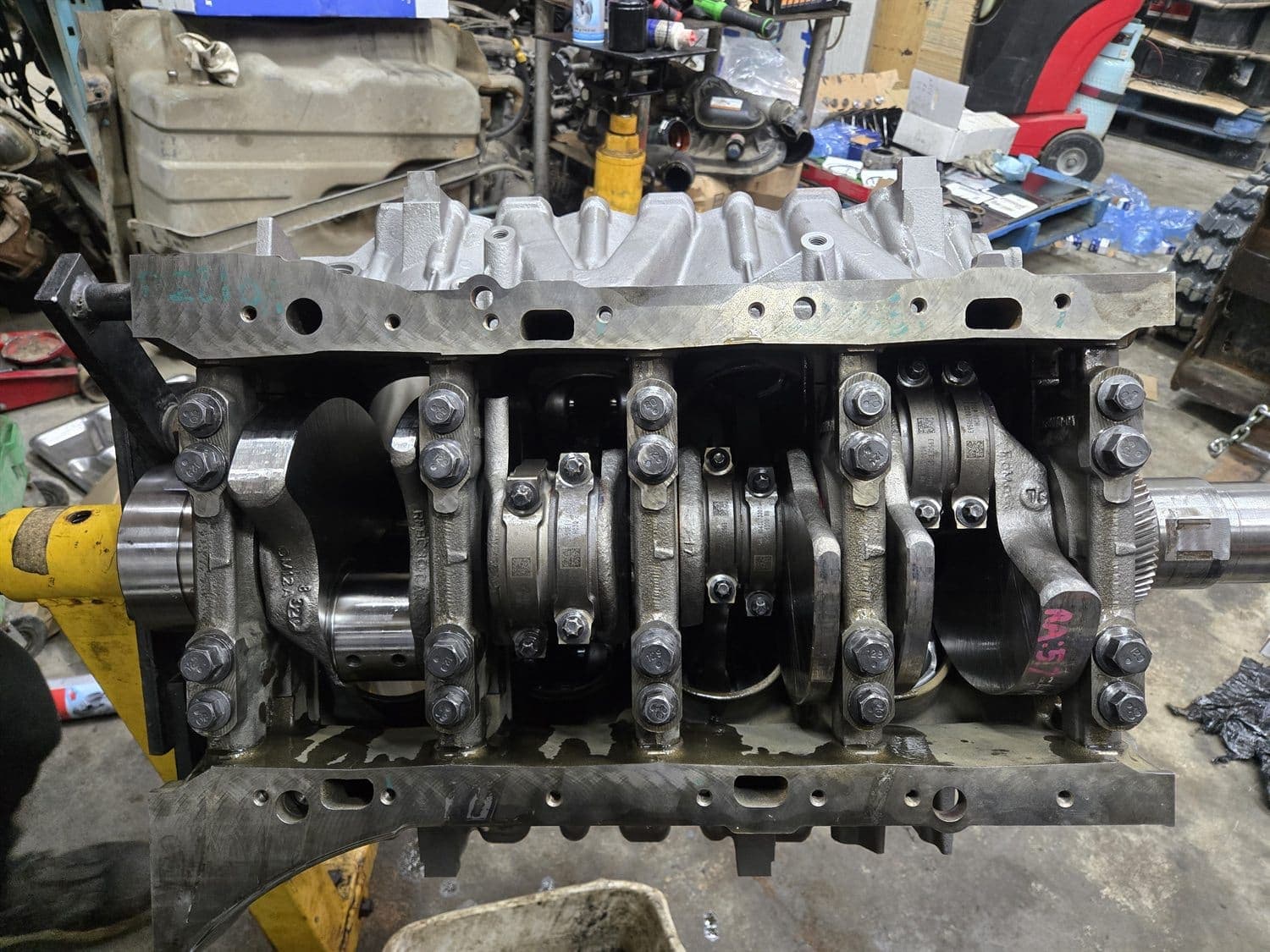
What came in
A 2018 F-350 that had lived hard — towing, plowing, big kilometres — and had earned a rebuild.
What we found
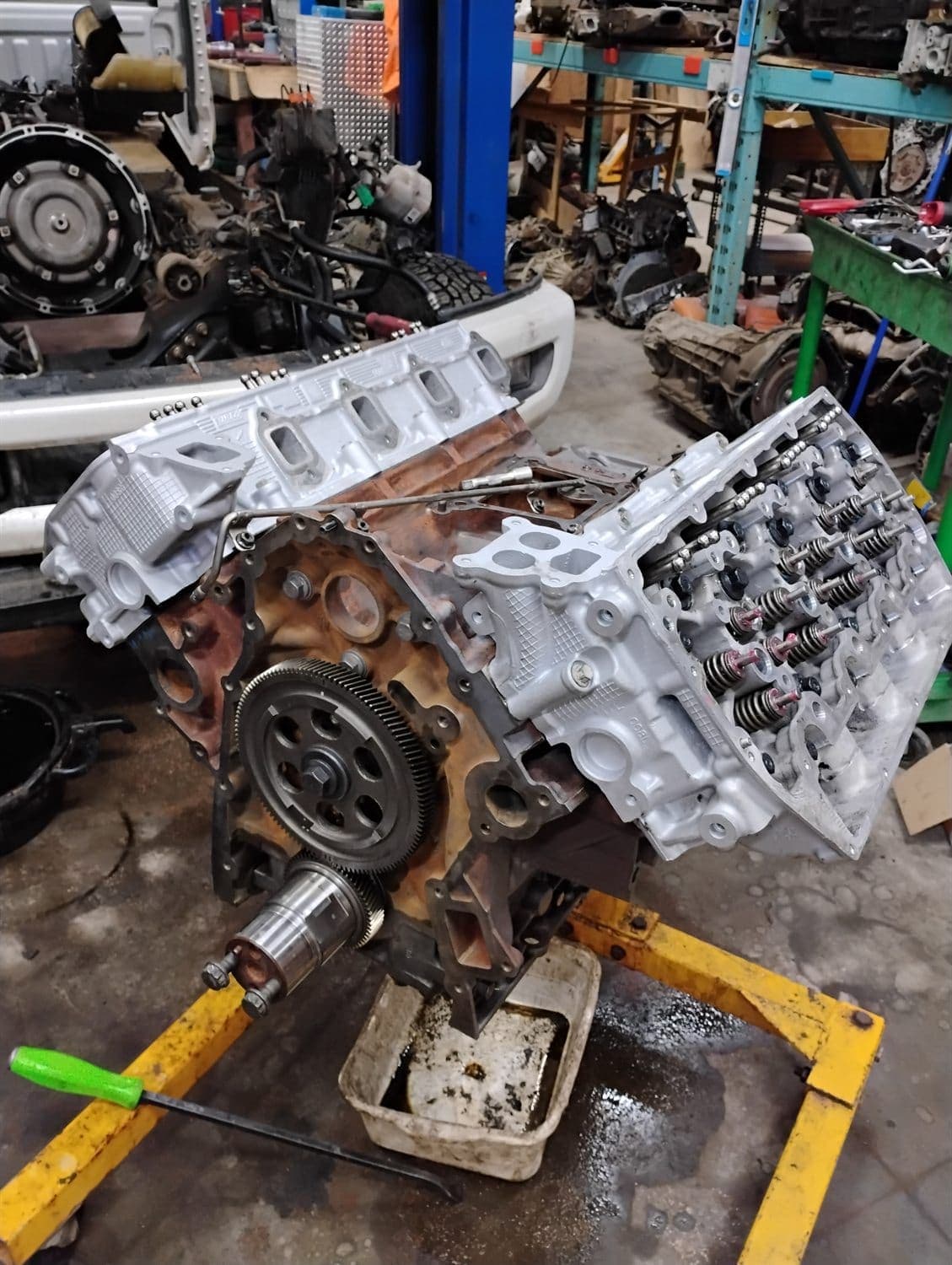
Full teardown confirmed the path: clean and measure everything, machine what needs it, and reassemble carefully rather than chase individual failures.
What we did
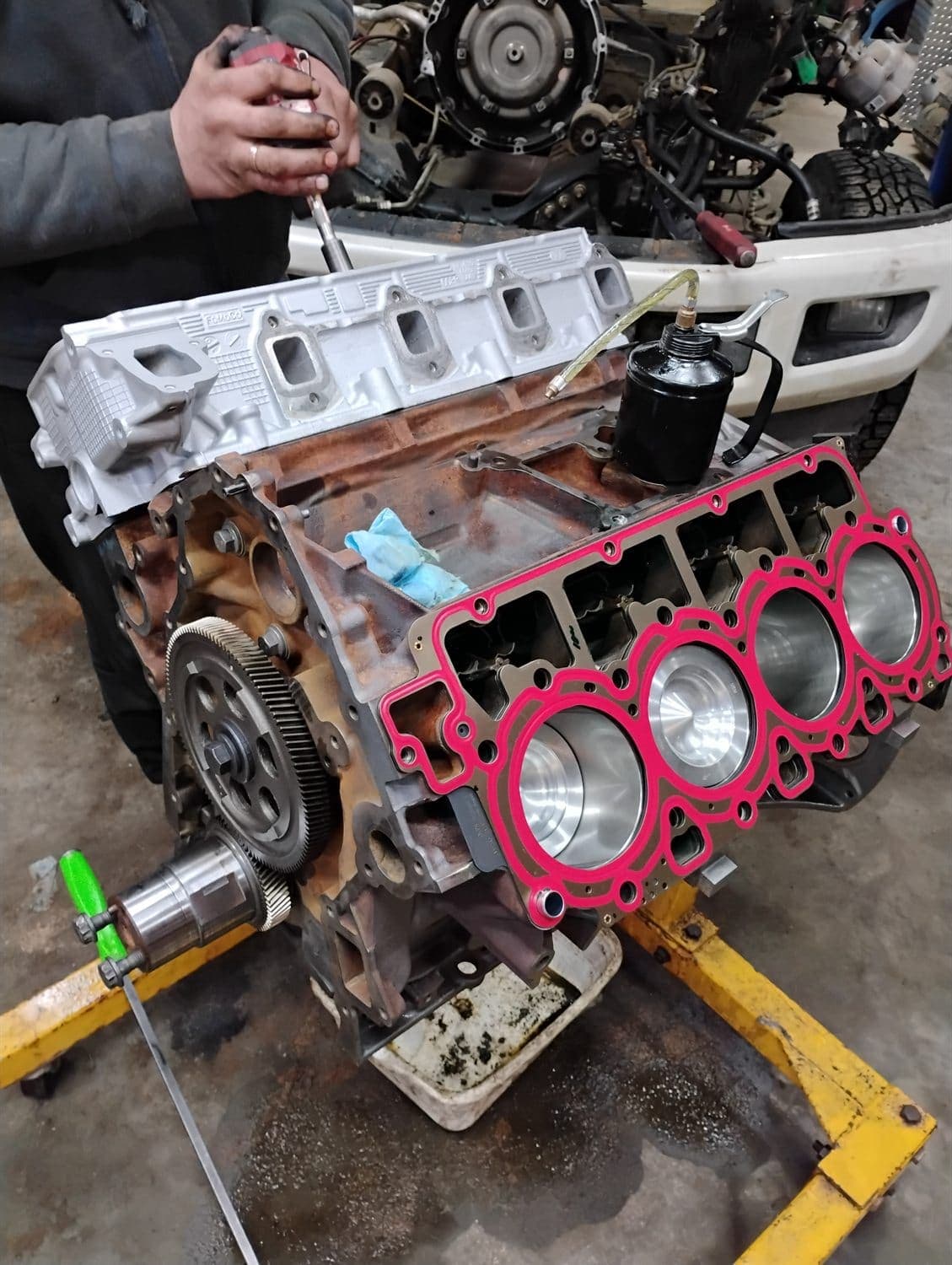
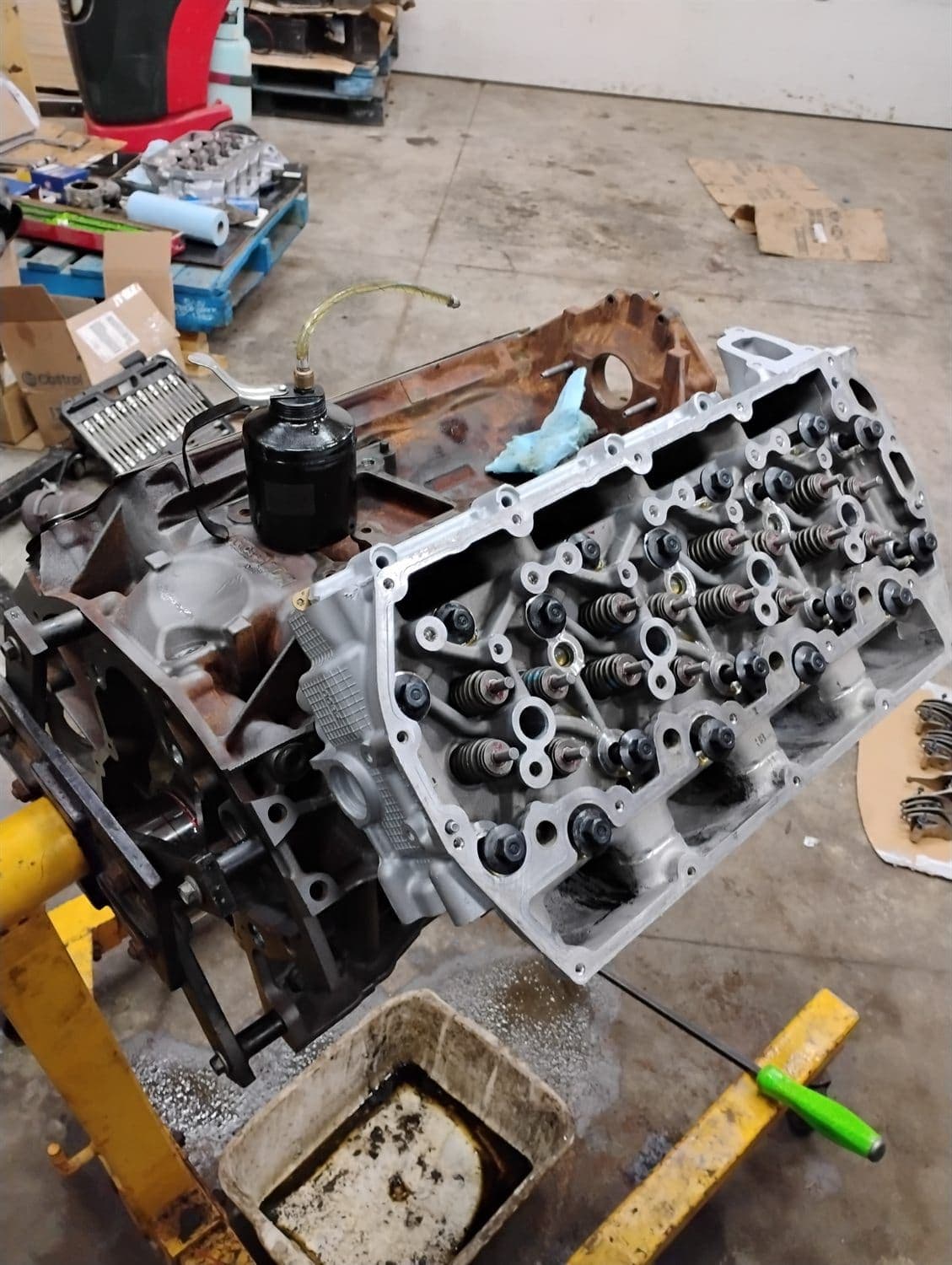
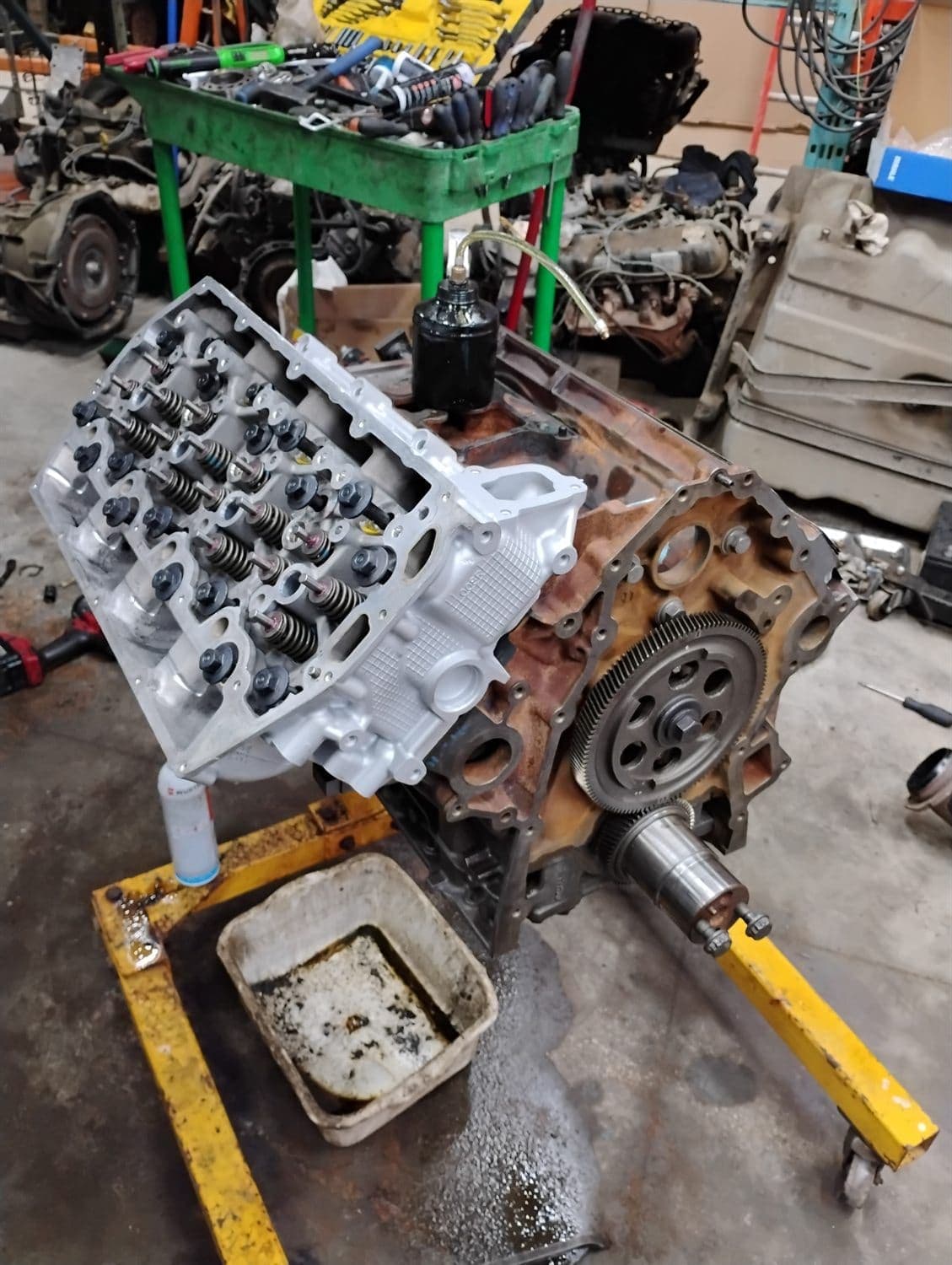
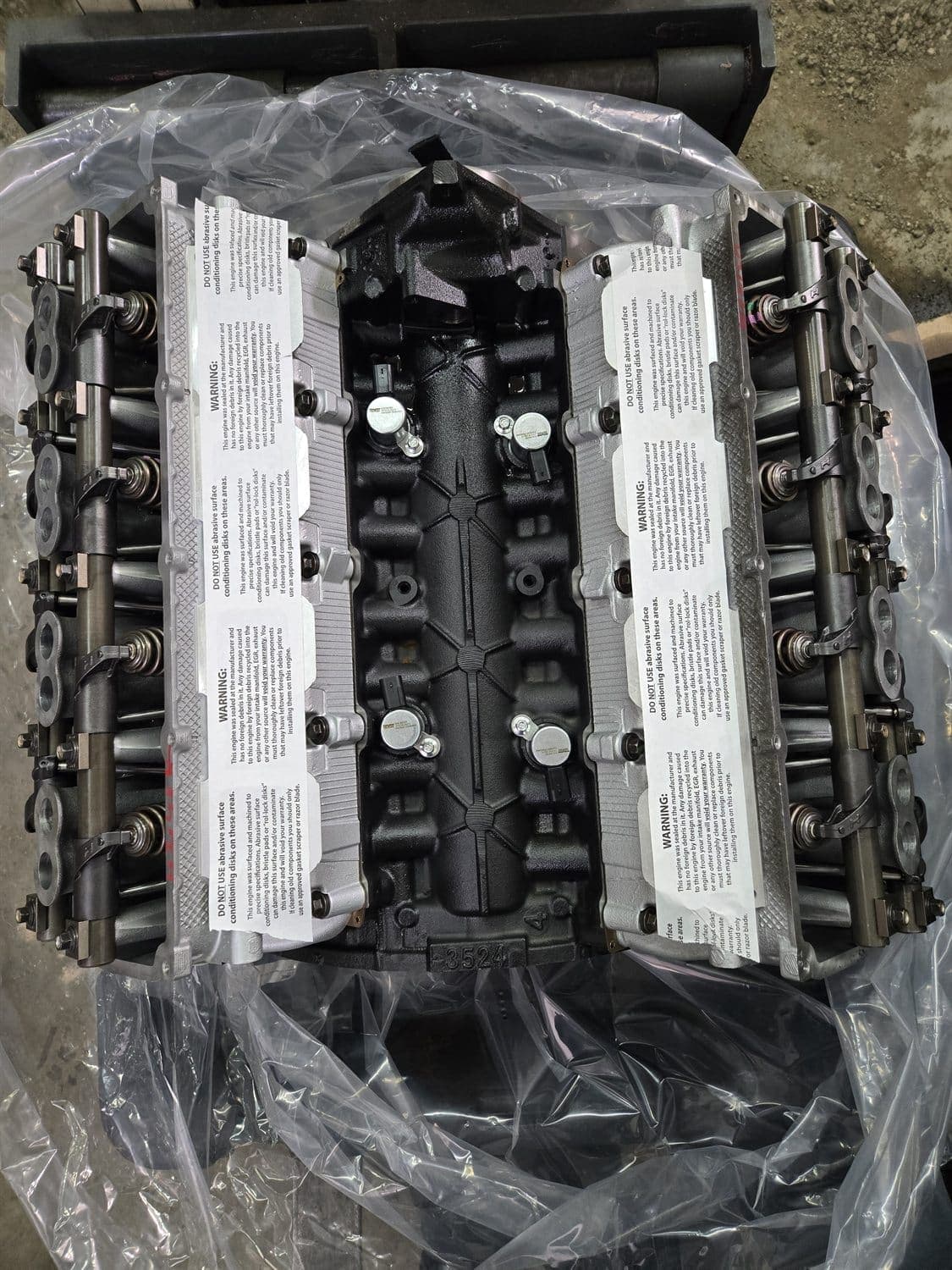
Complete teardown, machine work, new bearings and gaskets, and every fastener torqued to spec — these diesels use torque-to-yield hardware you don't reuse. The same process we run on every 6.7 that comes through.
The outcome
A second life for a hard-working truck at well under the cost of a new engine. Diesels are our comfort zone: repair, rebuild, or replacement, all three in-house.
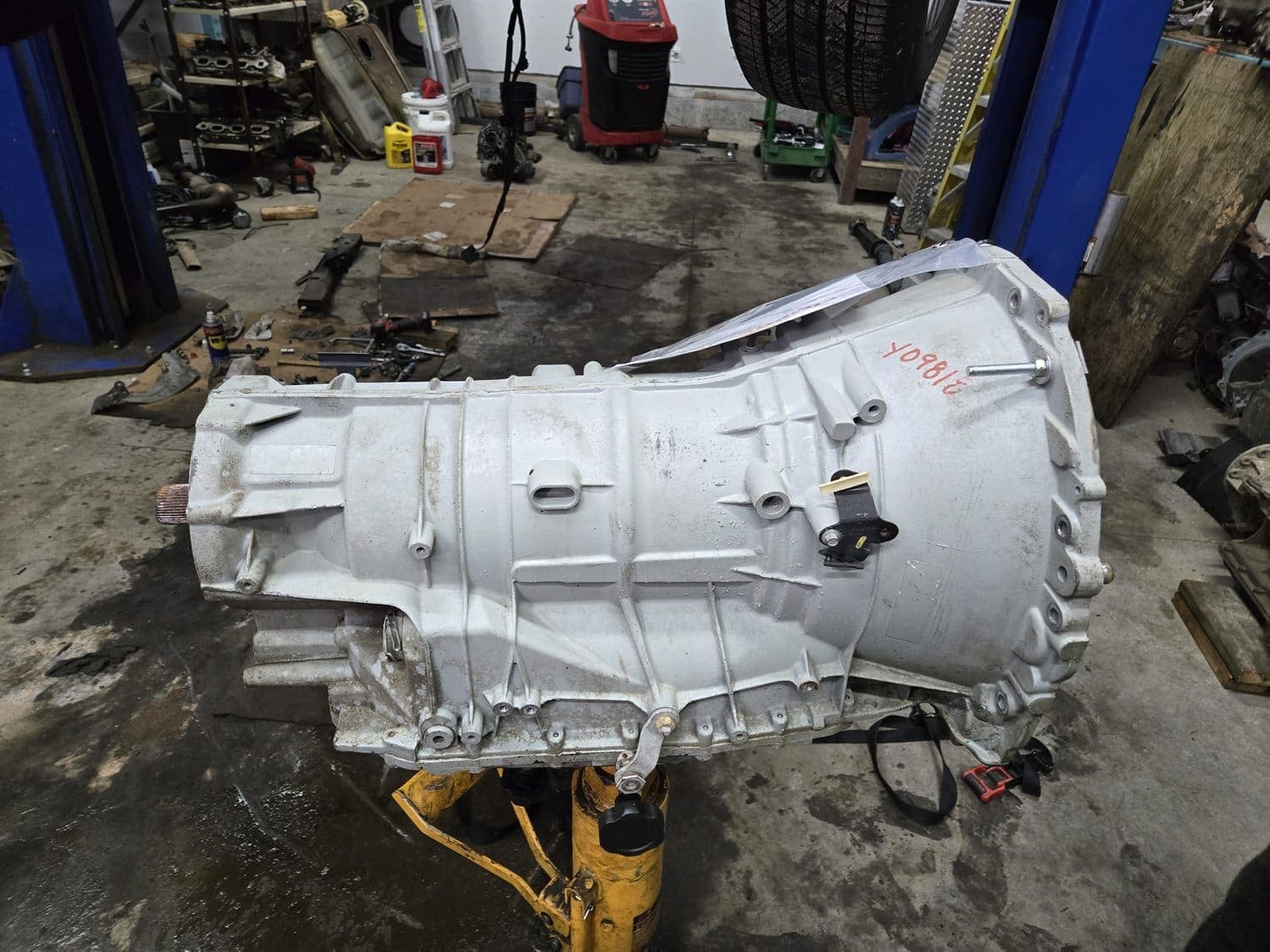
Photos from the job
Our own bays, our own bench — no stock photography.
Background
What to know about the 6.7L Power Stroke V8 Turbo Diesel
General background on this engine family — not findings from the job above.
Why a 6.7 Power Stroke ends up on an engine stand
There are two honest routes to a bare 6.7 block, and they are not in competition. The first is plain accumulated wear. These engines go into trucks that tow, plow and idle for a living, and loaded hours push heat, cylinder pressure and soot-loaded oil through the rings and bearings in a way a commuter vehicle never sees; after enough of them the bores lose their shape and the clearances open up. The second route is an upstream failure that takes a bottom end out early. Coolant that reaches the engine oil, through a head gasket breach into an oil passage, a cracked head, or a failing oil cooler, strips the film off the bearings and the cylinder walls, and it does that quietly. A cracked EGR cooler is a different problem with a different ending: it pushes coolant into the intake and exhaust stream, so coolant disappears with nothing on the floor and the tailpipe steams, and a large enough slug can hydrolock a cylinder. Head lift follows cylinder pressure well past what the engine was calibrated for, usually from a power tuner, which is why tuned trucks get head studs.
Early signs a 6.7 Power Stroke is wearing out
Wear announces itself slowly, which is why it gets explained away. Blow-by is the honest one: warm and idling, more puff and pressure at the oil fill than there used to be means the rings are not sealing what they once did. Oil consumption climbing with no leak underneath says the same thing from the other direction. Oil that climbs above the full mark and smells of diesel is the opposite problem, fuel dilution, and it matters more than most owners think, because thinned oil stops carrying load across the bearings long before anything gets noisy. Coolant that keeps dropping with no puddle is worth chasing, and these trucks run two reservoirs, a primary engine circuit and a low-temperature loop, so a 6.7 can read full at one bottle and low at the other. A knock that comes in under load, white smoke that will not clear once warm, and a hot engine that cranks longer than it used to, which on a common-rail diesel points at rail pressure bleeding down past a leaking injector, all belong in a bay rather than in next spring's plans.
Why a 6.7 high-pressure fuel pump failure is never just a pump
The high-pressure pump on a common-rail diesel is lubricated by nothing but the fuel passing through it, and on the 6.7 that job falls to a pump from the Bosch CP4 family, the design the Duramax made famous for the wrong reasons. The failure is mechanical. A roller follower turns out of alignment with its cam lobe and stops rolling, the lobe grinds into a follower that is no longer turning, and the pump starts machining itself and feeding its own filings into the fuel. Those filings travel wherever fuel travels, injectors and tank included, and they are still in there after a pump is replaced. On an engine that is already coming apart, that belongs in the rebuild quote rather than on a separate repair order, because a freshly built bottom end fed from a system that still holds grit gets to fail twice. Water is the quieter version of the same story: the separator exists because water strips the lubricity out of diesel, and one that never gets drained works against the pump every day.
What Edmonton duty does to a 6.7 Power Stroke, and how it reads at teardown
Edmonton gives these trucks a specific kind of hard life, and most of it lands on the oil. Soot has to be burned out of the particulate filter, and that takes sustained heat, so a truck doing short winter runs interrupts one regeneration after another. The extra fuel used to raise exhaust temperature washes past the rings into the sump, and fuel-thinned oil carries less load everywhere it goes. Idling puts soot into that same oil, and soot is abrasive, which is one reason a plow truck can be worn out at kilometres that would look modest on a highway truck. Hours rather than the odometer are the honest measure on anything that spends its winter parked and running. Cold starts are the hardest thing the engine does all year, because the bearings take load before oil pressure reaches them. Road salt works on the frame-mounted filter housing and the cooler lines, and gravel chaff packs the front cooling stack until charge air stops being cooled properly and intake and exhaust temperatures climb. None of that is visible from the driver's seat. It shows up as bearing and bore wear when an engine is finally measured.
Repair, rebuild, remanufactured or genuine OEM on a 6.7 Power Stroke
The line between a repair and a rebuild is the bottom end. A cracked EGR cooler, a set of injectors, a turbocharger, heads that have lifted: those are contained failures, and none of them needs an engine stand. Wear or damage in the rotating assembly is what does. From there the choices are an in-house rebuild, a remanufactured unit, or a genuine OEM engine sourced through Eskimo Auto & Truck Parts, the separate recycling and parts company that shares the address at 12940 53 Street NW. What drives the price of a 6.7 rebuild is access and measurements: the turbocharger and high-pressure fuel hardware sit in the valley, so a good share of the labour is reaching the engine at all, then whether the heads machine or have to be replaced, whether the crankshaft polishes up or needs grinding, and, where a pump has failed, how far the debris travelled. Worth knowing before authorising one: a rebuild resets the engine, not the rest of the vehicle. Turbo, injectors, coolers and emissions hardware keep their kilometres, and the torque-to-yield fasteners these diesels use are replaced rather than reused.
If you run one of these
- Check both coolant reservoirs on a 6.7; it can read full at one bottle and low at the other.
- Oil climbing above the full mark and smelling of diesel is fuel dilution, not a dipstick error.
- Metallic glitter in a drained fuel filter means stop driving and call (780) 482-2424 before the debris spreads.
- On a plow or idle-heavy truck, engine hours tell you far more about wear than the odometer does.
- Keep the receipts for coolant loss, fuel filters and regen complaints; a teardown is read against that history.
- Before authorising a rebuild, ask for measurements in writing, bore taper, out-of-round and journal wear, not a package price.
More jobs from our bays
See every job →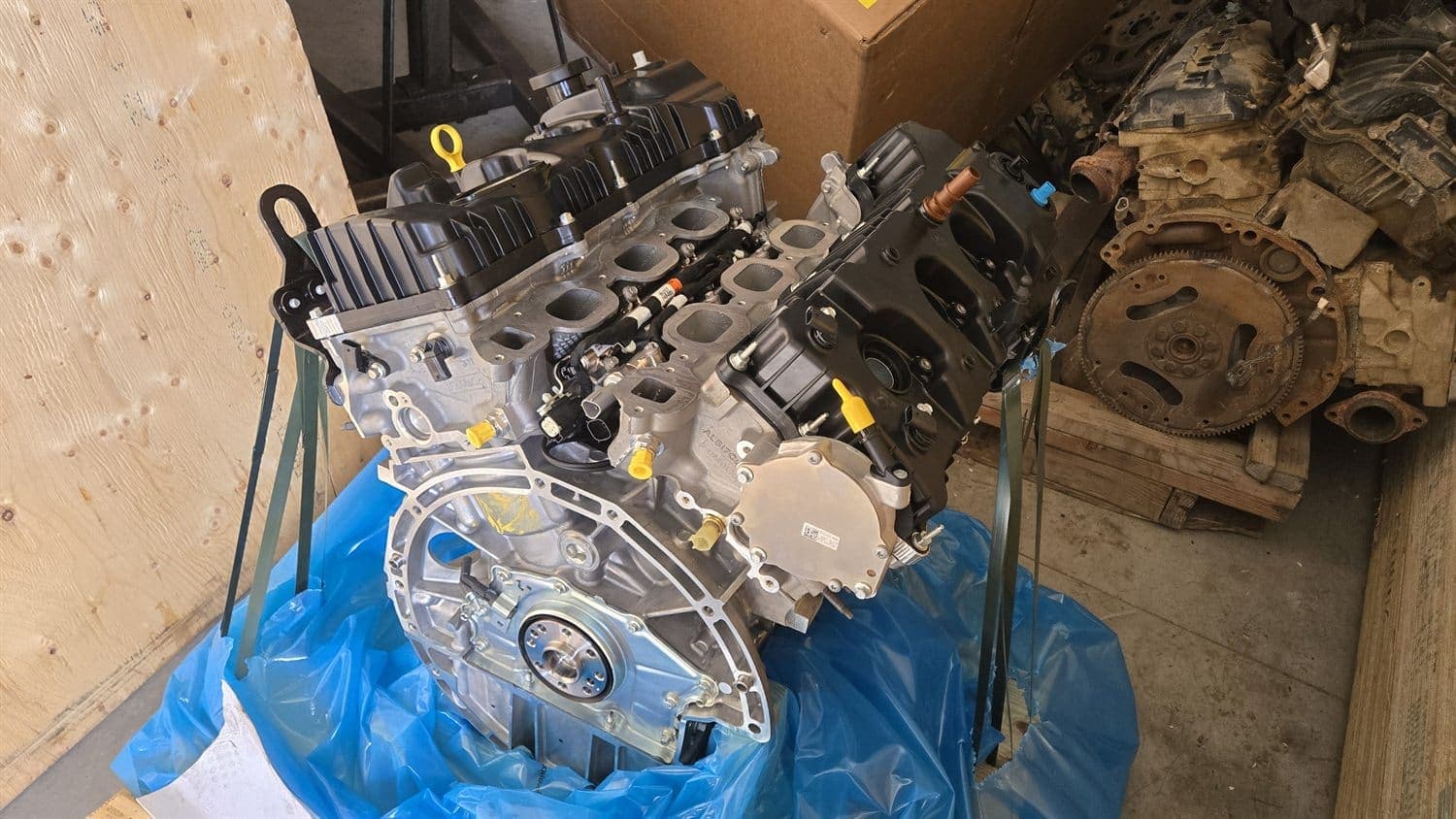
Got a job like this one?
Engine or transmission trouble — call (780) 482-2424 for a straight answer, or send us the details.