
A real job from our Edmonton shop
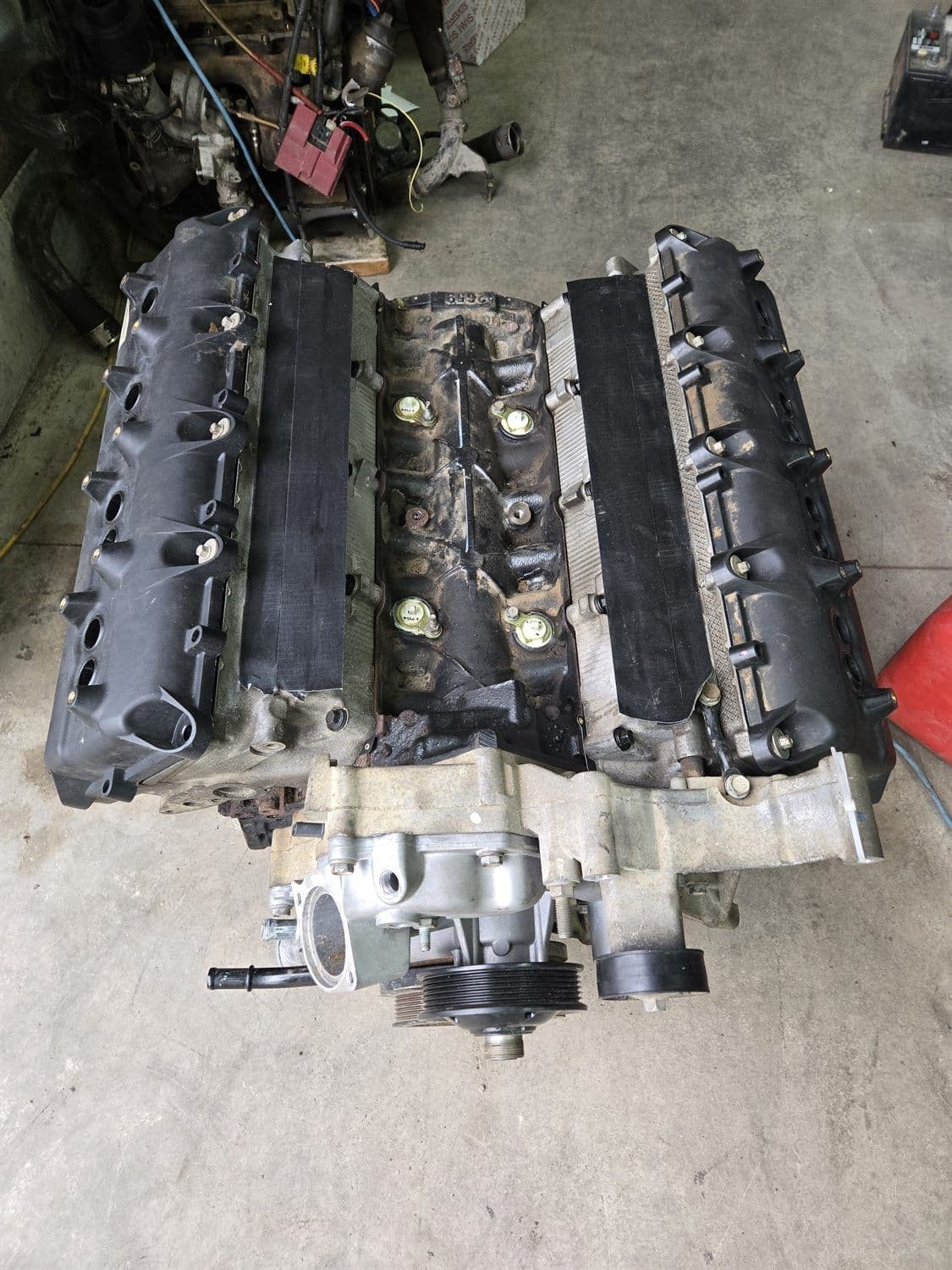
6.8L V10 engine swap — 2015 Ford Super Duty
2015 Ford Super Duty · 6.8L Triton V10
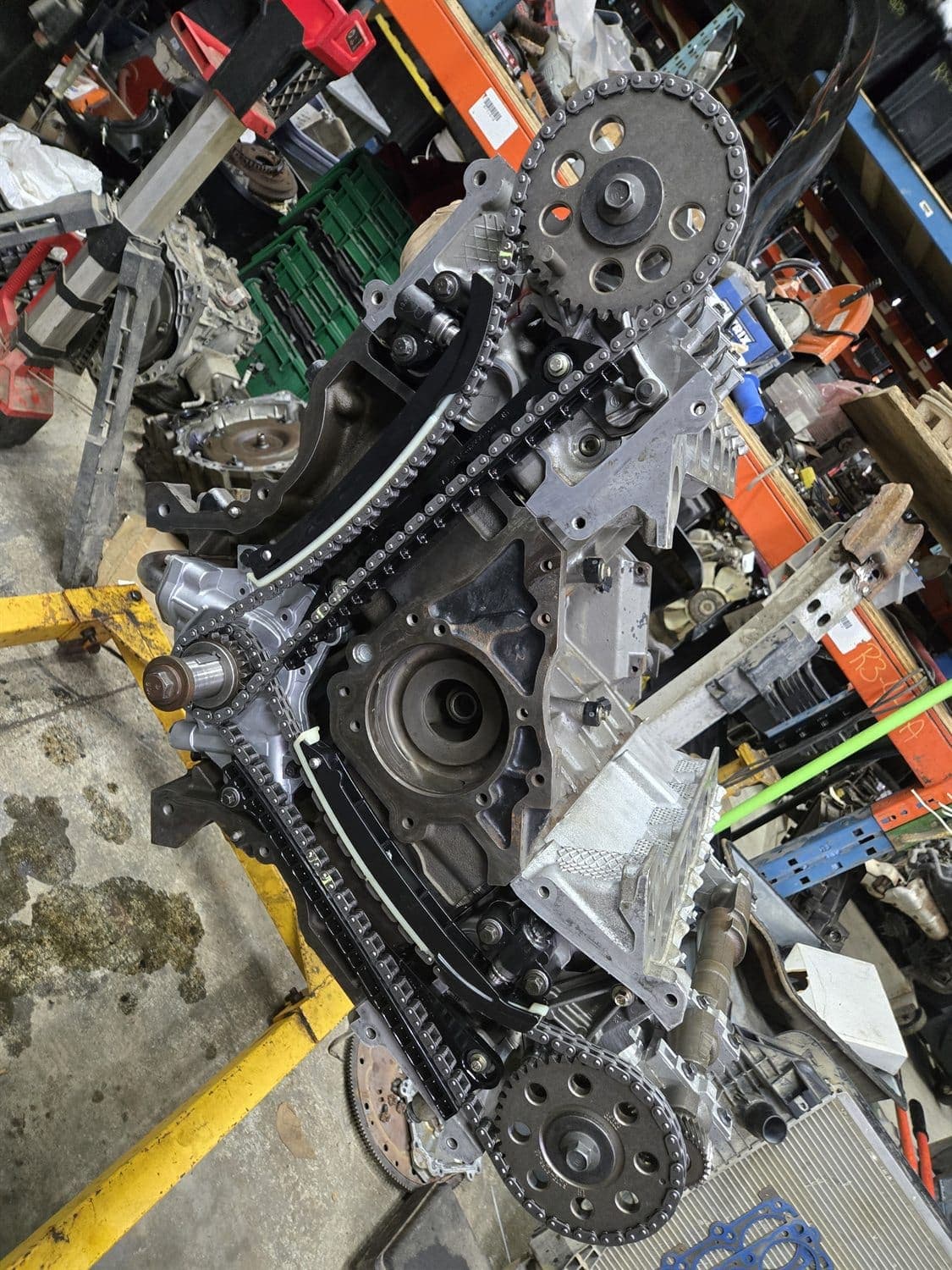
What came in
A 2015 Super Duty running Ford's big-block gas V10 — a lot of torque for hauling and plowing — in need of an engine swap.
What we found
The 6.8L Triton is a solid engine when it's looked after; this truck's answer was a swap, with the replacement engine gone through before it went in.
What we did
Went through the 6.8L Triton V10 and swapped it into the truck — the kind of heavy truck job a lot of shops won't touch.
The outcome
A working Super Duty back on the job. Whether the right call is a swap, an in-house rebuild, or a genuine OEM engine through our sister company, we lay out the options with real numbers.
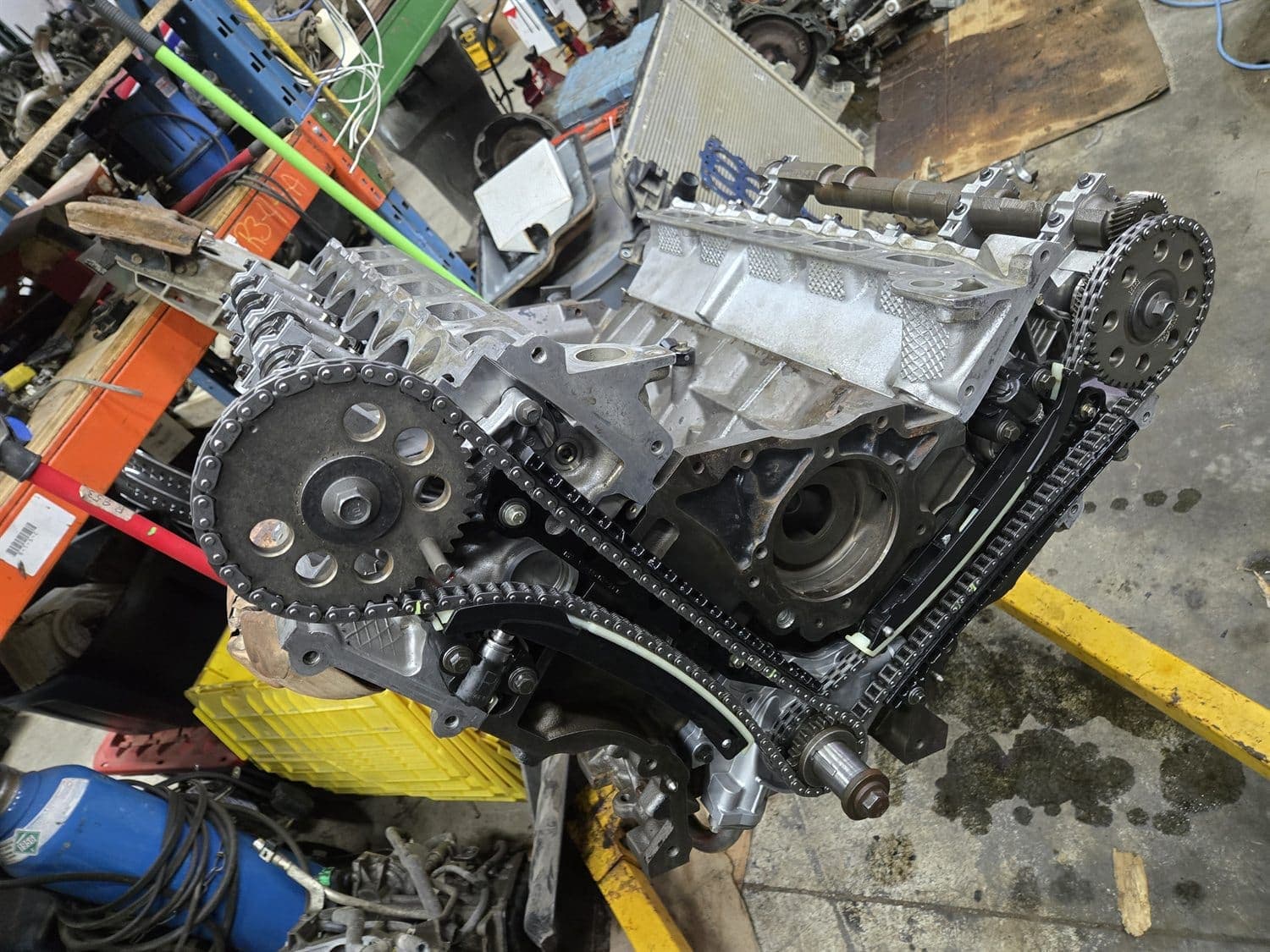
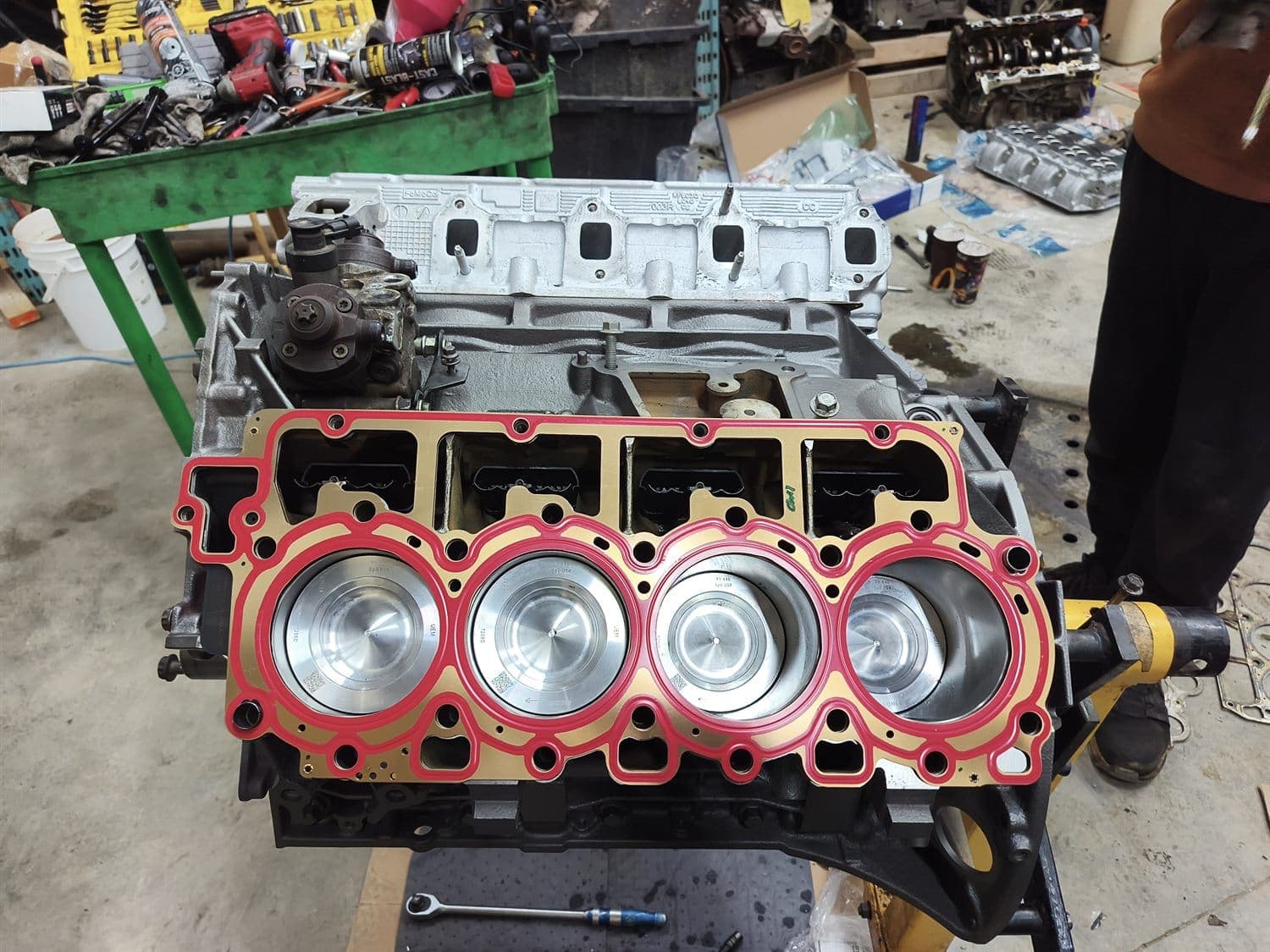
Photos from the job
Our own bays, our own bench — no stock photography.
Background
What to know about the 6.8L Triton V10
General background on this engine family — not findings from the job above.
What the Ford 6.8L Triton V10 is, and where Ford used it
The 6.8L Triton V10 is the largest member of Ford's modular engine family — the same architecture as the 4.6 and 5.4 Triton V8s with two more cylinders added, a single overhead cam per bank, and aluminum heads on an iron block. Because it kept the V8's 90-degree bank angle rather than the 72 degrees that would naturally balance ten cylinders, it carries a balance shaft to settle the rocking motion that layout produces. Early engines used two valves per cylinder; from the mid-2000s a three-valve head with variable cam timing took over. Ford built it from the late 1990s into the early 2020s, when a new big-block gas V8 replaced it, and put it wherever a gas engine had to do a diesel's work: Super Duty pickups through 2010, chassis cabs well past that, E-Series vans and cutaways, shuttle buses, ambulances, tow trucks, and the motorhome chassis under a great many North American gas Class A and Class C coaches. When the 6.2L V8 arrived for 2011 the V10 left the pickups, but it kept working in chassis cabs, vans and motorhome chassis for years afterward.
Rebuilding a 6.8 V10 against replacing it: the ten-cylinder arithmetic
Ten cylinders change the arithmetic of a rebuild. Machining and honing ten bores, going through two heads carrying thirty valves on a three-valve engine, and reassembling all of it takes considerably more machine shop and bench time than the same work on a V8. Oversize piston availability for modular Fords is poor, so these are generally machined and honed at standard bore, or sleeved where a single bore is damaged, rather than taken out to the next size. Against that, the engine was produced in very large numbers over a long run, so complete units are not hard to find. That arithmetic is what owners and shops weigh on a high-kilometre V10, and it is why these engines are more often replaced than rebuilt, while a rarer or higher-value engine earns the machine work. If you are the one deciding, the comparison worth asking for is a complete engine priced beside what the machine work and parts actually measure out to once the engine is apart. What moves either number is which parts come back in and how much has to come off to reach them.
6.8 V10 spark plugs and coils: ten of everything, and two plug problems
A V10 carries ten spark plugs and ten coils, and ignition service on one is priced by access far more than by parts. The modular family has two separate spark plug problems. The early two-valve heads engaged few threads in aluminum, and combustion pressure could work a plug loose until it pulled out of the head. The earlier three-valve engines traded that for a two-piece plug that carbons up below the seat and tends to break apart during removal; Ford later went back to a one-piece plug, so that one belongs to the earlier three-valve years rather than to every three-valve engine. Establish which plug yours takes before anyone quotes the job. The 5.4 Triton cam phaser guide on this site covers how each of those failures works. What is specific to a V10 is the geometry: in a cutaway, van or motorhome chassis the rear cylinders sit behind a doghouse and a tight firewall, so reaching the last few plugs and coils is most of the labour, and those are also the wells most likely to have trapped moisture. Plugs that have never been out fight hardest.
6.8 V10 exhaust manifold bolts, and why the end ones break
Two long manifolds, ten ports, cast iron bolted to aluminum heads: a V10 carries more exhaust fasteners per bank than any V8 in the family, along a longer head. Iron and aluminum expand at different rates through every heat cycle, and because each manifold is anchored toward its middle, the movement is greatest at the extremities, so the end bolts fatigue and snap first. Modular manifolds generally seal metal to metal against the head rather than on a gasket, so the difficulty is never the sealing surface; it is extracting a bolt that snapped below the deck without wrecking the aluminum threads. On a van, cutaway or motorhome chassis, the bolts most likely to be broken sit furthest behind the doghouse, and years of Edmonton road salt make every one harder to move. If you have a tick, have it located rather than assumed. Both of the likely sources are loudest cold: an exhaust leak at a broken manifold bolt quietens as the iron grows and closes the gap, while on a three-valve engine a rattle at the front is timing hardware still waiting on oil pressure. Same symptom on a cold morning, two very different bills.
What Edmonton cold, salt and winter storage do to a 6.8 V10
Cold is hard on these engines in specific ways. A V10 is a long engine with a chain run at the front of each bank, and at -30 thick oil takes its time reaching the tensioners and, on three-valve engines, the cam phasers that depend on oil pressure to stay quiet. Noise from the front on a cold start is worth diagnosing early rather than living with, because three-valve timing hardware does not improve on its own. Plow trucks and shuttle vehicles making short trips never fully drive moisture out of the oil or the exhaust, so pipes and mufflers rot from the inside while road salt works on the manifold bolts from the outside — and every short trip is another heat cycle through the fasteners that were already the weak point. Motorhomes have the opposite problem: they sit from October to May. What decides how a stored gas V10 behaves on the first loaded climb of the season is ignition and cooling — ten plugs and ten coils that have sat all winter, and a cooling system asked to handle sustained full load rather than a highway cruise.
If you run one of these
- Budget a V10 tune-up by access, not by parts — ten plugs and ten coils behind a doghouse is mostly labour.
- Find out which spark plug design your V10 uses before accepting a quote; the earlier three-valve plugs come out very differently.
- A cold-start rattle from the front of a three-valve V10 is worth diagnosing early — the timing hardware depends on oil pressure.
- Have a tick located before it is blamed on anything: exhaust leaks and front-end timing noise can both show up cold.
- Before authorizing a ten-cylinder rebuild, ask for a complete-engine price beside the machine work, measured after teardown rather than guessed.
- After winter storage, check cooling and ignition before loading a motorhome for its first long grade of the season.
More jobs from our bays
See every job →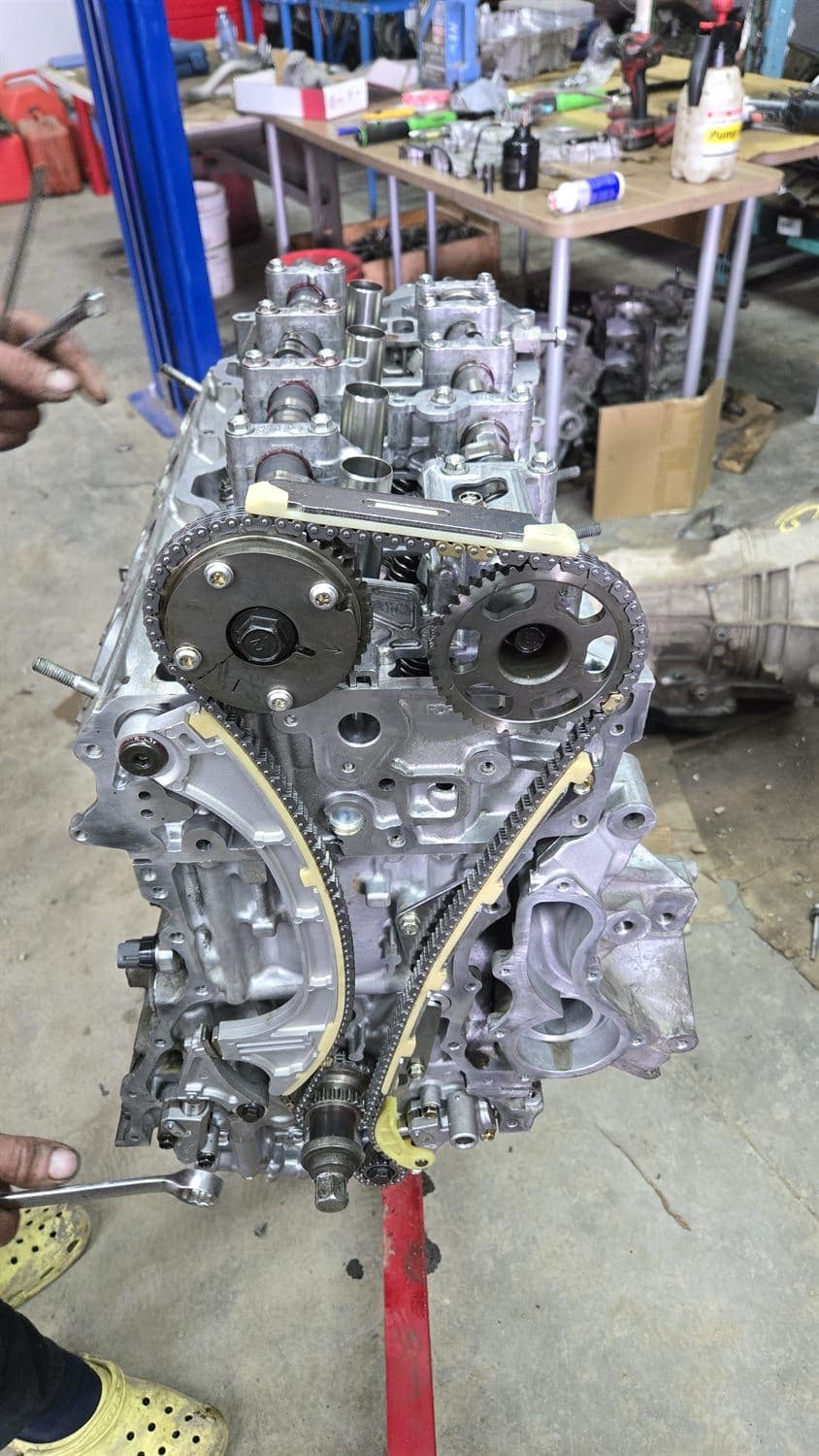
Got a job like this one?
Engine or transmission trouble — call (780) 482-2424 for a straight answer, or send us the details.