
A real job from our Edmonton shop
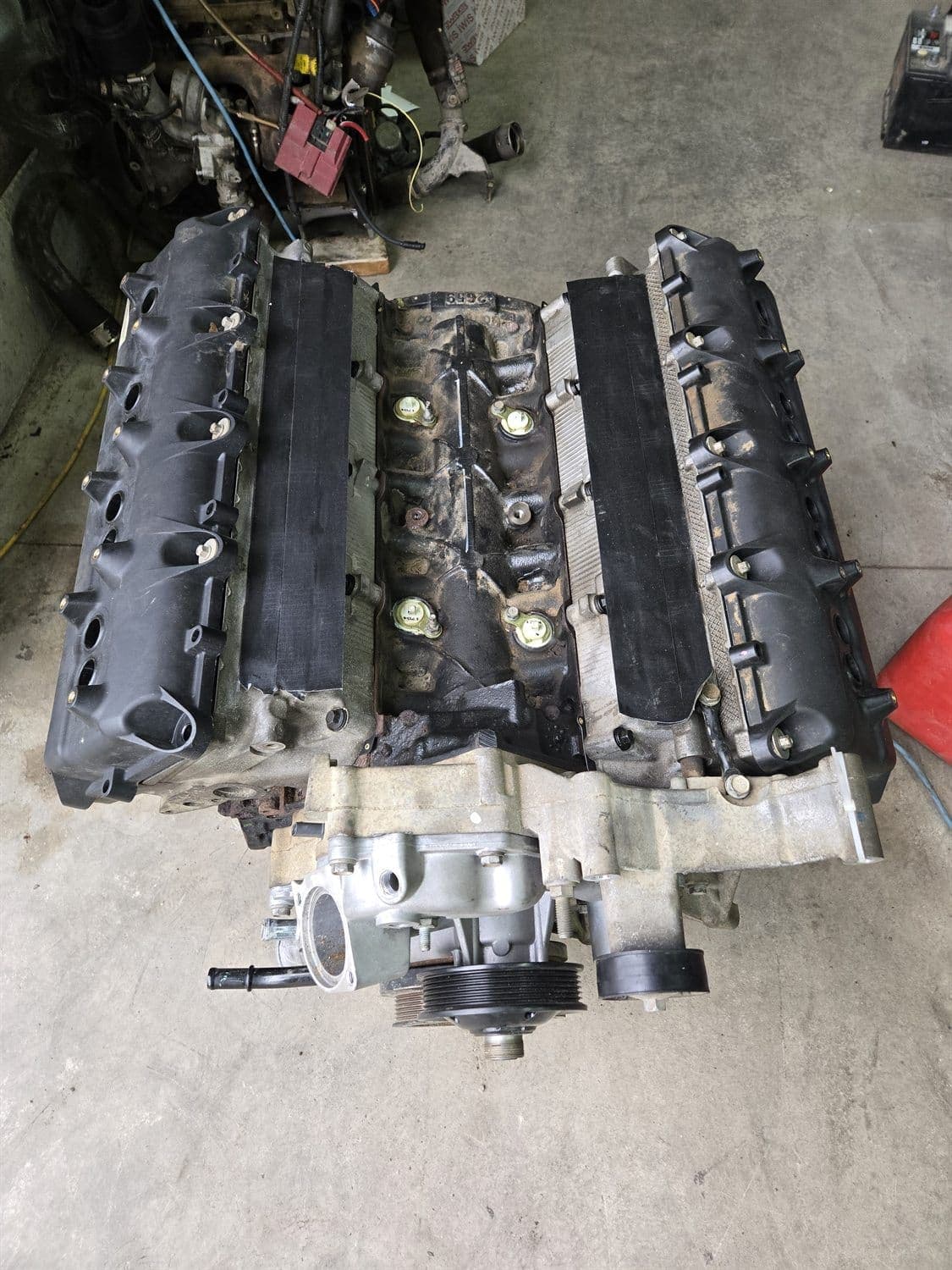
Cam phasers and timing done properly — 2008 Ford F-150 5.4L 3V
2008 Ford F-150 · 5.4L 3-Valve Triton V8
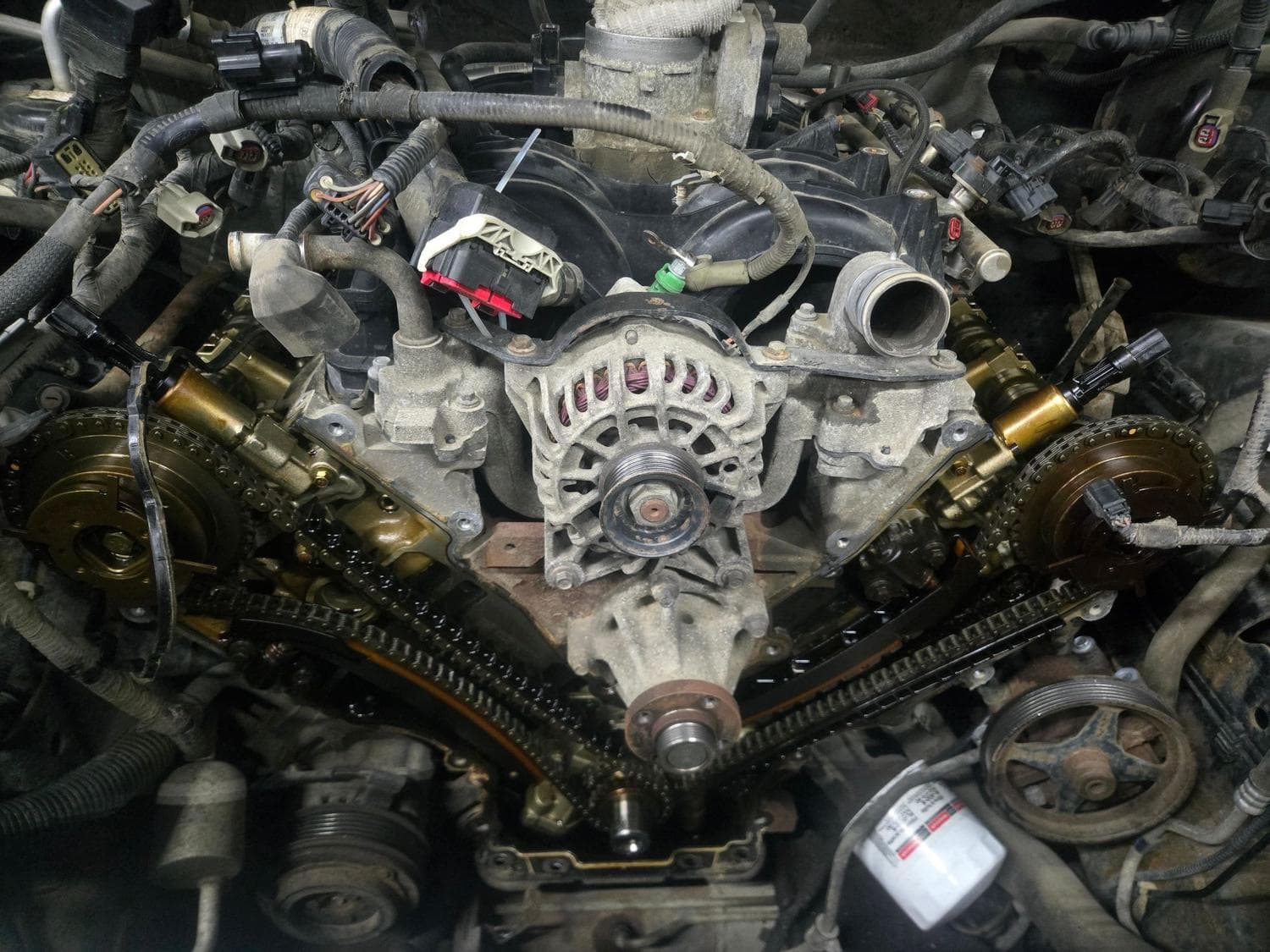
What came in
The noise the 5.4 3-Valve is known by: a rattle at start-up that gets longer and louder over months until it no longer goes away when the engine warms up.
What we found
The variable cam timing system. On these engines the rattle is as much an oil supply problem as a phaser problem, because the phasers sit at the far end of the oil circuit and are the first thing to go short when an engine loses pressure — which is why a phaser-only repair so often comes back.
What we did
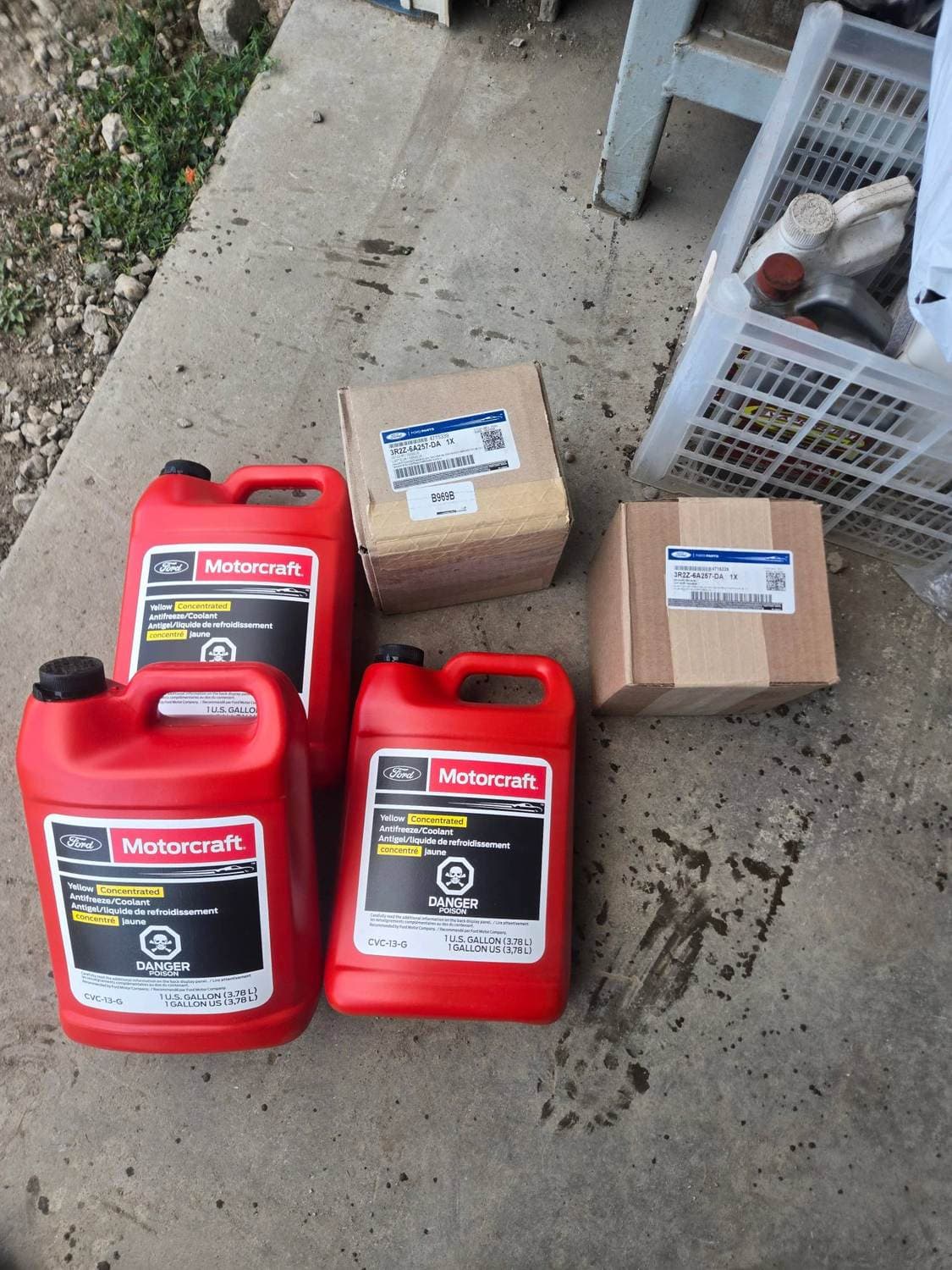
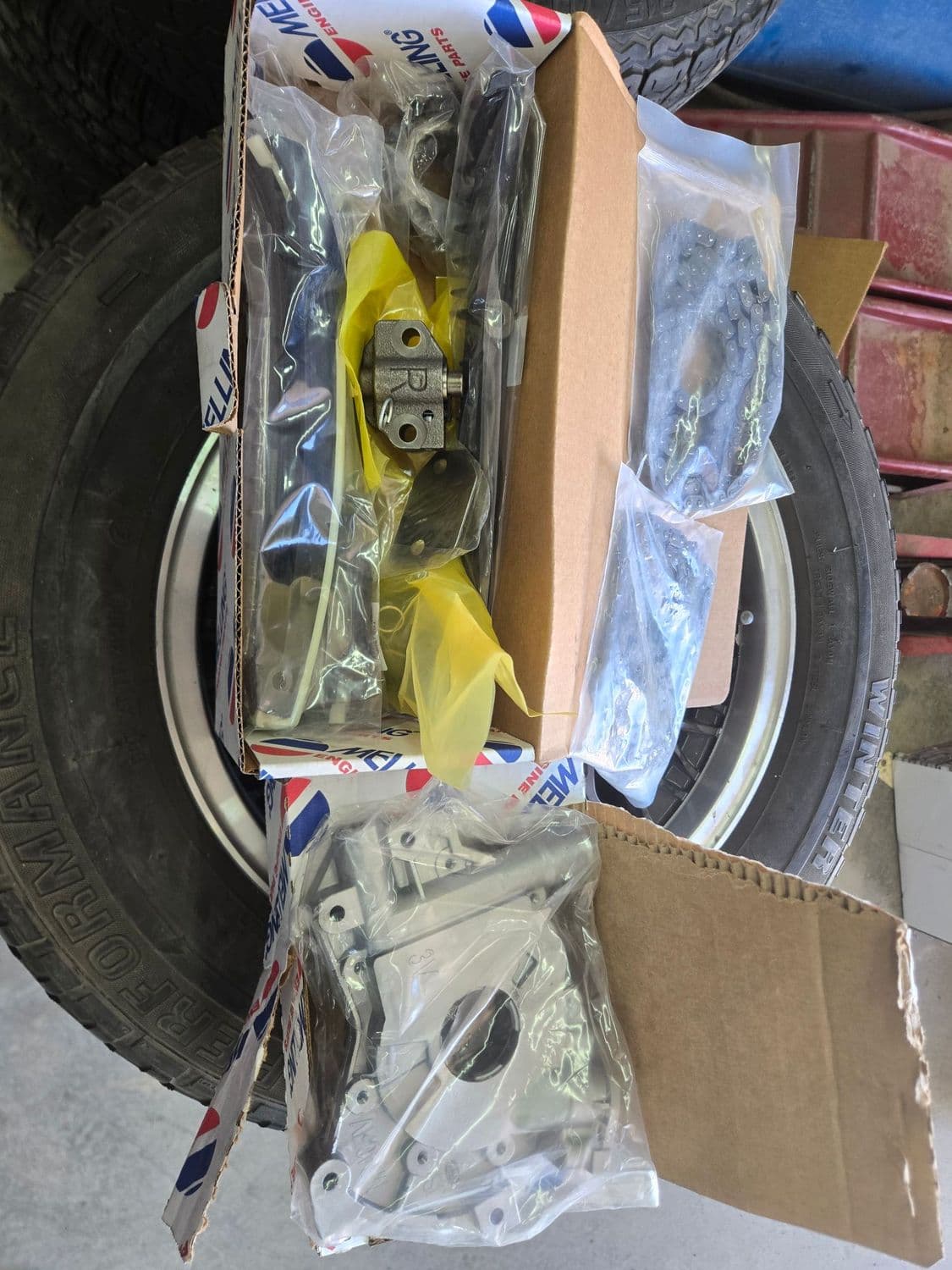
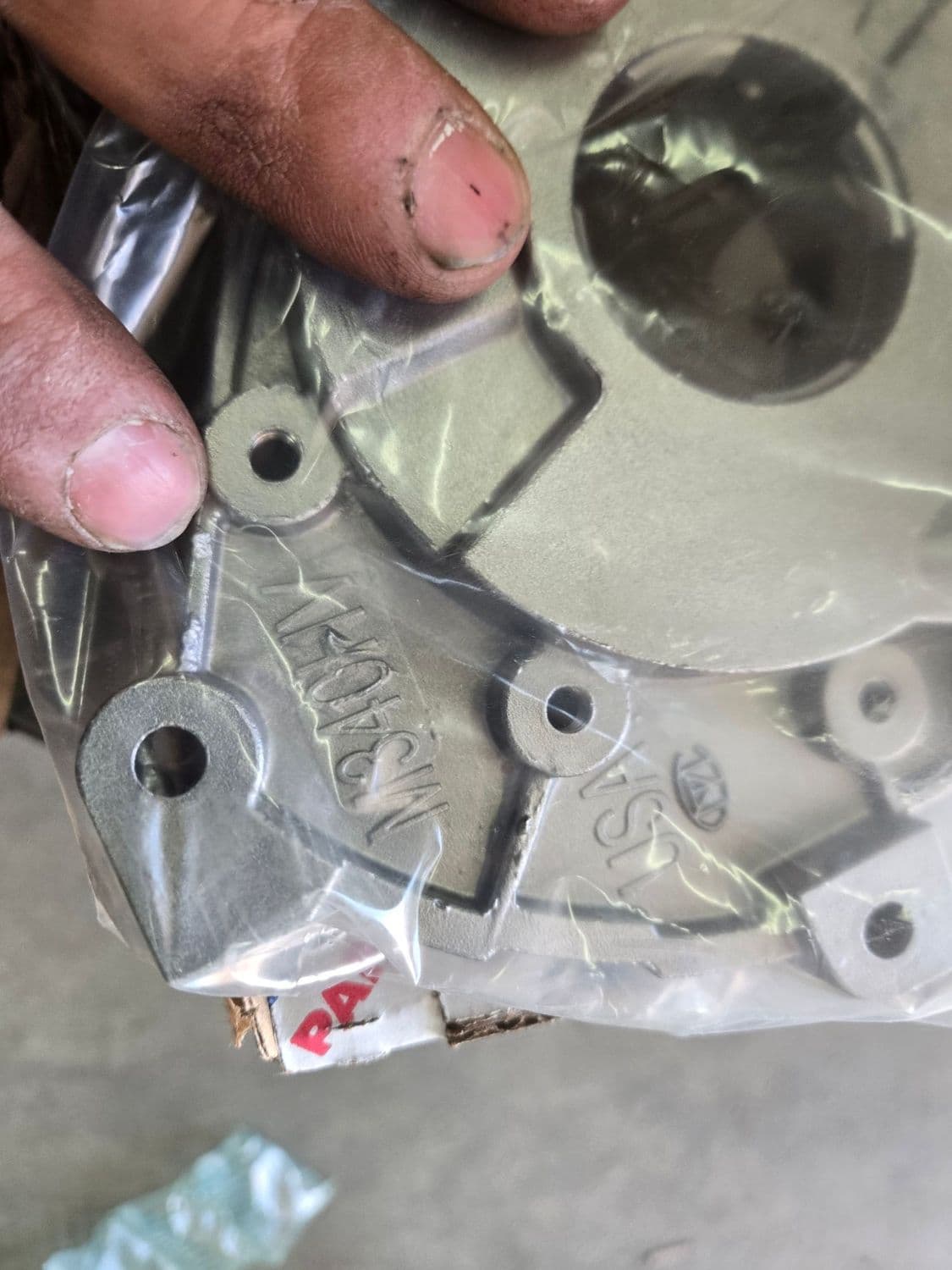
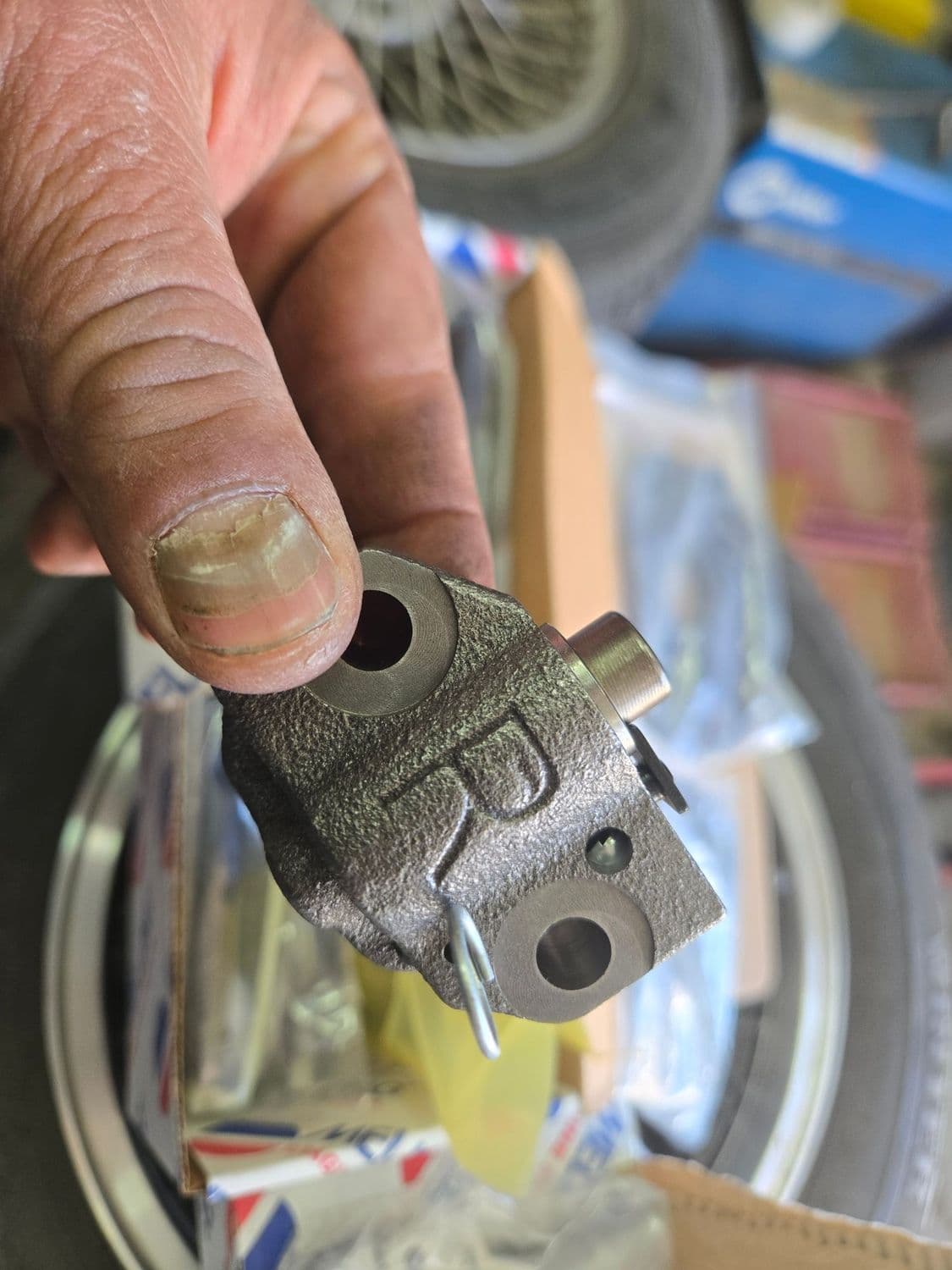
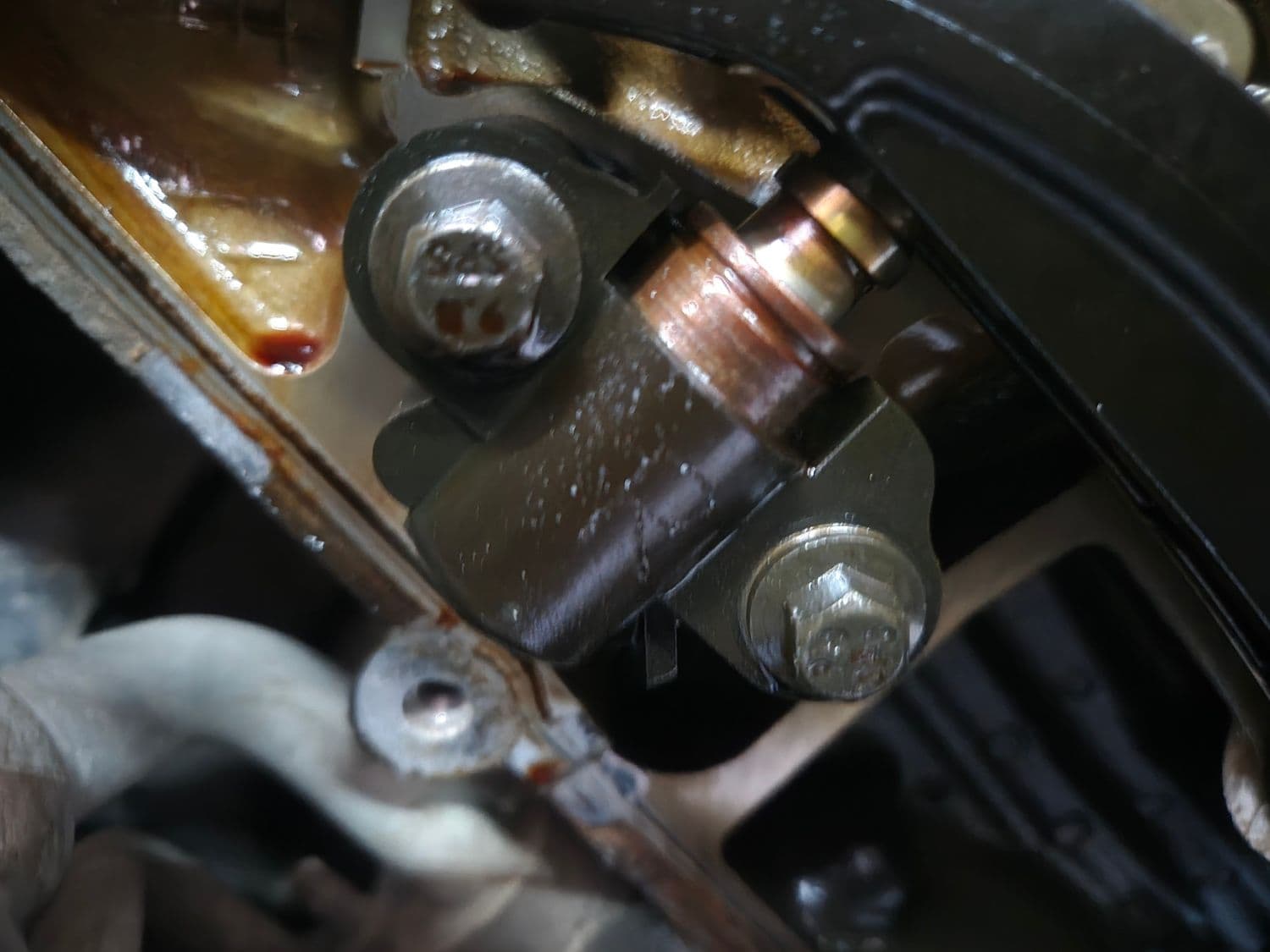
Replaced the cam phasers with genuine Ford parts (3R2Z-6A257-DA, the updated revision), fitted a high-volume Melling oil pump so the system can actually hold the phasers steady at hot idle, and renewed the chain tensioners and guides at the same time. Motorcraft filter and Motorcraft Yellow coolant on reassembly.
The outcome
A 5.4 that is quiet, with the whole system addressed rather than the noisiest part of it — and no aftermarket phasers anywhere in the repair.
Photos from the job
Our own bays, our own bench — no stock photography.
Background
What to know about the 5.4L 3-Valve Triton V8
General background on this engine family — not findings from the job above.
What a cam phaser is and what it is for
A camshaft decides when the valves open and close relative to the piston, and for most of engine history that relationship was fixed at the factory as a compromise. The timing that makes good power high in the rev range is not the timing that gives a smooth idle or clean emissions, so a fixed camshaft is always wrong somewhere. A cam phaser is the device that lets the engine stop compromising. It sits on the nose of the camshaft, between the timing chain and the cam itself, and it can rotate the camshaft a controlled number of degrees relative to the chain while the engine is running. Advance the cam and the valves open earlier; retard it and they open later. The engine computer moves it continuously — one setting at idle for smoothness, another in the mid range for torque, another at high rpm for power, and another again when the engine is cold and the catalytic converter needs heat. Ford calls the system variable cam timing, and on the 3-Valve modular V8 there is a phaser on each cylinder head.
How the phaser actually moves, and why that matters
This is the part that explains everything else. A phaser has no motor in it. It is a hydraulic device: an outer housing driven by the chain, an inner rotor splined to the camshaft, and chambers between them. Engine oil is pushed into one set of chambers or the other, and the pressure rotates the rotor inside the housing, carrying the camshaft with it. A solenoid in the front cover, commanded by the engine computer, decides which chambers get fed. So the phaser is positioned by oil, and — just as importantly — it is HELD in position by oil. The camshaft is not a smooth load. Every valve spring it compresses tries to twist it backwards and then flings it forwards again, dozens of times a second, so the phaser is constantly being kicked in both directions. The only thing resisting that is the oil holding it. Take the oil pressure away and the phaser is no longer held; it gets knocked back and forth against its internal stops, and the sound of it doing that is the rattle everyone recognises.
Why the rattle is really an oil supply problem
Follow the oil and the whole pattern makes sense. Oil leaves the pump, goes through the filter, and feeds the crankshaft main bearings, the connecting rod bearings and the camshaft journals on its way around the engine. The phasers are at the far end of that journey — the last components to be fed. Every bearing clearance that has opened up with age is another place where oil escapes before it ever reaches them, so an engine that has worn normally still makes decent pressure at the gauge while delivering less and less to the very end of the circuit. The phasers go short first. The condition where it shows worst is hot idle: oil is thin, the pump is turning slowly, and demand elsewhere is highest, which is exactly when owners report the rattle. That also explains the classic cold start-up rattle, which is the brief moment before oil pressure has built at all. Understand that and the repair strategy follows. Replacing the phasers without restoring the oil supply fixes the symptom and leaves the cause, which is why the job so often has to be paid for twice.
Why aftermarket phasers are a false economy on this engine
There is a general principle about aftermarket parts and then there is this specific one, and they are not the same. Plenty of aftermarket parts are excellent. The argument here is narrower and it is about consequences. On this repair, the part cost is a small fraction of the bill — reaching the phasers means the front of the engine comes apart, and that labour is the same whether the phaser in your hand cost two hundred dollars or six hundred. So the saving on a cheaper phaser is small, and the cost of it not lasting is the entire job again. We have had trucks arrive here that had already had this work done elsewhere with cheap parts and were still ticking, which means somebody paid the big number and did not get the result. One further point worth knowing if you are comparing quotes: Ford revised these parts, and the updated revision does not share the earlier one's bolt pattern, so phaser hardware is not something to mix and match between suppliers. The policy we work to is simple — genuine Ford phasers on this engine, or we would rather not take the job on.
How to judge the noise, and when it stops being just a noise
Ford's own guidance on this gives a usable test. Their bulletin on the condition says that if the noise is more than a lightly audible knock at hot idle, below 1200 rpm, with the engine at operating temperature, the phasers should be replaced. That is a more precise standard than most owners are given, and it is worth knowing because the early stage of this failure genuinely is tolerable: a brief rattle on a cold start, gone in a second or two, is something these engines have done for years. What matters is the direction of travel. A rattle that lasts longer than it used to, that starts appearing when the engine is warm, or that has turned from a rattle into a steadier tick, is the one to act on. At that point you are also past the phasers alone — the chains have been running on worn guides and slack tensioners for a while, and that is a different kind of failure to have, because a chain that jumps on an engine like this does not just make noise. Cam timing codes, rough running or a start that takes longer than it should all belong in the same conversation.
What keeps the next set alive
Everything in this system depends on oil, so the maintenance answer is less about products and more about intervals. Oil that has been left too long is thinner, dirtier and less able to hold pressure in the very places that are already marginal, and on an engine where the phasers are last in line, that lands on them first. Short trips and a lot of idling are harder on oil than the odometer suggests, which describes a great many trucks in this city. The small passages and screens in the variable cam timing solenoids are the other thing worth mentioning: they are fine, they live in dirty oil, and a solenoid that has gone lazy from varnish produces a cam timing complaint that is nothing to do with the phasers themselves. None of that is exotic. It is a reminder that on this particular engine, oil changes are not a service item so much as part of the repair you just paid for.
If you run one of these
- A brief rattle on a cold start is normal-ish on these; a rattle that lasts longer than it used to, or shows up warm, is the one to act on.
- Ford's own test: more than a lightly audible knock at hot idle below 1200 rpm with the engine warm means the phasers need doing.
- Ask whether the quote includes the oil pump. The phasers are last in line for oil, so new phasers on a tired pump is the repair that comes back.
- Ask whether tensioners and guides are included. New phasers on slack chains will tick again.
- Insist on genuine Ford phasers. The part is a small share of this bill and the labour is the rest — saving on the one part that must last is the worst trade on offer.
- If a shop already did this and it still ticks, find out what brand of phaser went in before paying anyone to do it a second time.
- Keep the oil changes tight afterward. The whole system is held in place by oil pressure.
The background on this failure
Ford 5.4L Triton Cam Phaser Failure: The Cold-Start Rattle Explained, and What Fixing It Really Costs
Read the full guide — symptoms, causes and what it costs →More jobs from our bays
See every job →
Got a job like this one?
Engine or transmission trouble — call (780) 482-2424 for a straight answer, or send us the details.