
A real job from our Edmonton shop
Full 6.7 Power Stroke reman — 2017 Ford F-550
2017 Ford F-550 · 6.7L Power Stroke V8 Turbo Diesel
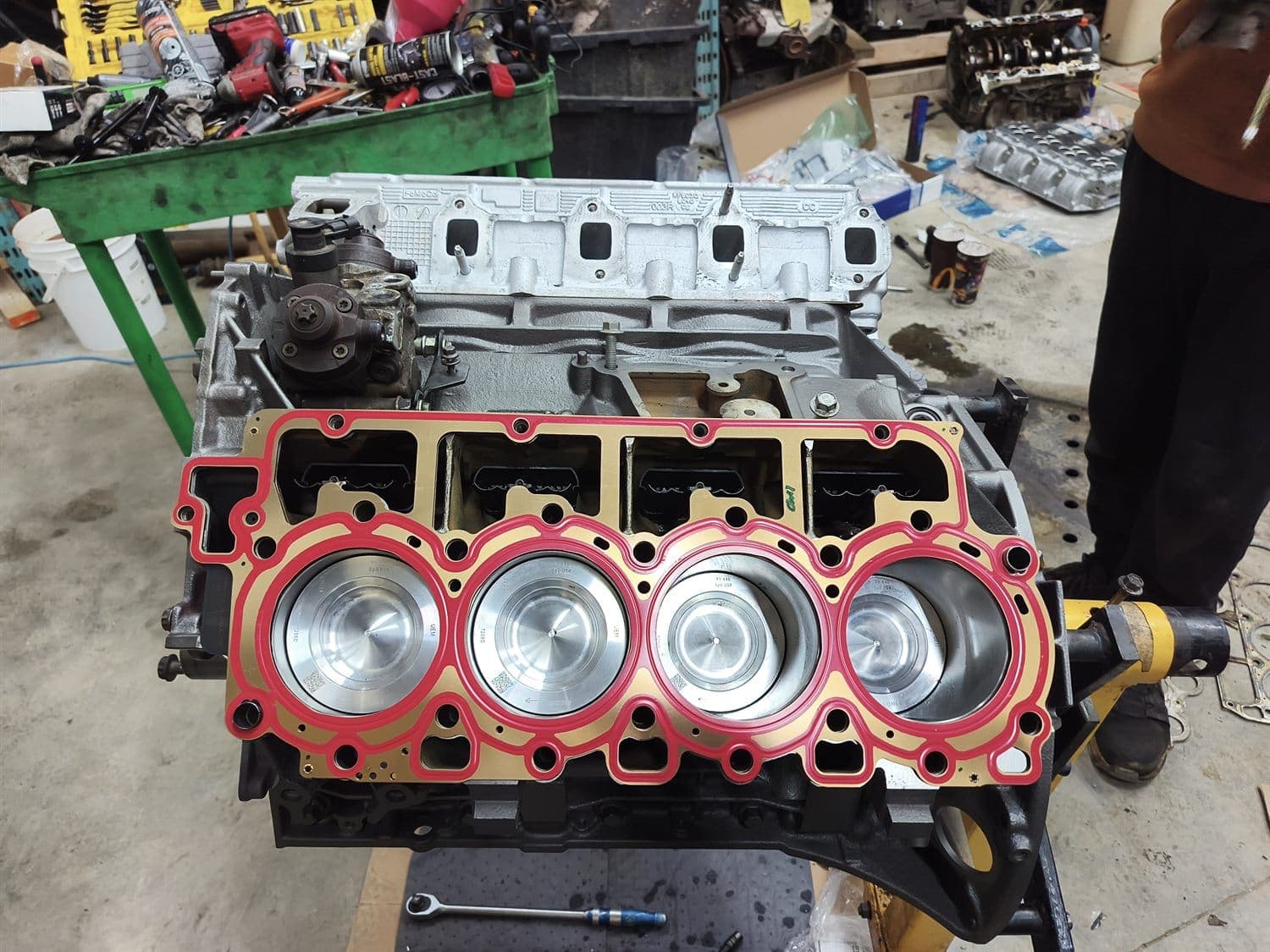
What came in
A hard-working 2017 F-550 whose 6.7L Power Stroke was past the point where a patch repair made sense.
What we found
The engine needed a ground-up remanufacture, not parts swapped in place: the block was worn to where the right answer was machining it and building the bottom end fresh.
What we did
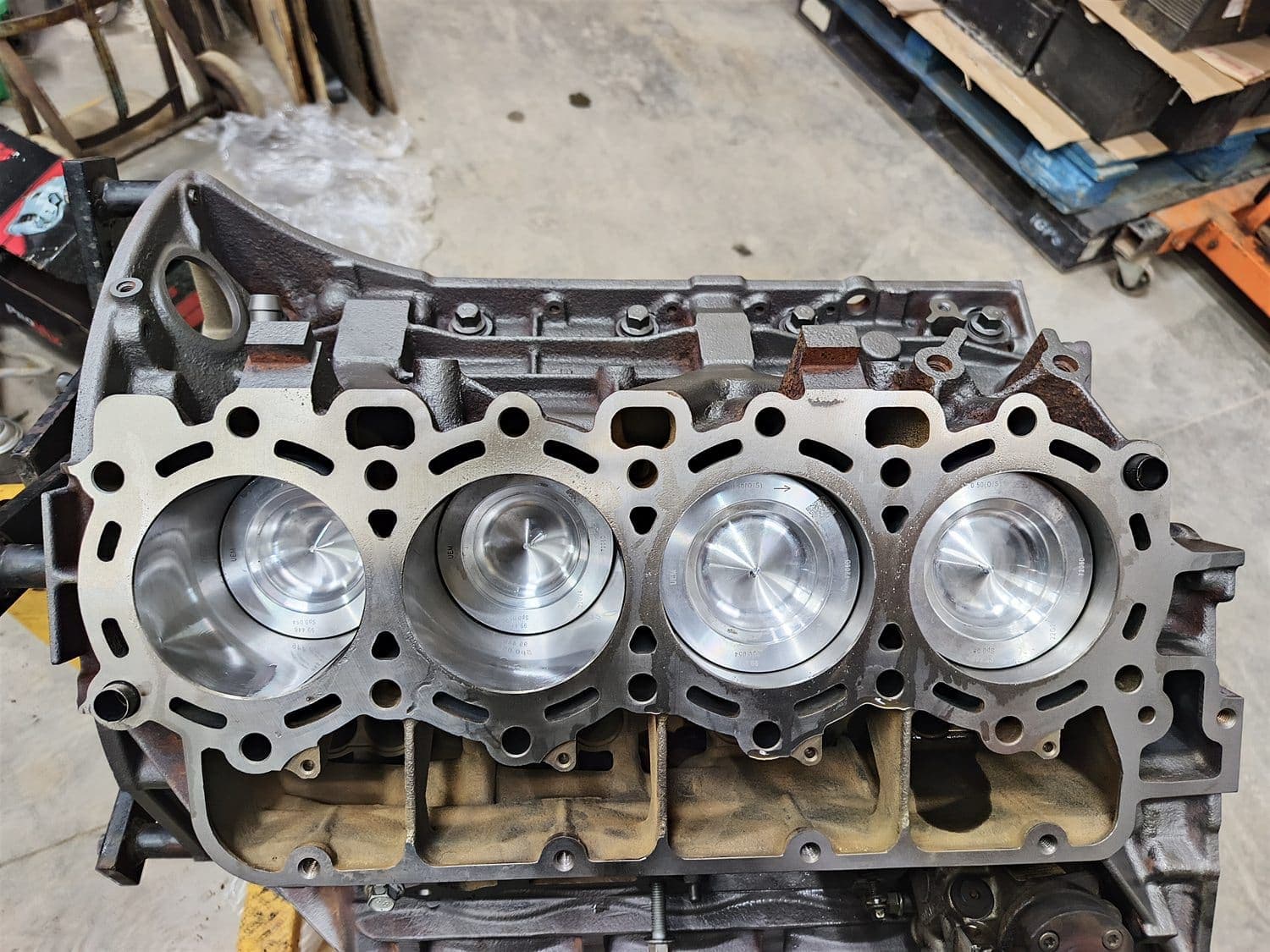
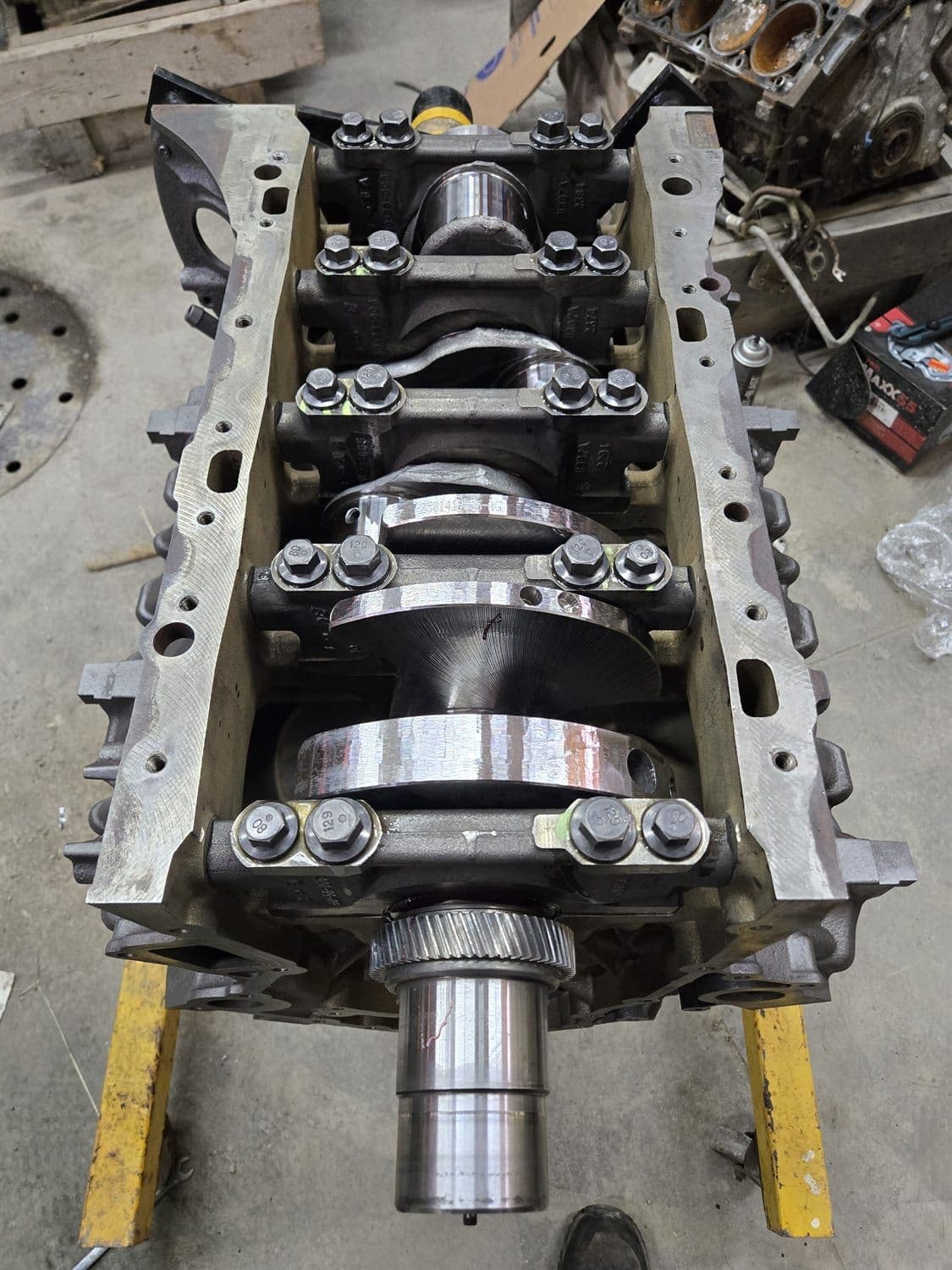
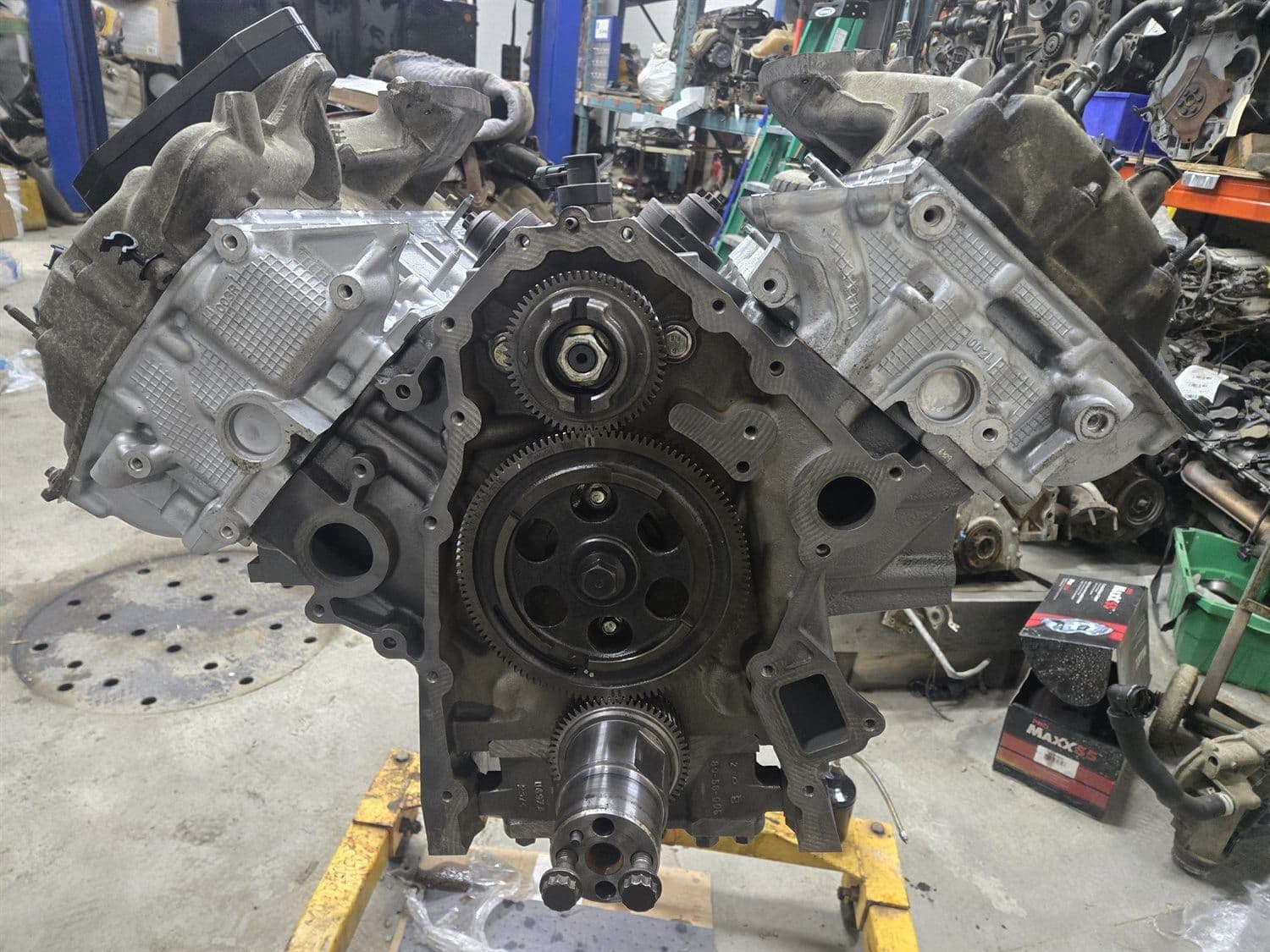
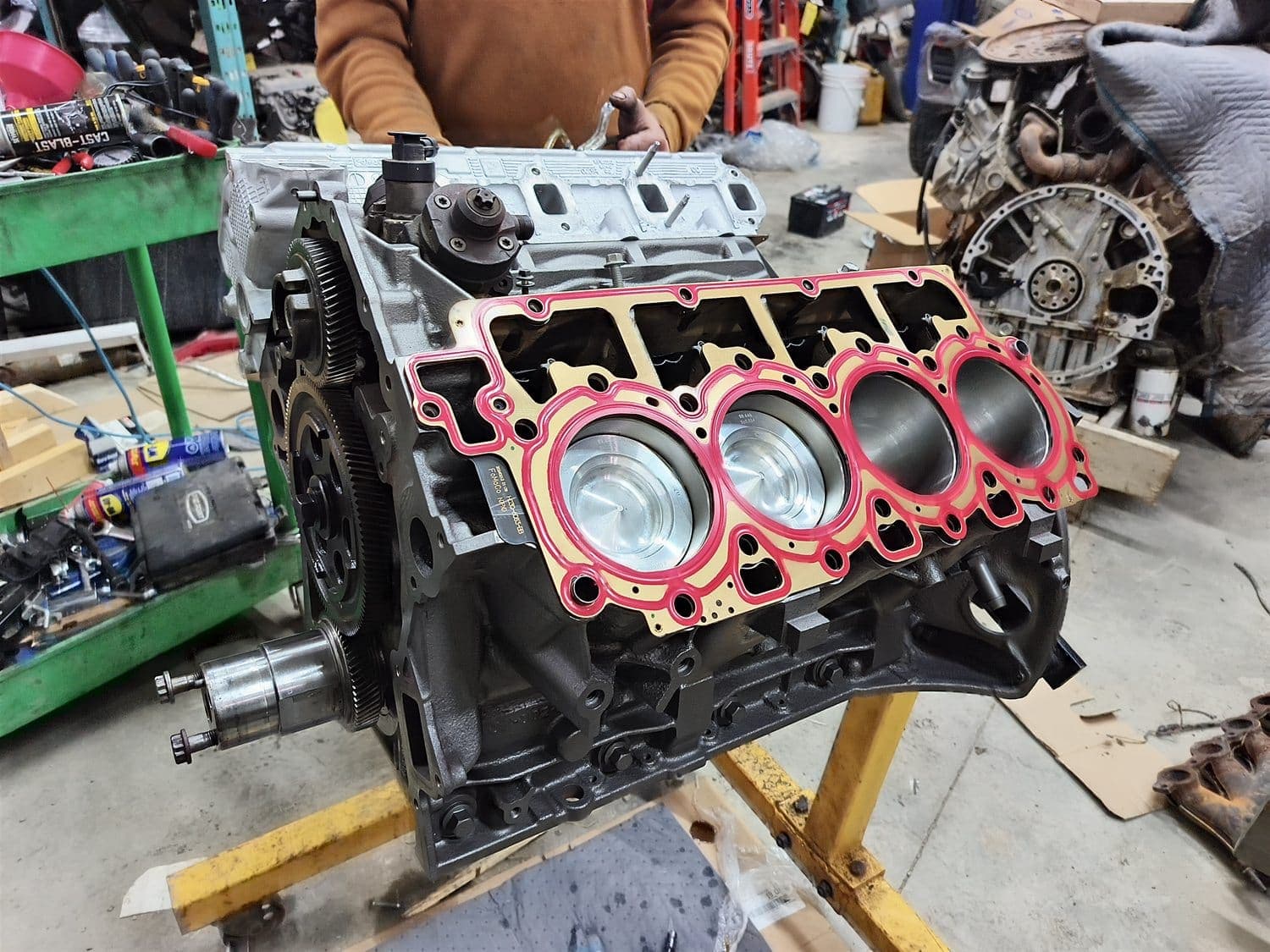
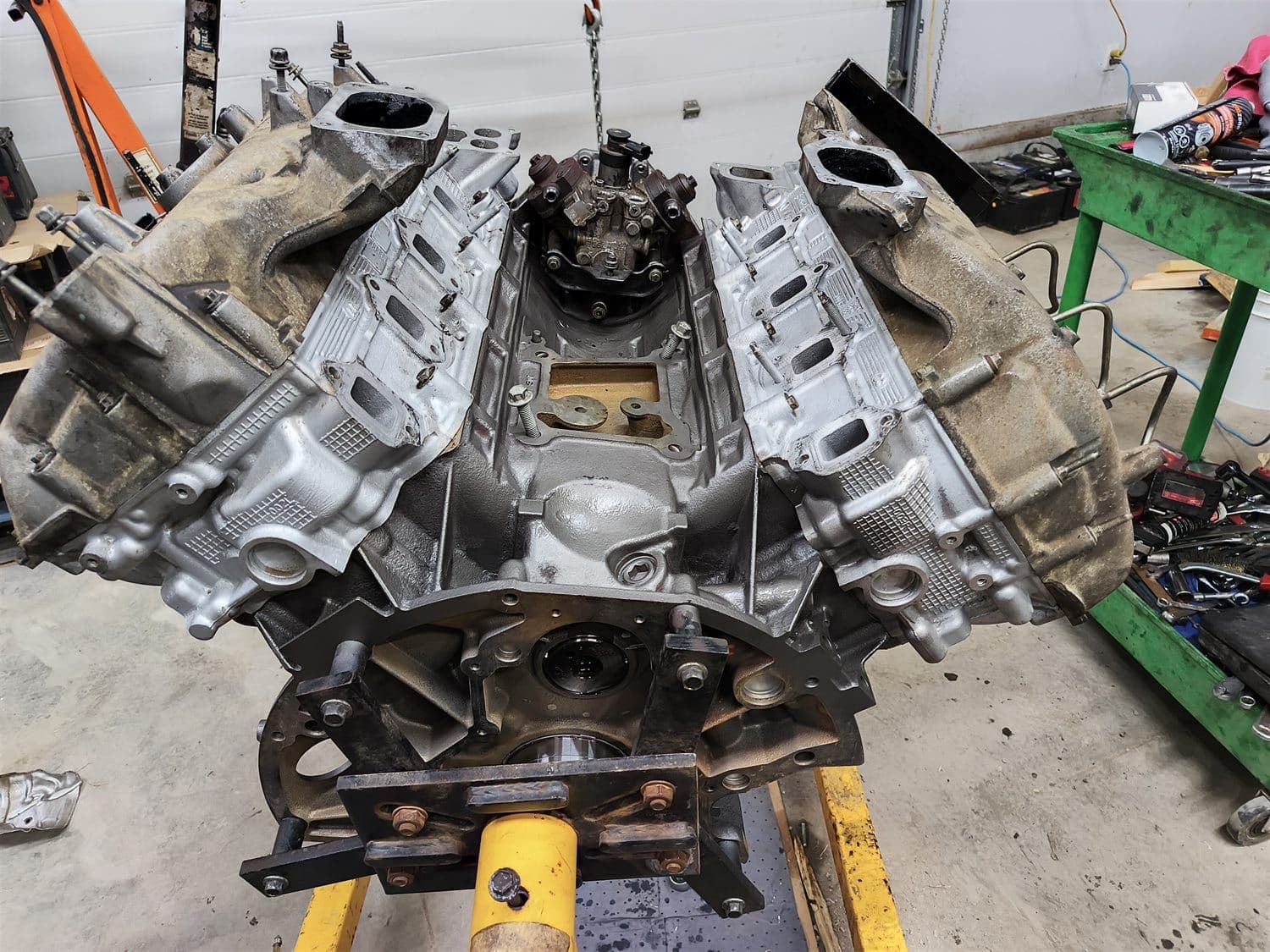
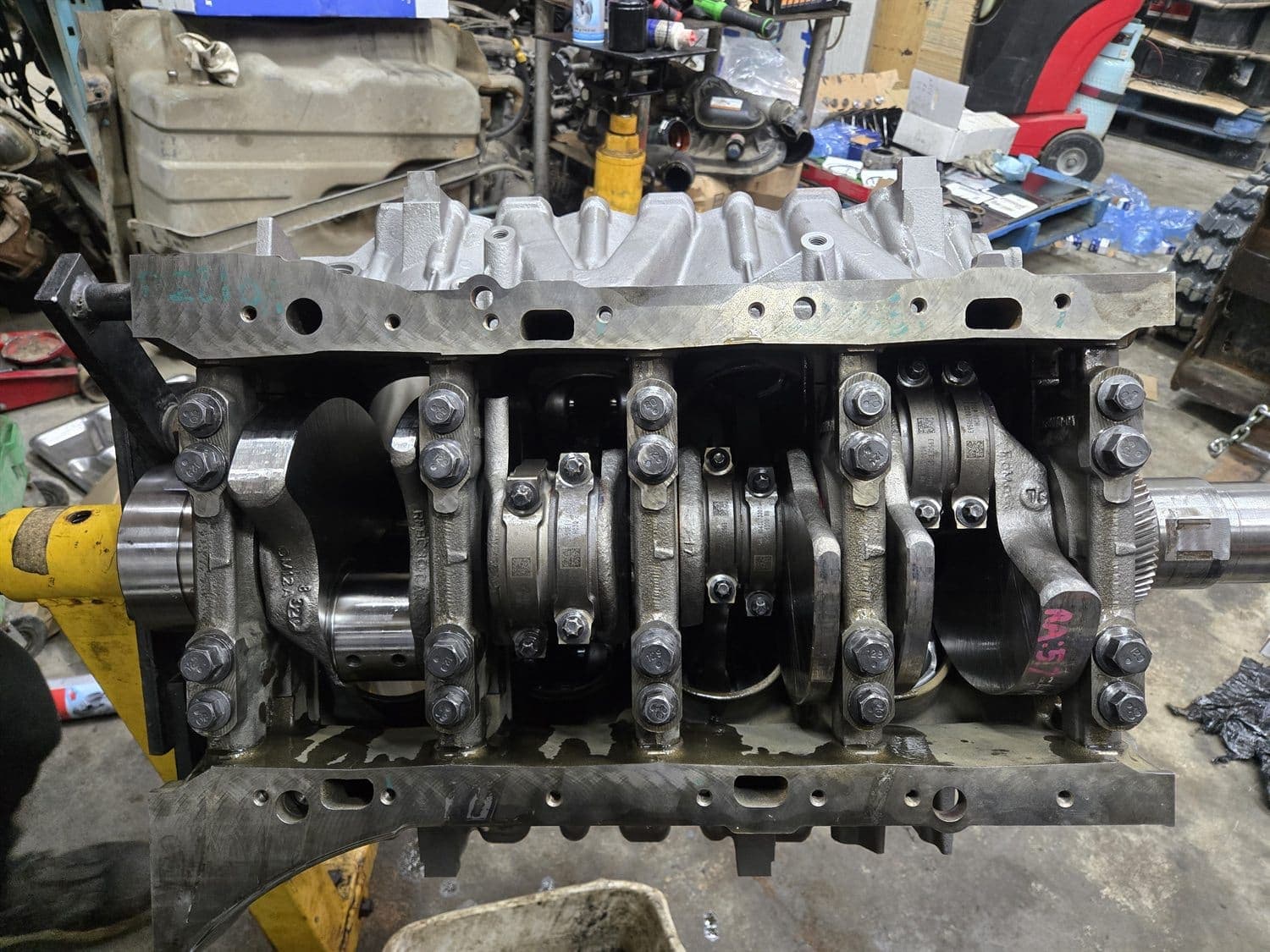
Cleaned and machined the block, bored it 0.50 mm oversize, and fitted fresh OEM-spec oversize pistons — the 0.50 O/S markings are visible on the crowns in the photos. Set the crankshaft on new bearings, torqued the main caps to spec on their torque-to-yield hardware, brought the rotating assembly together, laid fresh multi-layer-steel head gaskets before the heads went back on, and went through the high-pressure fuel system. Every clearance checked, every fastener to spec.
The outcome
A fresh engine for well under the price of a new crate unit, built in-house so we control every step — done right, documented, warrantied, and built for another few hundred thousand kilometres.
Photos from the job
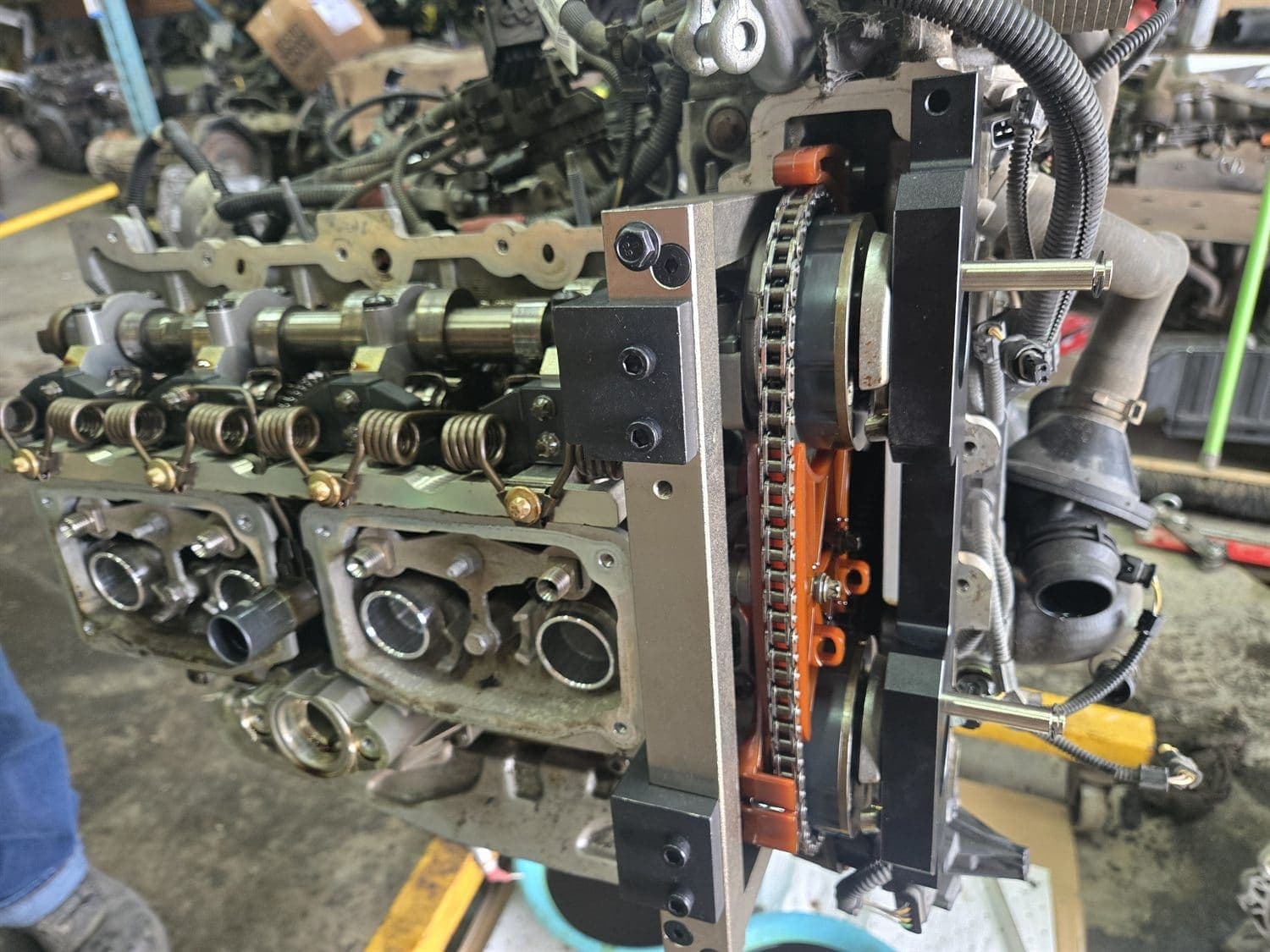
Our own bays, our own bench — no stock photography.
Background
What to know about the 6.7L Power Stroke V8 Turbo Diesel
General background on this engine family — not findings from the job above.
What a 6.7 Power Stroke block and heads are made of
The 6.7L Power Stroke is Ford's own diesel, built around a compacted graphite iron block. That casting is stronger and stiffer than ordinary grey iron at the same weight, which is how it carries the cylinder pressure a modern diesel runs, and it is harder on cutting tools than grey iron, which is why a machine shop treats it as its own job rather than as another V8. The cylinders are cut straight into the block with no liners, so the first answer to ordinary wear is boring to an oversize and fitting pistons made for it; sleeving a bore is a salvage operation on a casting damaged past that, not routine practice. The heads are aluminum, on a reverse-flow layout that routes exhaust inward to a turbocharger sitting in the valley rather than out toward the fenders. Aluminum moves more through heat cycles than iron does, so flatness on a head that has run hot gets checked rather than assumed. What wears in the bottom end is unremarkable: cylinder taper at the top of ring travel, bearing clearance opening up, and crankshaft journals losing their finish.
What gets mistaken for a worn-out 6.7 Power Stroke
Nothing about a tired 6.7 is cheap, which is why the list of things that imitate one gets worked through before a block is condemned. A dead injector drops a cylinder and sounds like a bottom end. A soot-packed variable-geometry turbo and a plugged exhaust filter both strangle an engine that measures fine inside. A cracked EGR cooler is where coolant vanishing with no puddle on the ground usually leads, and it steams the tailpipe while it does it. Smoke colour narrows that list rather than settling it: blue is burning oil, white on a diesel is most often unburned fuel from an injector not atomizing or a cylinder down on compression, and only sometimes coolant, which smells sweet. Compression and leak-down numbers, live fuel-rail data and a look inside the exhaust tract separate those from genuine wear. The order matters to the bill as much as to the answer, because every one of those can be confirmed or cleared with the engine still in the truck. A worn-out 6.7 is what is left once they are gone, and the signs of that are set out on our F-350 6.7 rebuild page.
When a worn 6.7 Power Stroke block is worth saving
Whether a worn 6.7 block is worth saving is a measuring decision rather than an opinion, and because the bores are parent metal there is no liner to fall back on. Some things end a casting outright no matter how good the rest of the engine looks: a crack, a deck moved by a hard overheat, or erosion around the coolant passages. Bores that still fall within reach of an available oversize piston do not. Past the largest oversize made for the casting a block is finished as a candidate, which is why the fork on one of these is narrower than on an engine built around replaceable liners, with no quiet third option that resets a bore. Diesel cylinder pressure is also why roundness matters more here than on a gas engine, and why a bore is judged under the clamp load the heads and main caps actually apply rather than loose on a bench; a bore that measures round unbolted is not necessarily round once the engine is bolted together. All of that gets weighed against what the rest of the vehicle is worth: frame, transmission, rust, and whatever is already queued up behind the engine.
What boring a 6.7 Power Stroke to oversize commits you to
Boring is not simply resizing a hole. A cylinder is cut to a specific oversize because a piston is made for that size, so the piston set is chosen first and the block is machined to suit it, which is why the oversize ends up stamped on the crowns and why it has to be recorded for whoever opens the engine next. Because compacted graphite iron cuts differently than the grey iron a gas V8 shop sees most, the surface finish left in the bore is specified for the rings being fitted rather than carried over from another engine; rings seat against the finish, not against the size. Cutting the deck is a separate decision again, because it changes how far the pistons stand out of the block and therefore what the head gasket and the compression ratio have to do, so on a diesel it is never a default operation. One oversize buys a second life. Past the largest one made for the casting there is no third, which is the honest limit of this route, and how that gets weighed against a different engine is set out on the engine rebuild service page.
What Edmonton cold mornings and gravel dust do to a 6.7's bores
Cold is when a worn bore announces itself. Piston clearance is at its greatest before anything has expanded, so a knock or a rattle heard in the first minutes on a January morning and gone once the engine is warm is the most useful thing an owner can describe to a shop. It is the wear that measuring later confirms, and it is inaudible by the time the truck reaches the bay in the afternoon. The other thing that wears a parent-metal bore is dust. Gravel-road grit that gets past a tired filter, or past a loose clamp anywhere downstream of it, goes straight down the cylinders, which is why filtration and a sealed intake tract matter more on one of these than on a truck that lives on pavement, and why a bore can measure past standard at kilometres that would look modest on paper. What cold starting does to bearings, and what short winter trips and a lot of idling do to the oil, is covered on our F-350 6.7 rebuild page; the winter starting routine for a diesel is on the diesel truck repair page.
If you run one of these
- Record the noise on your phone the next cold morning; it is the wear a shop cannot hear by afternoon.
- Oil consumption, crankcase pressure at the breather and a knock that loads up under throttle together point at the bottom end.
- A 6.7 bore is parent metal with no liner behind it, so whether an oversize piston is still made decides the whole job.
- Several far cheaper faults imitate a worn-out 6.7, so ask what was ruled out before a replacement engine is priced.
- Whether a worn block can be saved is a measuring question, so get it measured before committing to either path.
- Ask whether going through the high-pressure fuel system is inside your rebuild quote; injectors, rails and lines are easiest reached with the engine out.
More jobs from our bays
See every job →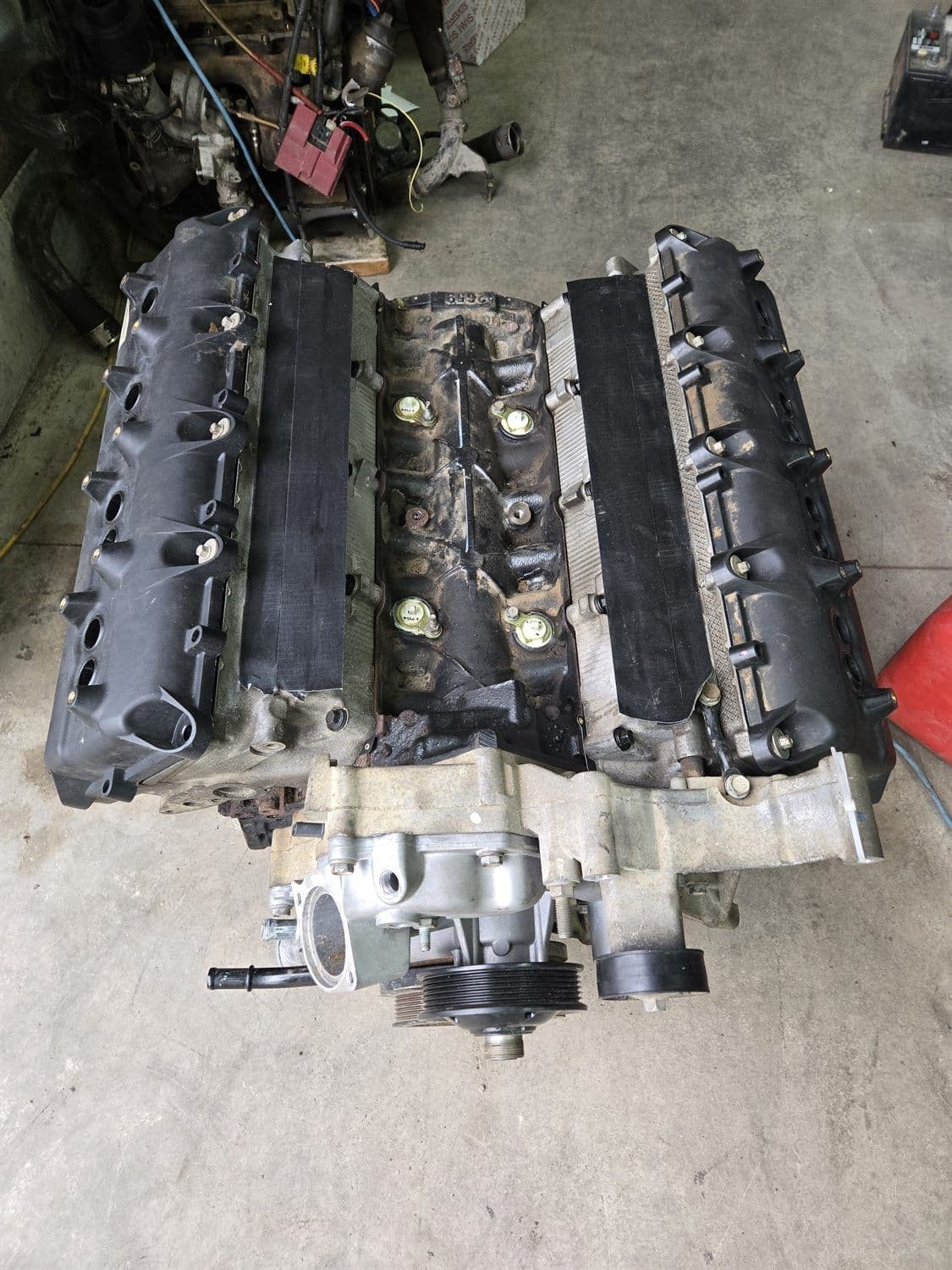
Got a job like this one?
Engine or transmission trouble — call (780) 482-2424 for a straight answer, or send us the details.