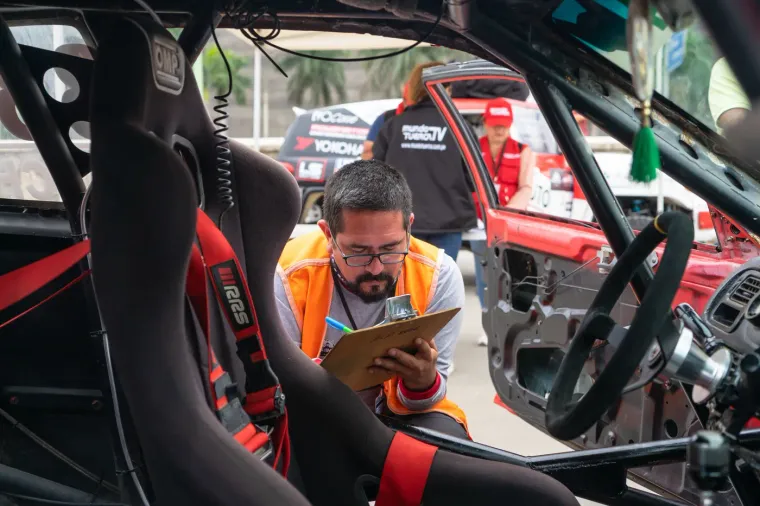
If your vehicle was last registered outside Alberta, it needs a passed out-of-province inspection before you can plate it here. Bring the registry form and the vehicle. Most fail items we repair here; a windshield goes to a glass specialist, and structural rust is body-shop work.
Alberta requires most vehicles coming in from another province or territory to pass an out-of-province (OOP) inspection before they can be registered here. That covers the common cases: you moved to Alberta with your vehicle, you bought one from out of province, privately or from a dealer, at auction or online, or you're bringing back a vehicle you had registered elsewhere. The inspection has to be done at a licensed inspection facility by a technician licensed under Alberta's Vehicle Inspection Program; a regular mechanic's once-over doesn't count, no matter how thorough. Vehicles previously branded as damaged or written off fall under a different, more rigorous program, not an OOP, so if you aren't sure which one applies to yours, ask when you book. Eskimo Auto Repair is AMVIC-licensed and we're at 12940 53 Street NW in Edmonton. Ours is $135 for a typical car, SUV or half-ton. Call (780) 482-2424 and we'll tell you what to bring before you drive over.
Start at the Registry: The Form You Need Before We Can Inspect
The registry comes first, and people lose days by arriving here without that step done. Go to any Alberta registry agent and buy a Request for Vehicle Inspection Form, taking photo ID and either the out-of-province registration or your bill of sale. No shop can sell you that form, and no licensed facility can start the inspection without it. If the vehicle has to be moved legally before it is inspected, ask the same agent about a temporary permit at the same time. Then bring the form and the vehicle in. The inspection holds a hoist and a licensed technician for up to a couple of hours on a light vehicle, so book it instead of dropping in; demand runs high through the summer moving season. What happens next depends on the result, and a pass and a fail each start their own clock.
What the Alberta Out-of-Province Inspection Covers
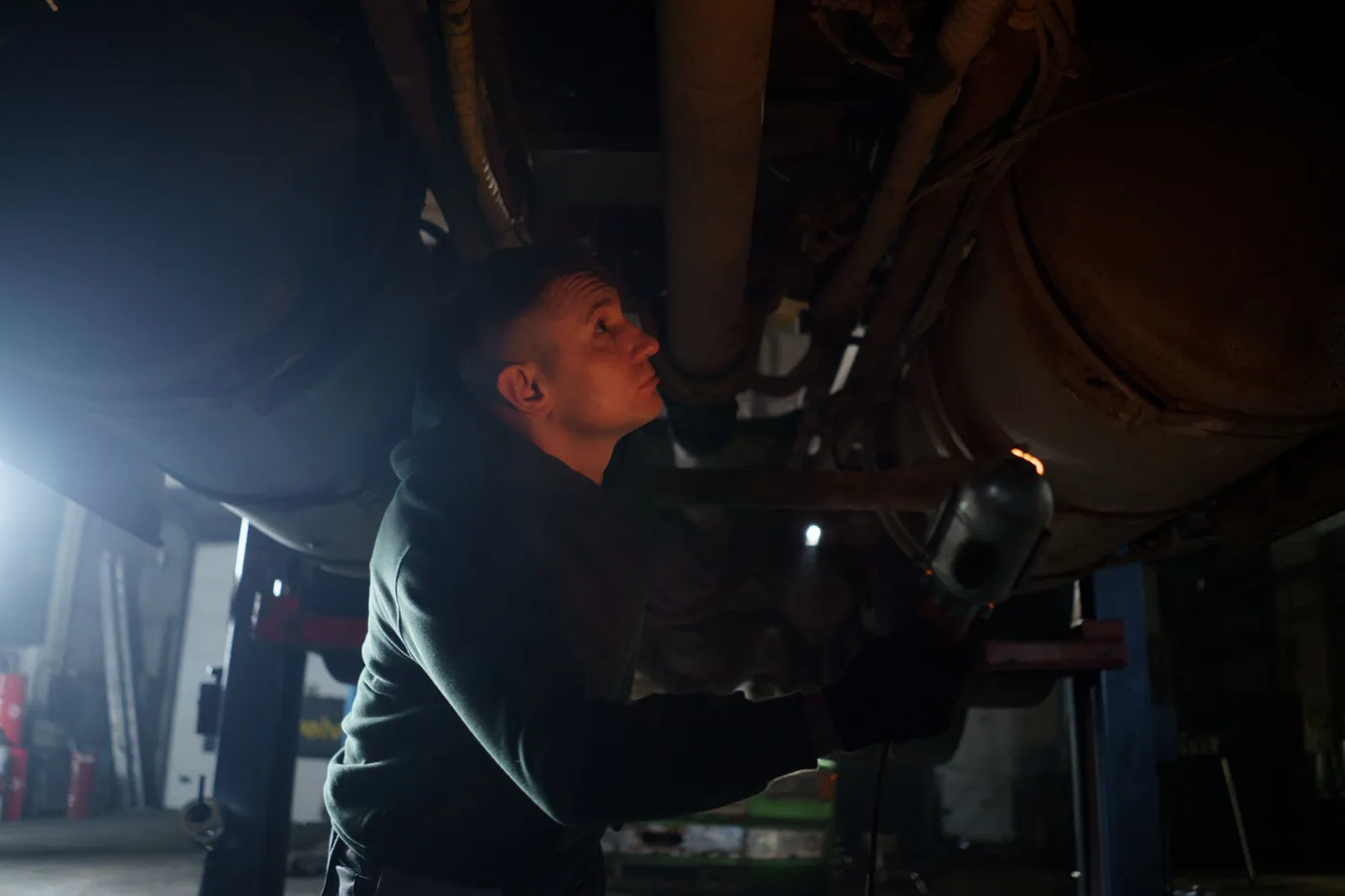
The provincial standard covers these areas, and a licensed technician works the whole list. It is a pass-fail check against a defined standard, not our opinion, and not negotiable in either direction. Brakes get measured rather than eyeballed: pad and shoe thickness, rotor and drum condition, lines and hoses, and the parking brake. Steering and suspension means ball joints, tie rod ends, bushings, struts and shocks, and wheel bearings. Then tires, for tread depth and damage; lights and signals front to back; glass in every position, with the wipers and washers; seatbelts, retractors and anchors; exhaust, for leaks, insecure components and a converter that has been removed; the fuel system, tank and filler neck; and the frame and body, including rust that has perforated through. The published standard is the authority on any specific item. What it says nothing about is engine or transmission health, remaining life, or whether the vehicle was a good buy. That is a pre-purchase inspection, and we do those too.
What Fails Most Often on Vehicles From Ontario, the Maritimes and BC
The failures we see most are a windshield cracked in the driver's wiper sweep, tires at or below minimum tread, seized parking brakes and burnt-out lights. The one that turns a routine inspection into a real bill is rust, and where the vehicle came from tells you how much to expect. Ontario and the Maritimes salt harder and longer than Alberta does, and those vehicles arrive with the corrosion already well along: rusted steel brake and fuel lines, rotted exhaust and hangers, corroded suspension and subframe mounting points, seatbelt anchors and floor pans eaten through, and parking brake cables seized inside their housings. Anything that lived near the ocean is worse again, because coastal salt air works year-round rather than from November to April. BC is a different pattern. Highway gravel chips windshields, and a mild coast means tires and brakes that have never met an Alberta winter. Whatever the vehicle passed elsewhere, Alberta starts from zero.
Sort These Before You Book, Starting With a Cracked Windshield
A few minutes in the driveway saves a wasted visit. Walk the lights with someone standing outside, front and back, including the plate lamp and the high-mount brake light. Put a coin in the tire tread. Then look hard at the windshield, because a crack in the glass the driver's wiper clears is a listed fail item and we cannot pass a vehicle around it. Windshields are not work we take on. That job belongs to a glass specialist, chips included, so get it done first and bring the vehicle to us afterwards; a cracked windshield found on our hoist costs you the inspection twice. Every other glass position on the vehicle we handle ourselves, and our auto glass page covers that side of it. One more thing before you come: empty the cargo area, because the floor, the spare and the rear seatbelt anchors all have to be reachable.
If It Fails: The 10-Day Repair Clock and How the Re-Check Works
A fail comes with an itemized list and 10 days to complete the repairs. Return inside those 10 days and only the failed items are re-checked; past 10 days Alberta requires a full re-inspection. Those are calendar days, not shop days, and a weekend plus one back-ordered part will eat most of them. So we quote the moment the vehicle is on the hoist and tell you straight away what is on the shelf and what has to come in, so nothing burns the 10 days waiting on a number. Most fail items are everyday work here: brakes, exhaust, lights, rusted brake lines, worn steering and suspension parts. Our brake repair and our suspension and steering pages carry the current ranges. Diagnostics run $120 an hour when a warning light has to be chased rather than simply repaired. For a mirror, a light assembly or a seatbelt component, Eskimo Auto & Truck Parts can often source genuine OEM quickly. One honest limit: structural rot and body perforation are body-shop work, and on a badly rusted salt-belt vehicle we will tell you the repair is worth more than the vehicle rather than sell you a re-inspection.
After You Pass: The 14-Day Certificate Deadline, and What the Certificate Is Not
On a pass you get the Out-of-Province Vehicle Inspection Certificate and the record of inspection. Take the certificate to an Alberta registry agent within 14 days; after that it is no longer accepted and the whole inspection is done again, at full price. Plates and Alberta insurance follow from the registry and your insurer, so passing and registering should be the same week's errands. Be clear about what you are holding, though. The certificate is a pass against a standard on the day of inspection. It is not a warranty, not a condition report, and not a promise that nothing will need attention next month. Plenty of vehicles pass with pads just over the minimum or tires just inside legal tread, and both are still jobs to plan for. Anything that passed but sits close to the limit gets noted on the record we hand back, so you know what is coming instead of finding out in February.
What an Out-of-Province Inspection Costs in Edmonton
Facilities set their own inspection prices and are required to post them, and across Edmonton the same inspection generally runs between about $130 and $250. At $135 for a typical car, SUV or half-ton we sit at the bottom of that range, and that is the posted price, not a number that climbs once the vehicle is in the air. If anything fails, the repairs are quoted separately and go ahead only with your approval. What a full repair shop gives you that an inspection-only outfit cannot is the second half: the list, the quote, the work and the re-check in one building, inside the 10 days. One thing worth doing in the same visit. A vehicle that has never wintered in Alberta usually has no block heater, and often no winter tires. We install block heaters, and we mount, balance and set up a winter set once you have one. Both are easier to book in September than in the third week of October.
Signs you need this service
- You've moved to Alberta and your vehicle is still registered in another province or territory
- You bought a vehicle from out of province — privately, from a dealer, at auction, or online
- You're bringing back a vehicle you previously registered in another province
- You were gifted or inherited a vehicle that's registered outside Alberta
- A registry agent or your insurer told you they need an inspection certificate to register the vehicle
- Your previous OOP certificate expired because it wasn't presented within 14 days
- You failed an inspection somewhere else and the 10-day repair window is already running
- The vehicle came from Ontario or the Maritimes and it has not been on a hoist since it arrived
What's included
- Complete out-of-province inspection to the Alberta Vehicle Inspection Program standard
- Performed by a licensed technician at a licensed inspection facility
- A straight answer on whether your vehicle needs an OOP or the branded-vehicle program, before you buy the registry form
- Inspection certificate and record of inspection for the registry on a pass, with anything close to the limit noted
- An itemized, plain-language list of any failed items with a repair quote
- In-house repairs on most fail items — brakes, steering and suspension, exhaust, lights and rusted brake lines — with genuine OEM parts sourced through Eskimo Auto & Truck Parts; a windshield goes to a glass specialist and structural rust is body-shop work
- Re-inspection of failed items when the repairs are completed within the 10-day window
- Straight answers before you book — what to bring, what commonly fails, what it costs
Frequently asked questions
What do I need to bring to the inspection?
The Request for Vehicle Inspection Form and the vehicle, in that order. The form comes from any Alberta registry agent, and buying it takes photo ID plus either the out-of-province registration or your bill of sale. No licensed facility can start an OOP inspection without it, so the registry is your first stop, not the shop. Bring the wheel lock key if your vehicle has one, because the wheels may have to come off.
How long does the inspection take, and do I need to book ahead?
Plan on up to about two hours for a typical car or light truck, and longer for something larger or more complicated. Book it rather than dropping in: the inspection holds a hoist and a licensed technician for a solid block, and demand runs high through the summer moving season. If the vehicle has come from a salt-belt province, leave a little room in your day for a conversation about what turned up underneath it.
How much does an out-of-province inspection cost in Edmonton?
The inspection is $135 for a typical car, SUV or half-ton. Every licensed facility sets and posts its own price, and they vary widely across the city, so ask what a quoted number includes before you book. Ours covers the technician's time on the hoist and either the certificate or the itemized failed-items list at the end. The registry form is bought separately, from the registry, before you come.
If it fails, do the repairs have to be done at your shop?
No. The list is yours and you can take it anywhere. What you cannot do is take your time: the repairs have to be finished and the vehicle back in front of a licensed technician within 10 days for only the failed items to be re-checked. After that, Alberta requires a full re-inspection. Most people leave it with us so the list, the quote, the repairs and the re-check happen in one building instead of three.
Does a cracked windshield fail, and do you replace windshields?
A crack in the glass the driver's wiper clears is a standard fail item, and windshields are not work we take on, chips and the camera behind the glass included. A glass specialist handles all of that. The sensible order is windshield first, inspection second, so one crack does not cost you two inspections. The rest of the glass on the vehicle we do ourselves, used or new.
I just moved to Alberta from Ontario. What should I expect?
Expect rust to be the story rather than anything mechanical. Underneath a salt-belt vehicle the corrosion is usually further along than the paint suggests, and the standard does not care how well the vehicle drives. If you have not bought it yet, a pre-purchase inspection tells you what you are walking into before you pay for the registry form. If the rot turns out to be structural, we will say so rather than sell you a re-inspection.
Do I need an out-of-province inspection if I bought the vehicle in Alberta?
No. It applies only to vehicles last registered outside Alberta, so an Alberta-registered vehicle bought here does not need one. Two things are worth knowing. Vehicles previously branded as damaged or written off fall under a different and more rigorous program, so ask when you book. And the voluntary inspection, the one about condition and value before you hand over the money, is a pre-purchase inspection, which we also do.
Related services
Book your out-of-province vehicle inspection
Call for a straight answer on cost and timing, or book online.