
A real job from our Edmonton shop
Cabin filters nobody had changed — 2014 Nissan Titan
2014 Nissan Titan · 5.6L V8
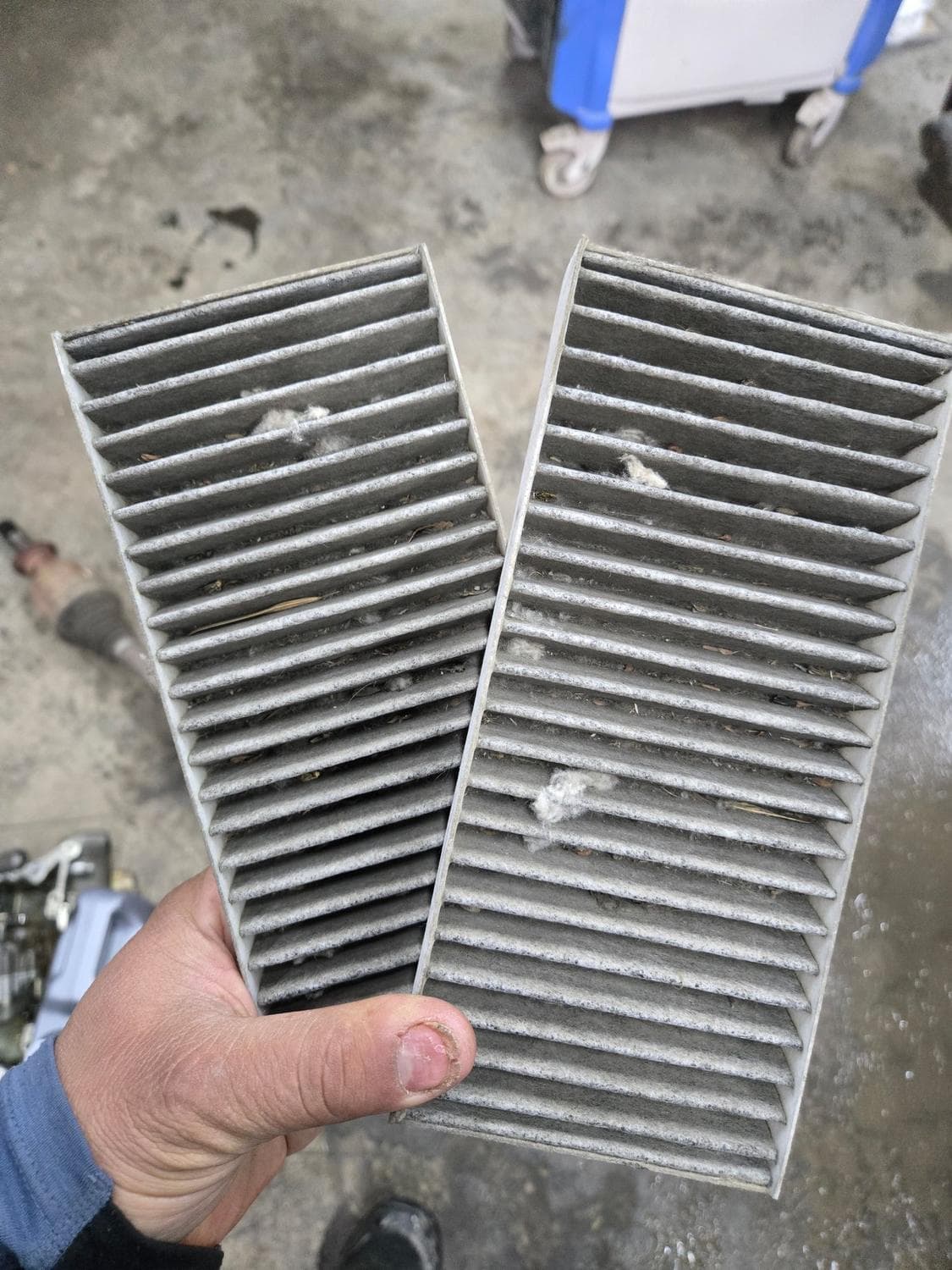
What came in
No fault, no warning light, and nothing on a scan tool — just the slow decline in heat, defrost and airflow that a blocked cabin filter produces and that owners tend to put down to the vehicle getting old.
What we found
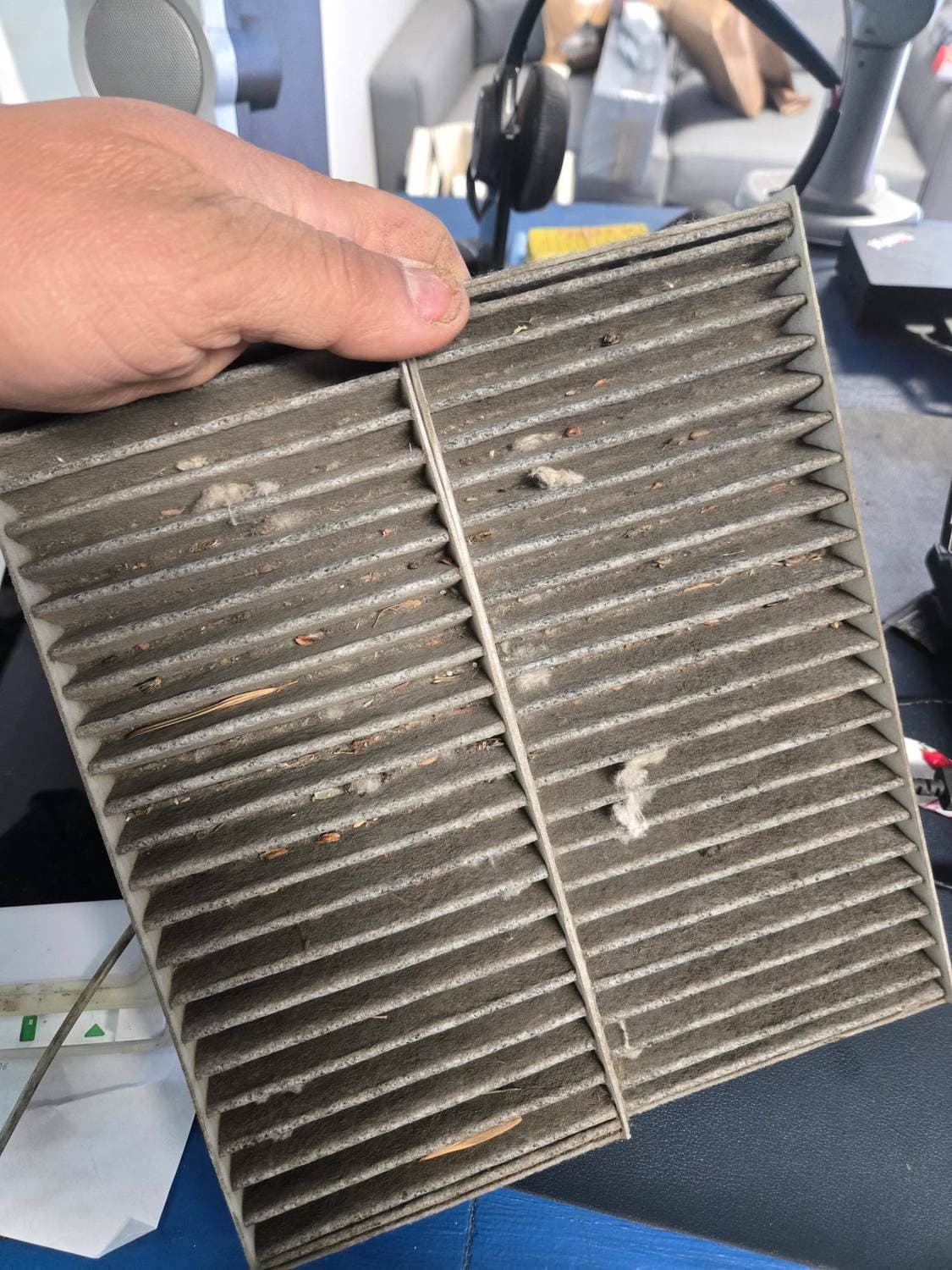
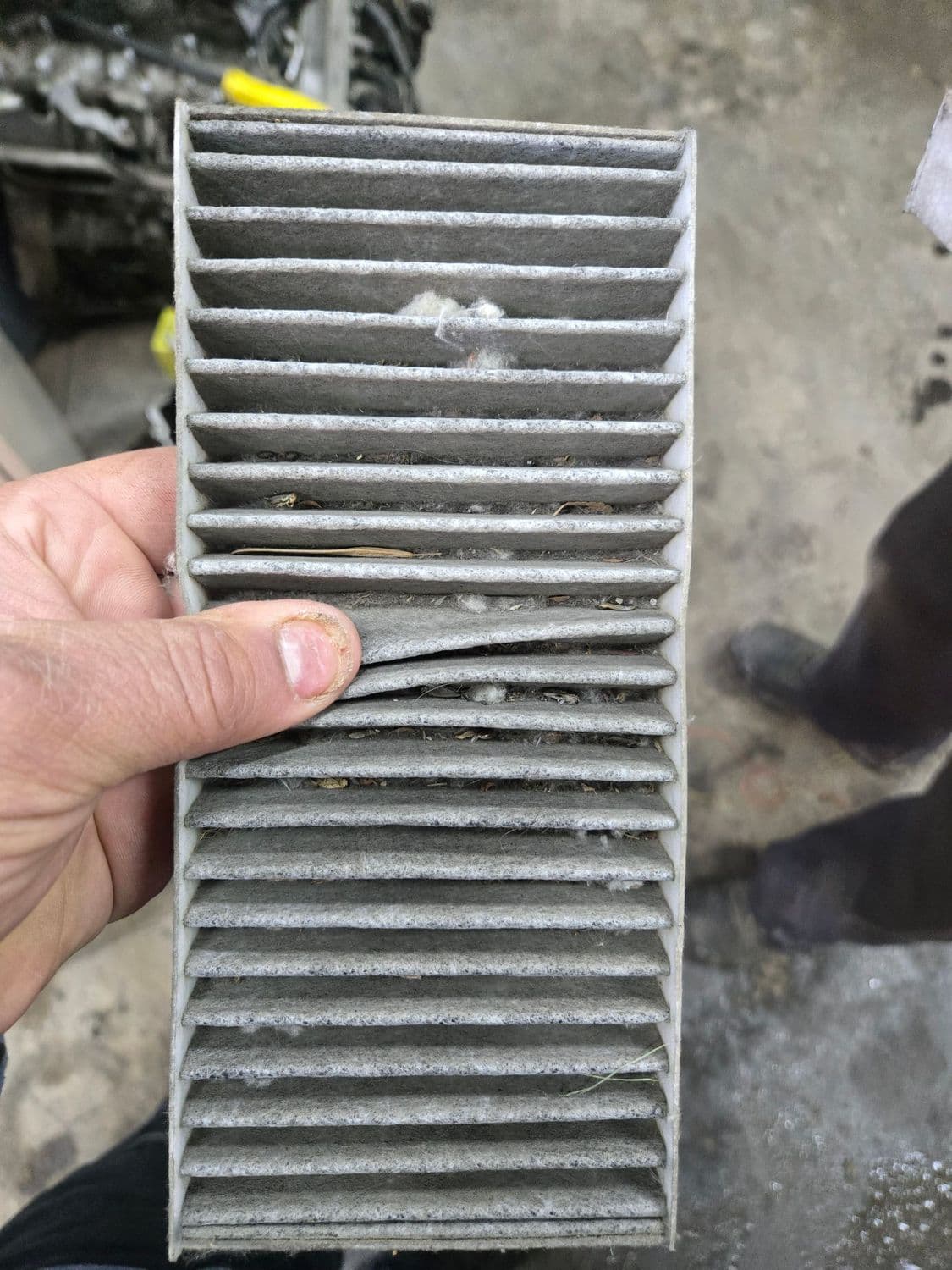
Both cabin filters behind the glove box were loaded solid with dust, seeds, needles and matted fluff. Air was finding its way around what was left rather than through it.
What we did
Replaced the pair. This truck takes two filters side by side, so a change that only does one leaves half the restriction in place.
The outcome
Full airflow restored to the heater and defroster, and a blower motor that is no longer pulling against a blocked filter every time it runs.
Photos from the job
Our own bays, our own bench — no stock photography.
Background
What to know about the 5.6L V8
General background on this engine family — not findings from the job above.
What a cabin filter is and where the air actually comes from
The air that reaches you through the dash vents is not taken from inside the vehicle. Unless recirculation is selected, it is drawn from outside through an intake at the base of the windscreen, under the plastic cowl where the wipers sit, and that is the worst possible place and the only sensible one. It is low pressure at speed, which makes the air move without a fan, and it is also exactly where leaves, seeds, road dust, pollen and everything else collects. The cabin filter sits in that path, almost always behind the glove box, and catches what the air brings with it before it reaches the heater core, the evaporator, the blower and you. It is a simple pleated panel, usually with a layer of activated carbon for smells. It is not a lifetime part, it has no sensor, and nothing in the vehicle will tell you it is full. The only way anyone finds out is by pulling it, which is why this is the single most skipped service item on any vehicle.
Why a blocked filter shows up as a HEAT problem, not an air problem
This is the part worth understanding, because it is what sends people to a shop with the wrong complaint. A heater does not work by making air hot in one place. It works by moving a quantity of air across a hot heater core and delivering it to the cabin, and how much heat you actually get is the temperature difference multiplied by how much air is moving. Block the airflow and the engine coolant is still exactly as hot as it ever was, the heater core is still exactly as hot, and yet much less heat arrives at your feet — because far less air is being carried across it. The air that does come through can even feel hotter at the vent while the cabin as a whole gets colder, which is genuinely confusing from the driver's seat. Defrost suffers in the same way and for the same reason, except that defrost also depends on moving enough dry air across the glass to carry moisture away, so a restricted filter leaves windows fogging up and staying fogged. People describe all of this as a heater problem, and sometimes it is. Often it is a filter.
What a blocked filter does to the blower motor and its resistor
A blower is a fan being asked to move air against whatever resistance is in front of it. Restrict the path and the motor works harder, draws more current and runs hotter for every minute it is switched on, which is most of the time in an Edmonton winter. That shortens the motor's life. It is also hard on the part that controls fan speed — a resistor pack or a control module, depending on the vehicle — which sheds its own heat into the air passing over it. On many vehicles that component is deliberately mounted in the airflow so it is cooled by the air the blower is moving, which is an elegant arrangement right up until the airflow drops, after which it is cooking itself. The familiar failure where only the highest fan speed still works is a resistor or module failure, and reduced airflow is one of the things that gets it there. So a filter nobody changed quietly turns into a blower motor and a speed control, which is not a $75 conversation.
The one that takes two filters, and the half-done change
Not every vehicle uses a single panel. Plenty of trucks and SUVs take a pair side by side in the same housing, because the opening behind the glove box is not wide enough to slide one large filter through. Both sit in the same airstream and both have to come out. It is an easy thing to get half right — the first filter slides out, the new one goes in, and the second one is left in place behind it, still blocked, still restricting the same air. If a cabin filter has been changed recently and the airflow is still poor, that is worth asking about, and it costs nothing to look. The same applies to a filter fitted the wrong way round: these are directional, with an airflow arrow printed on the frame that should point the way the air travels, and backwards is both less effective and harder on the blower.
What to expect from one in an Edmonton winter
Service intervals printed in an owner's manual assume conditions that are not necessarily yours. A vehicle parked under trees collects seeds and needles — you can see both in these photos. A vehicle driven on gravel roads loads up with dust far faster than one that lives on pavement. Running recirculation most of the time helps the filter and hurts the glass, because the moisture you and your passengers breathe out stays in the vehicle instead of being carried away. A reasonable habit is to look at it once a year, going into winter rather than coming out of it, since that is when you need the defroster and when a weak one actually matters. Filters are inexpensive, the job is quick on most vehicles, and it is the cheapest thing on the list to rule out before anyone starts pricing a blower motor or a heater core.
If you run one of these
- Nothing warns you about a cabin filter. No light, no code — the only way to know is to look at it.
- Weak heat in winter is often airflow, not temperature. A blocked filter leaves the heater core just as hot while far less heat reaches you.
- If your windows fog and stay fogged, check the filter before assuming the worst about the heater.
- Some vehicles take TWO filters side by side. If yours was changed recently and airflow is still poor, ask whether both came out.
- Filters are directional — the arrow on the frame should point the way the air flows.
- A blocked filter makes the blower motor and its speed control work hotter for every minute they run, which is how a cheap part turns into an expensive one.
- Check it going INTO winter, not coming out of it. Park under trees or drive gravel and look more often.
More jobs from our bays
See every job →
Got a job like this one?
Engine or transmission trouble — call (780) 482-2424 for a straight answer, or send us the details.