
A real job from our Edmonton shop
The Wrangler that would not stop leaking — 2019 Jeep Wrangler 2.0L turbo
2019 Jeep Wrangler · 2.0L turbocharged four-cylinder (GME T4)
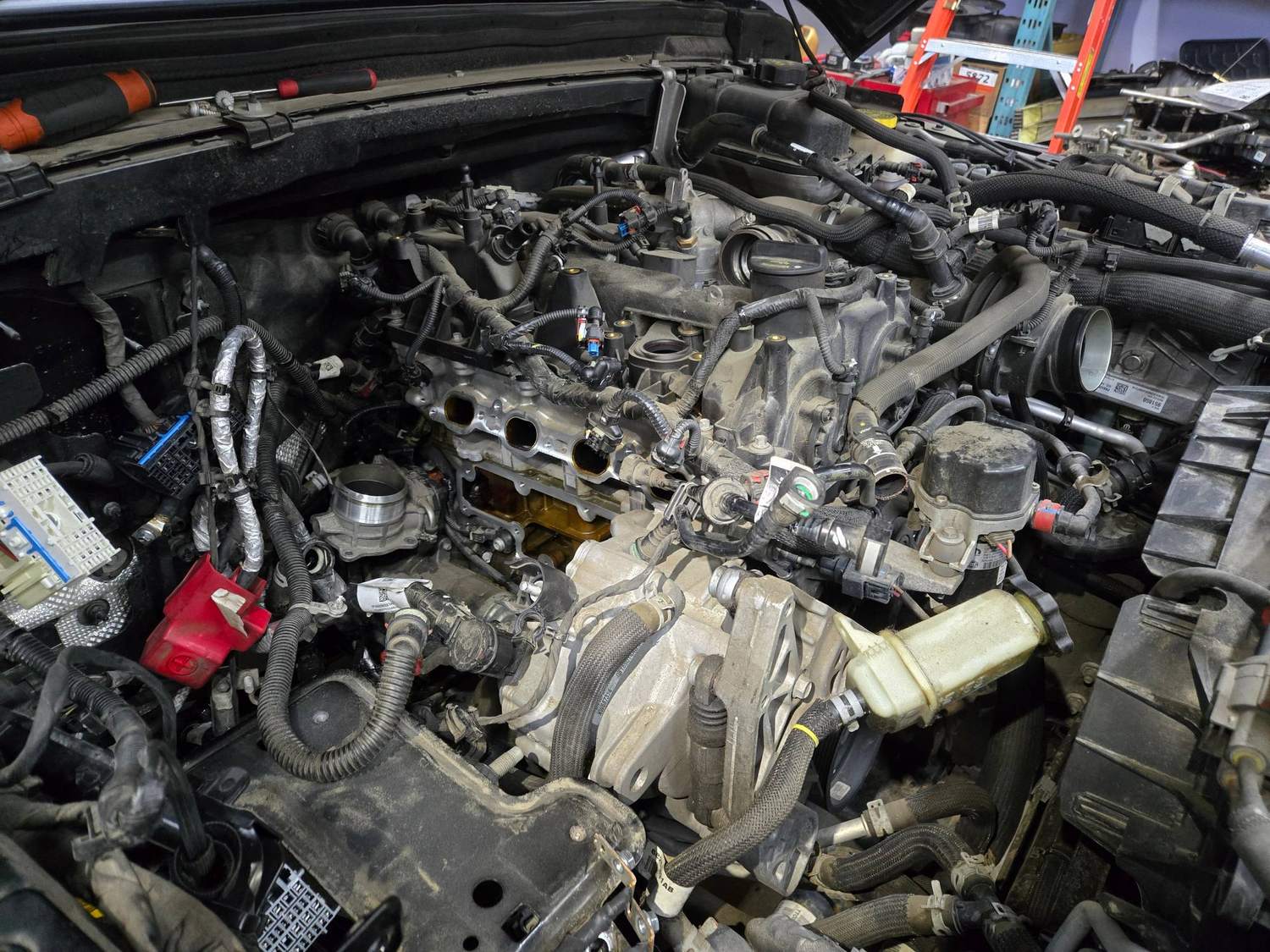
What came in
Oil on the driveway and oil down the side and back of the engine on a 2.0L turbo Wrangler — the kind of leak that has usually already been chased once without being fixed.
What we found
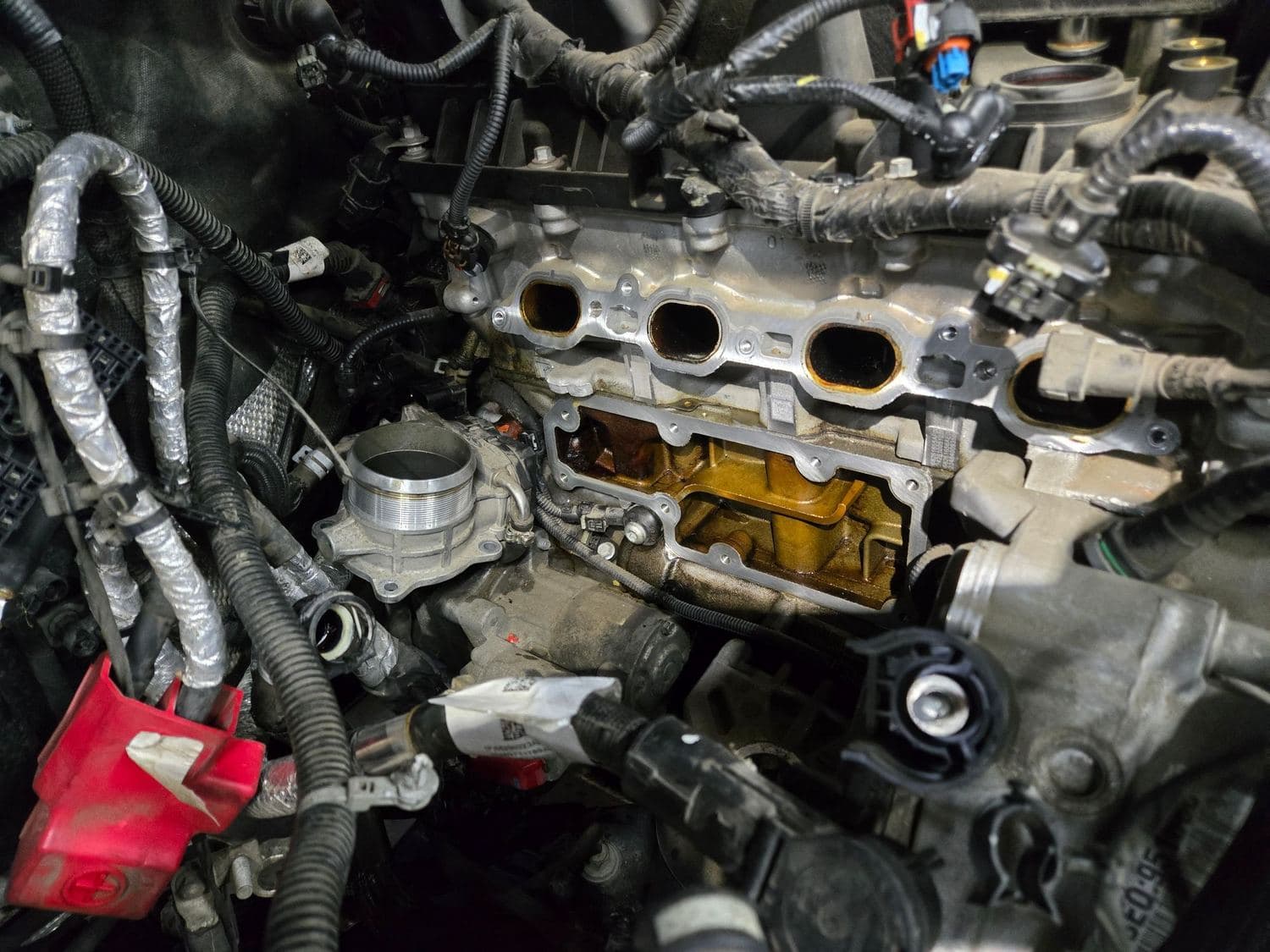
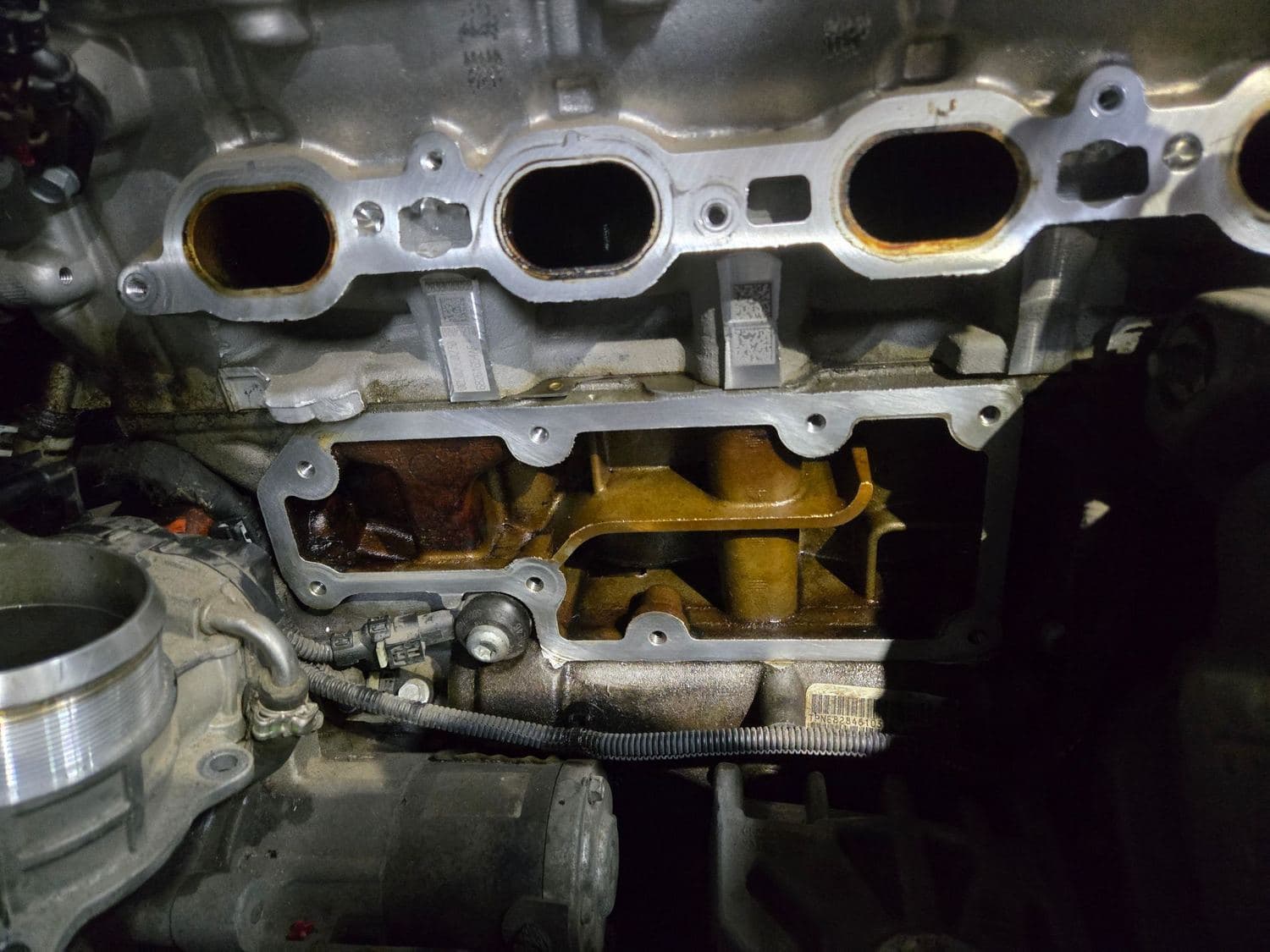
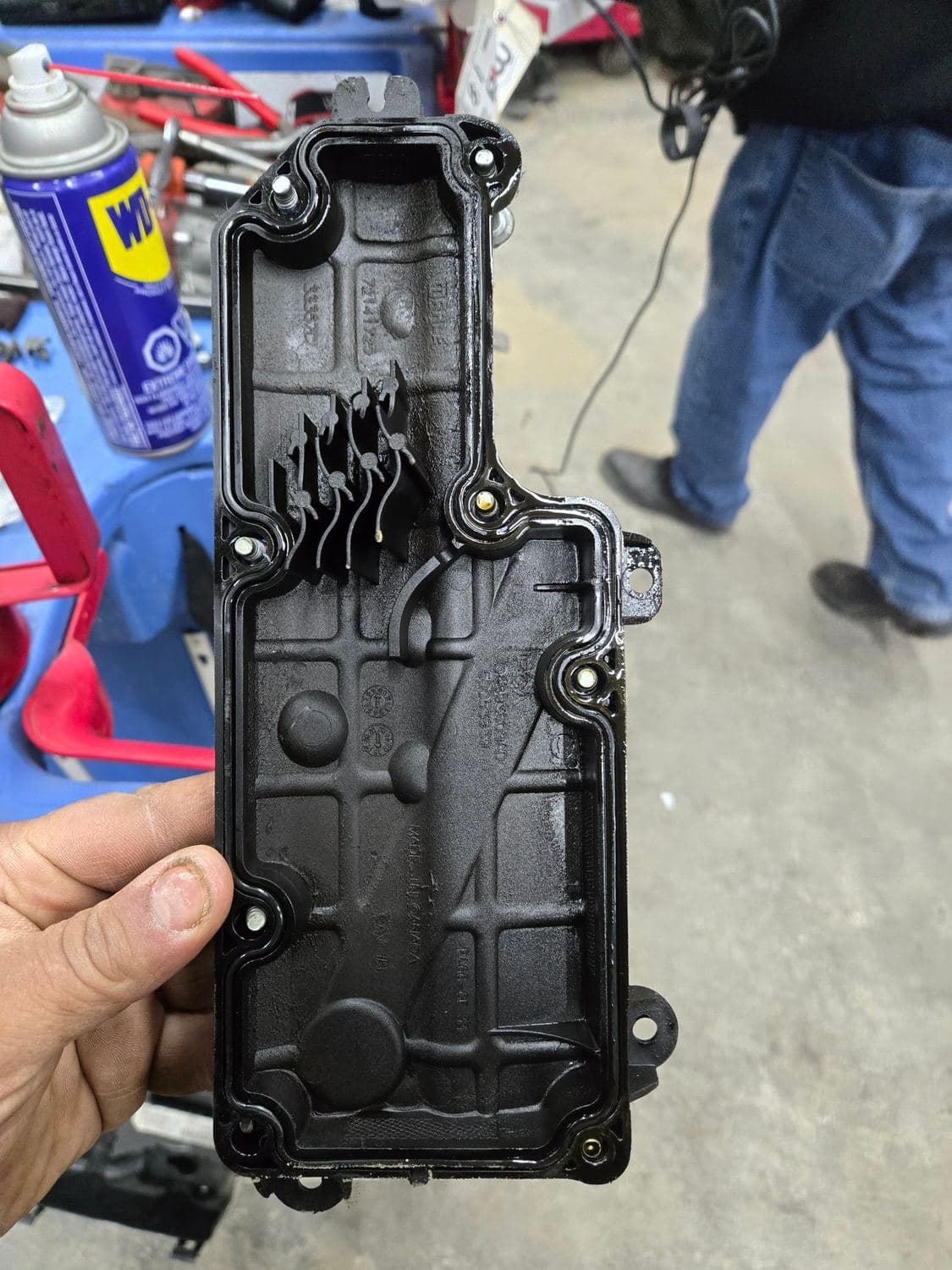
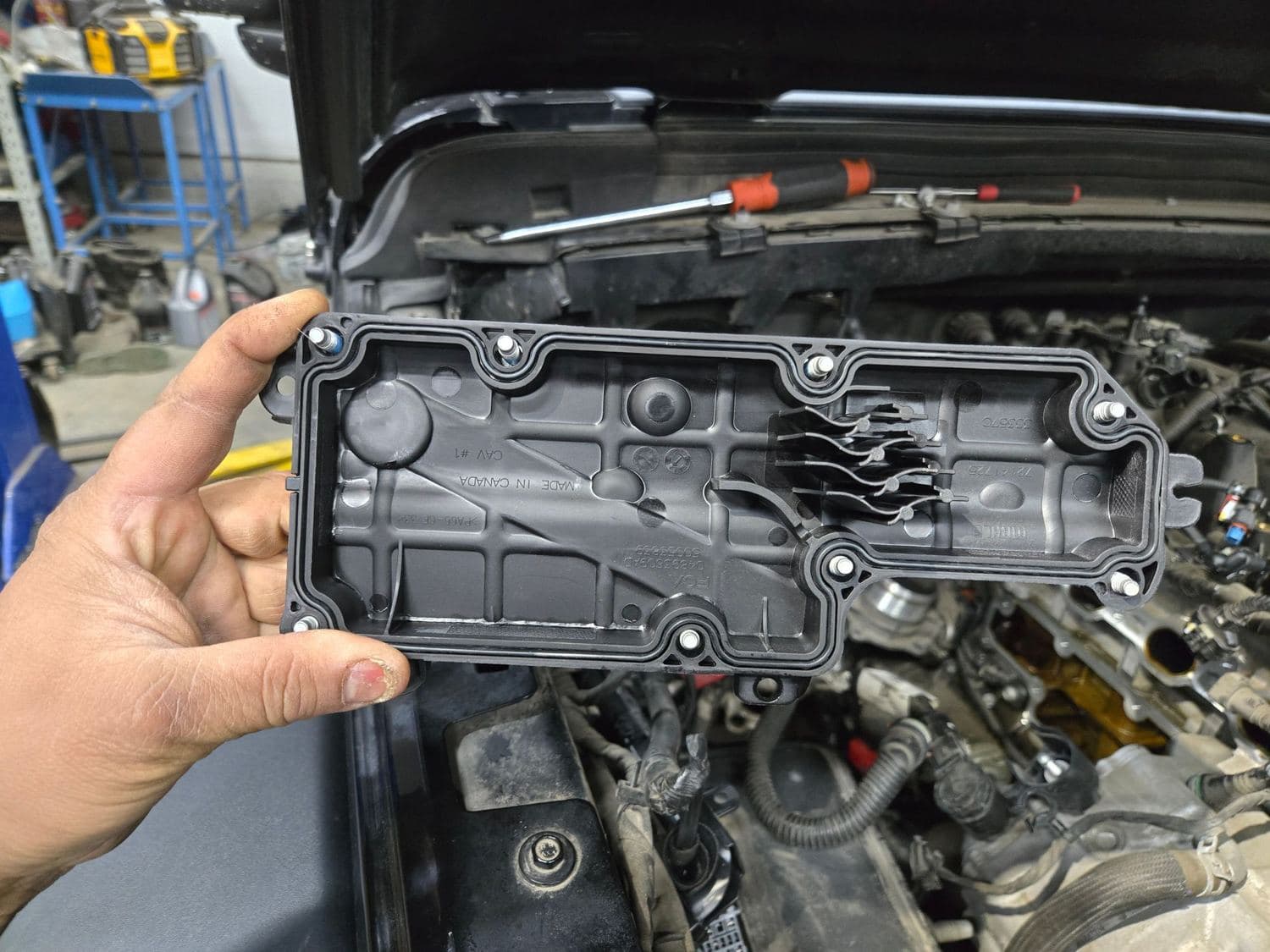
The crankcase oil separator was leaking at its housing seal. Because the oil escapes high on the engine and runs down, the wet area sits well below where the leak starts, which is why this one is so often written up as a valve cover, rear main seal or oil cooler line leak instead.
What we did
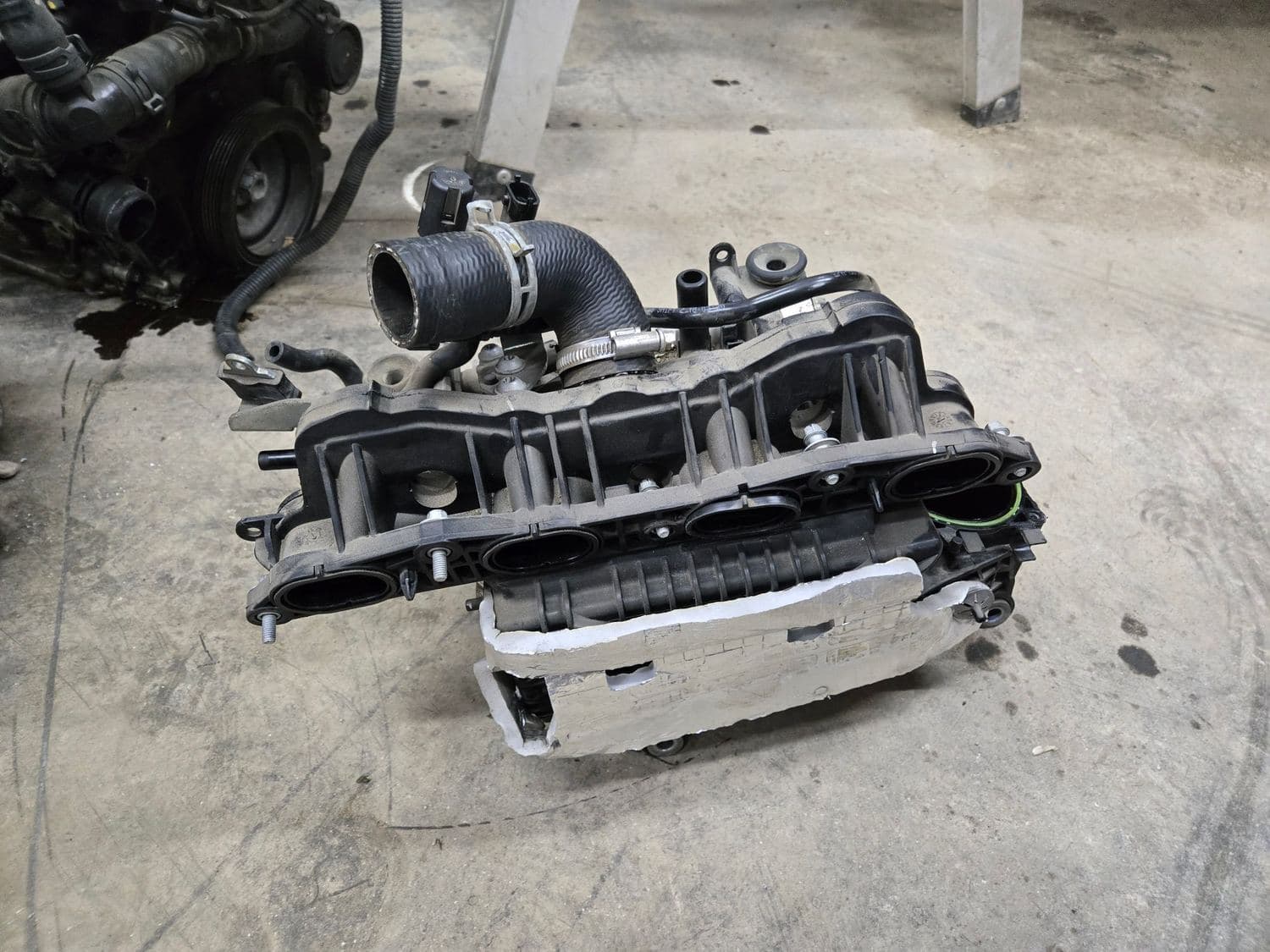
Drained the cooling system, removed the intake manifold, and replaced the oil separator together with its moulded gasket rather than attempting to reseal it. Reassembled with new intake port seals, refilled and bled the coolant, then cleaned the engine down so the repair can be verified on the next inspection instead of guessed at.
The outcome
A dry engine, and a leak fixed at the actual source rather than at the lowest point the oil happened to reach. The part is inexpensive; what this job costs is the access, and that is worth knowing before comparing quotes.
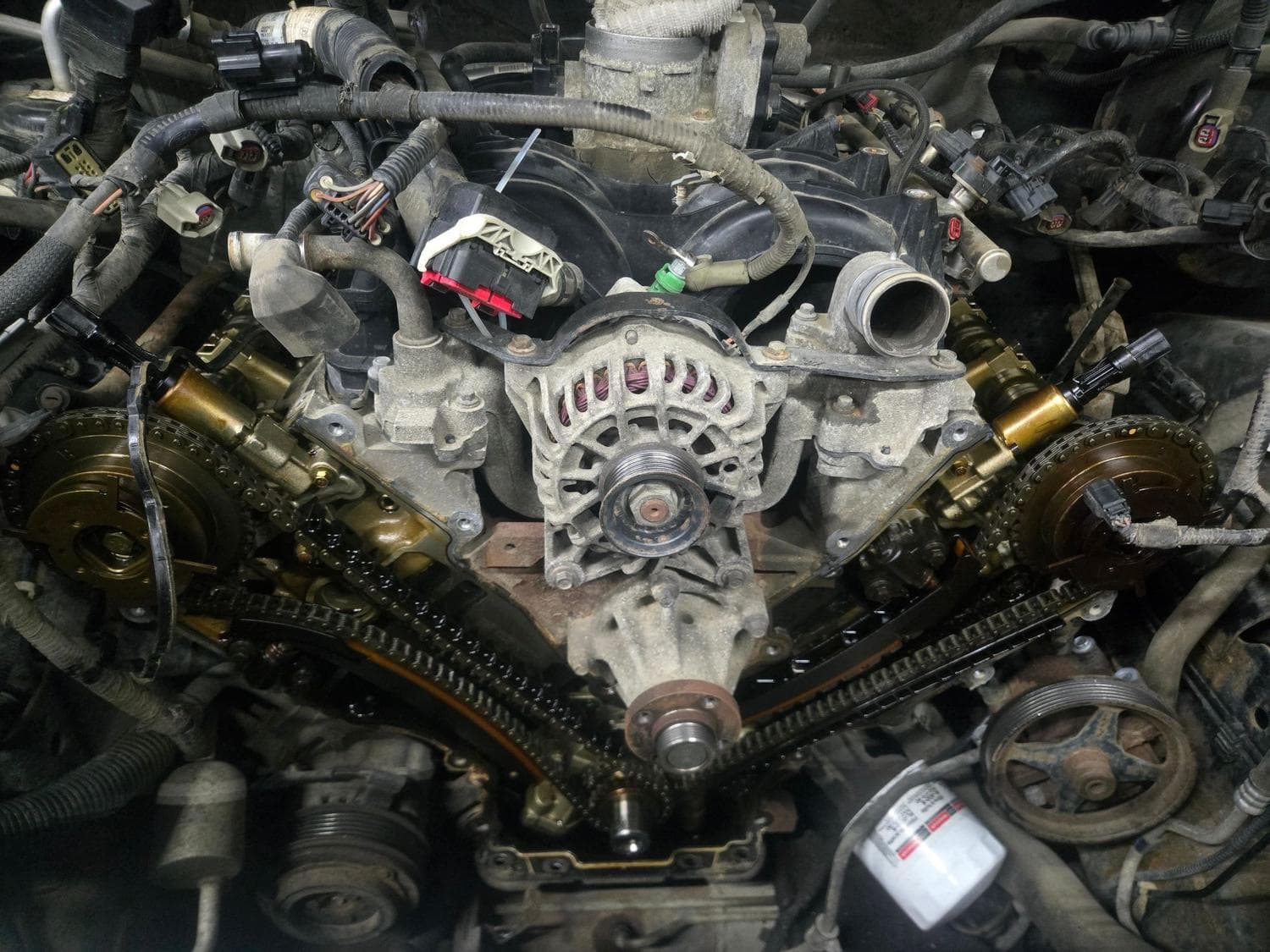
Photos from the job
Our own bays, our own bench — no stock photography.
Background
What to know about the 2.0L turbocharged four-cylinder (GME T4)
General background on this engine family — not findings from the job above.
Why an engine has to breathe at all
No piston ring seals perfectly, and none is meant to. On every power stroke a small amount of what is happening above the piston escapes past the rings into the crankcase, and that leakage is called blow-by. It is not a fault; it is a design condition that every engine lives with, and it is greater on a turbocharged engine because the pressure above the piston is higher. What arrives in the crankcase is a mixture — combustion gases, unburned fuel, water vapour, and oil that has been whipped into a fine mist by the crankshaft. If that mixture were left to accumulate it would do two things, both bad. It would pressurise the crankcase, and pressure inside an engine has to escape somewhere, which means past the seals and gaskets that were never designed to hold it back. And the fuel and water in it would condense into the oil, thinning it and turning it acidic, which attacks bearings and forms sludge. So the engine is given a way to breathe: the crankcase is vented, continuously, and the gases are routed back into the intake to be burned instead of released. That is crankcase ventilation, and it is not optional equipment.
What the oil separator actually does, and how it does it
The problem with venting the crankcase into the intake is the oil mist riding along in those gases. Send that straight to the intake and it coats everything downstream — the charge pipes, the intercooler, the compressor wheel of the turbocharger — and on a direct-injection engine it lands on the backs of the intake valves, where there is no fuel spray to wash it off, and bakes into hard carbon. Oil in the intake charge also lowers the effective octane of what is entering the cylinder, which is not something you want on a small, highly boosted engine. The separator is the device that takes the oil back out before the gases leave. It does it mechanically, with no moving parts in the separating itself. The gas is forced through a chamber full of baffles and fins that make it change direction repeatedly over a short distance. The gas, being light, follows the turns. The oil droplets, being heavier, cannot — they carry straight on, strike the walls and fins, run together into larger drops, and drain back down into the sump through a return passage. Clean gas leaves the top, recovered oil leaves the bottom, and the engine keeps the oil it paid for. The internal maze visible in these photos is that separator element.
Why a turbocharged engine needs two ways to vent
On a naturally aspirated engine the plumbing is simple, because the intake manifold is always below atmospheric pressure while the engine is running. There is always suction available to draw the crankcase gases in, and a single valve metering that flow is enough. A turbocharged engine spends part of its life in exactly the opposite condition. Under boost the intake manifold is above atmospheric pressure, so not only is there no suction to pull the gases in, the pressure would try to push the other way, into the crankcase. The answer is two paths with check valves deciding between them. Off boost, at idle and light cruise, manifold vacuum draws the gases in downstream of the throttle in the familiar way. Under boost, that path closes and the gases are instead drawn into the inlet of the turbocharger, ahead of the compressor, where the air rushing past creates a slight depression. The system also has to limit how hard it pulls, because too much crankcase vacuum will pull seals inward and make them leak. All of that sits in and around the separator assembly, which is why a fault here can show up as an oil leak, as oil in the intake tract, or as a pressure complaint, depending on which part of it has failed.
Why this leak gets blamed on the wrong part
Oil does not announce where it came from. It leaves at the failure, runs downhill under gravity and airflow, and makes the engine wet somewhere lower and further back than where it started. The separator sits high on the side of the engine under the intake manifold, so by the time the oil is visible it has travelled across castings, down the back of the block and onto whatever is below. Every component it passed on the way is now a plausible-looking suspect, and the cheap, accessible ones get blamed first — the valve cover gasket especially, because it is near the top, it is a known leak point on plenty of other engines, and it is a fraction of the labour. Owners of these Wranglers describe the same sequence often enough that it is worth naming: a leak, a valve cover gasket, and a leak that is still there afterwards. The way to avoid paying twice is to find the top of the wet area rather than the bottom, and the way to do that properly is to clean the engine down completely, run it, and look again — or use a fluorescent dye and a UV lamp, which shows the origin rather than the destination. It is a slower diagnosis and it is the one that only gets paid for once.
Why a cheap part turns into most of a day
There is a category of repair where the part price tells you almost nothing about the bill, and this is one of them. The separator is an inexpensive component. It is also underneath the intake manifold, which means the manifold has to come off to reach it, and on this engine taking the intake off means draining the cooling system first, along with disconnecting wiring, vacuum lines and charge-air plumbing that all live in the same space. Reassembly is not simply the reverse: the intake goes back on new seals rather than old ones, and the cooling system has to be refilled and properly bled afterward, because air left in a modern cooling system is its own problem. That is the shape of the job, and it is why two quotes for the same repair can look very different. If one is dramatically cheaper, the useful question is whether it includes removing the intake manifold, because there is no route to this part that does not.
What happens if the leak is left alone
An external oil leak is easy to live with for a while, which is exactly why it tends to be left. The honest answer is that the leak itself is usually a slow problem rather than a sudden one, but it is not harmless. Oil level falls between services, and a small turbocharged engine working hard is not a good place to be low on oil. Oil on a hot exhaust or turbocharger smells, smokes and is a genuine fire risk at the extreme. Oil soaking rubber and plastic — mounts, hoses, wiring insulation and belts — shortens their lives, so the repair bill quietly grows parts that had nothing to do with the original fault. And the leak hides anything else that starts leaking later, because the engine is already wet. There is a related point worth separating out: if the ventilation system is blocked or its pressure control has failed rather than simply weeping at a seal, crankcase pressure rises and starts pushing oil out of other seals as well, which turns one gasket into several. That is a different fault with a similar symptom, and it is worth having the pressure checked rather than assumed when an engine is leaking from more than one place at once.
If you run one of these
- On a 2.0L turbo Wrangler, an oil leak that has already had a valve cover gasket and is still leaking is worth having the oil separator looked at.
- Ask the shop to find the TOP of the wet area, not the bottom — oil runs downhill, and the lowest wet part is rarely the source.
- A proper diagnosis means cleaning the engine down and looking again, or using dye and a UV lamp. It takes longer and it is the version you only pay for once.
- The part is inexpensive; the cost is access. Any quote should say plainly whether the intake manifold coming off is included.
- The cooling system gets drained to do this job, so it should come back refilled and bled, not just topped up.
- Check your oil level between services while you wait for the repair — a small turbo engine running low on oil is a much bigger bill.
- If the engine is leaking from several places at once, ask about crankcase pressure rather than booking several gaskets.
More jobs from our bays
See every job →
Got a job like this one?
Engine or transmission trouble — call (780) 482-2424 for a straight answer, or send us the details.