
A real job from our Edmonton shop
Honda K24 2.4L rebuild
Honda K-series · 2.4L K24 four-cylinder
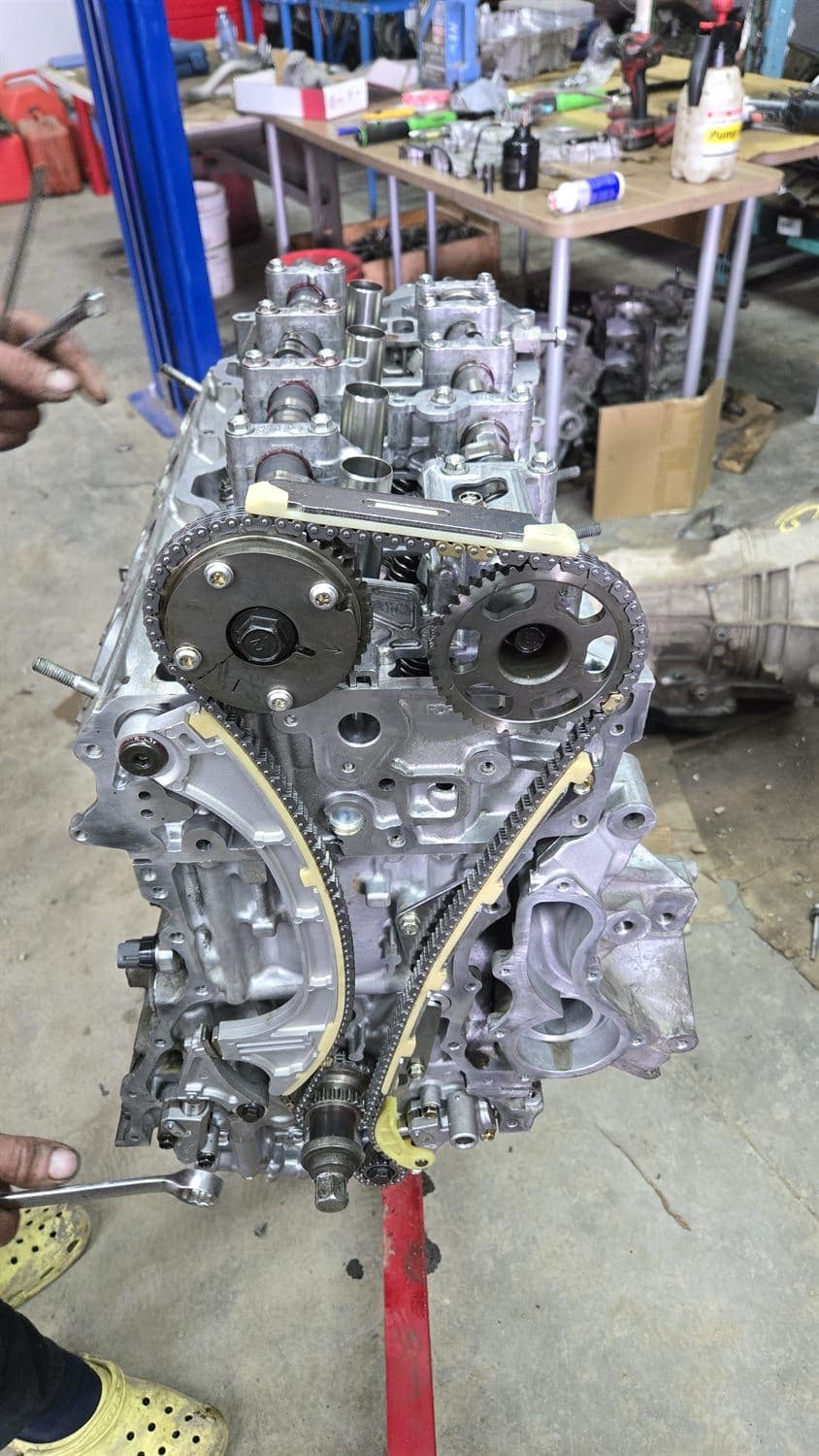
What came in
A K24 on the bench — the four-cylinder behind a huge range of Accords, CR-Vs, Elements and TSXs, and a genuinely good motor that high kilometres, oil neglect or a timing problem can still take down.
What we found
The engine was worth a proper rebuild — usually the smart, affordable fix on this platform rather than replacement.
What we did
Went through the bottom end and the head, replaced the wear parts, and reassembled to Honda spec.
The outcome
A common, well-proven engine put back to spec. Imports are a big part of what we do — we're not just a domestic-truck shop.
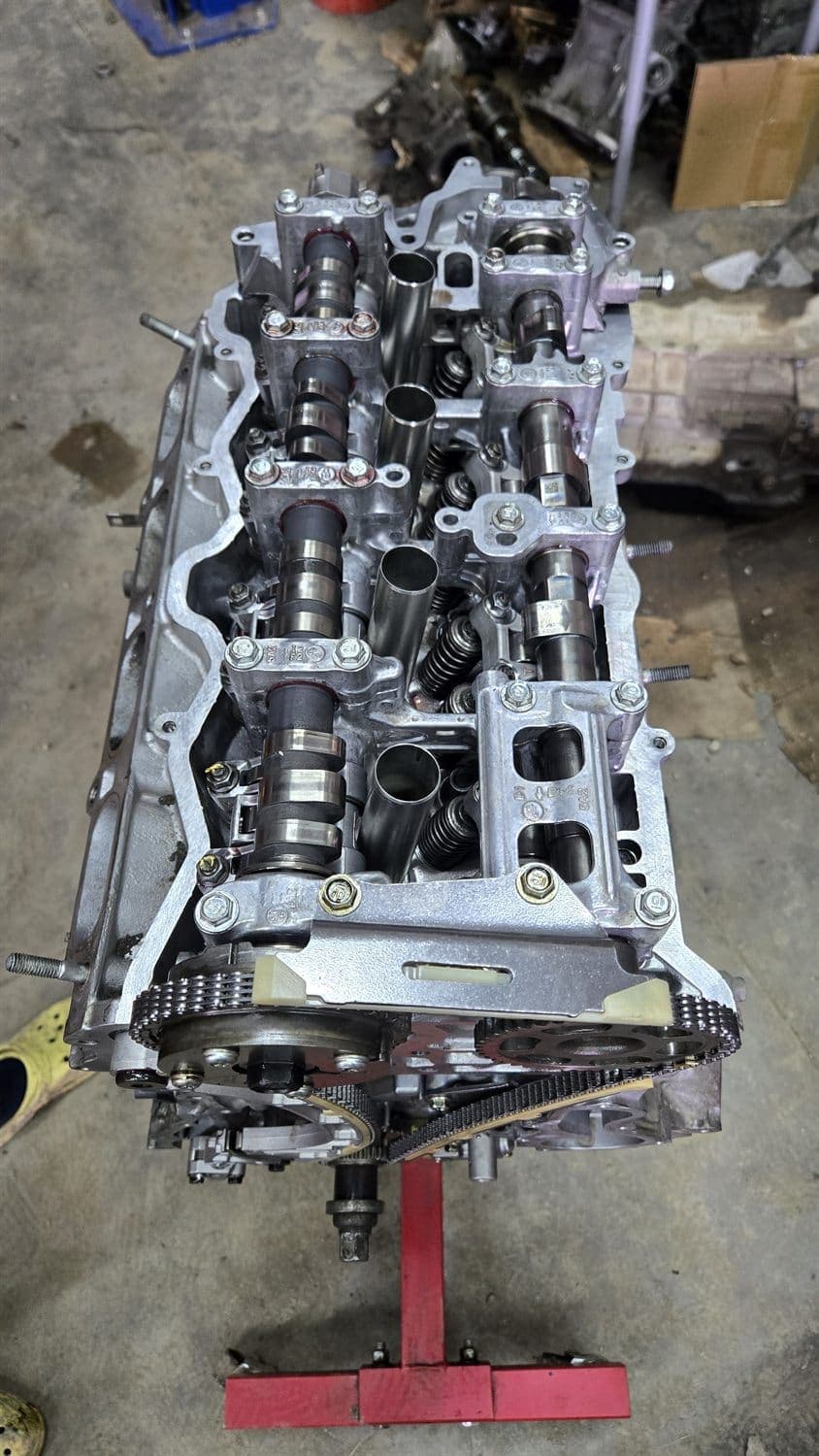
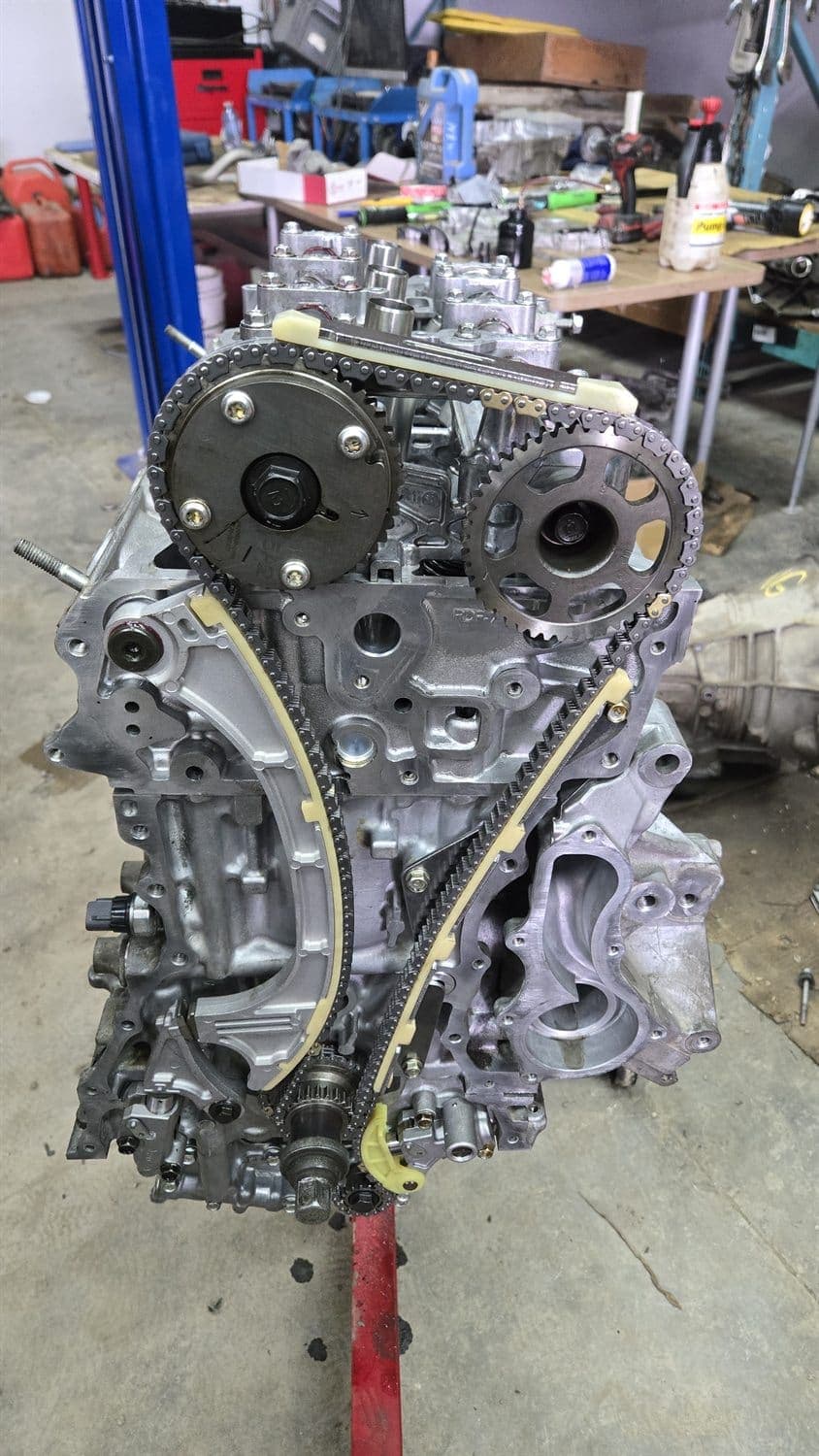
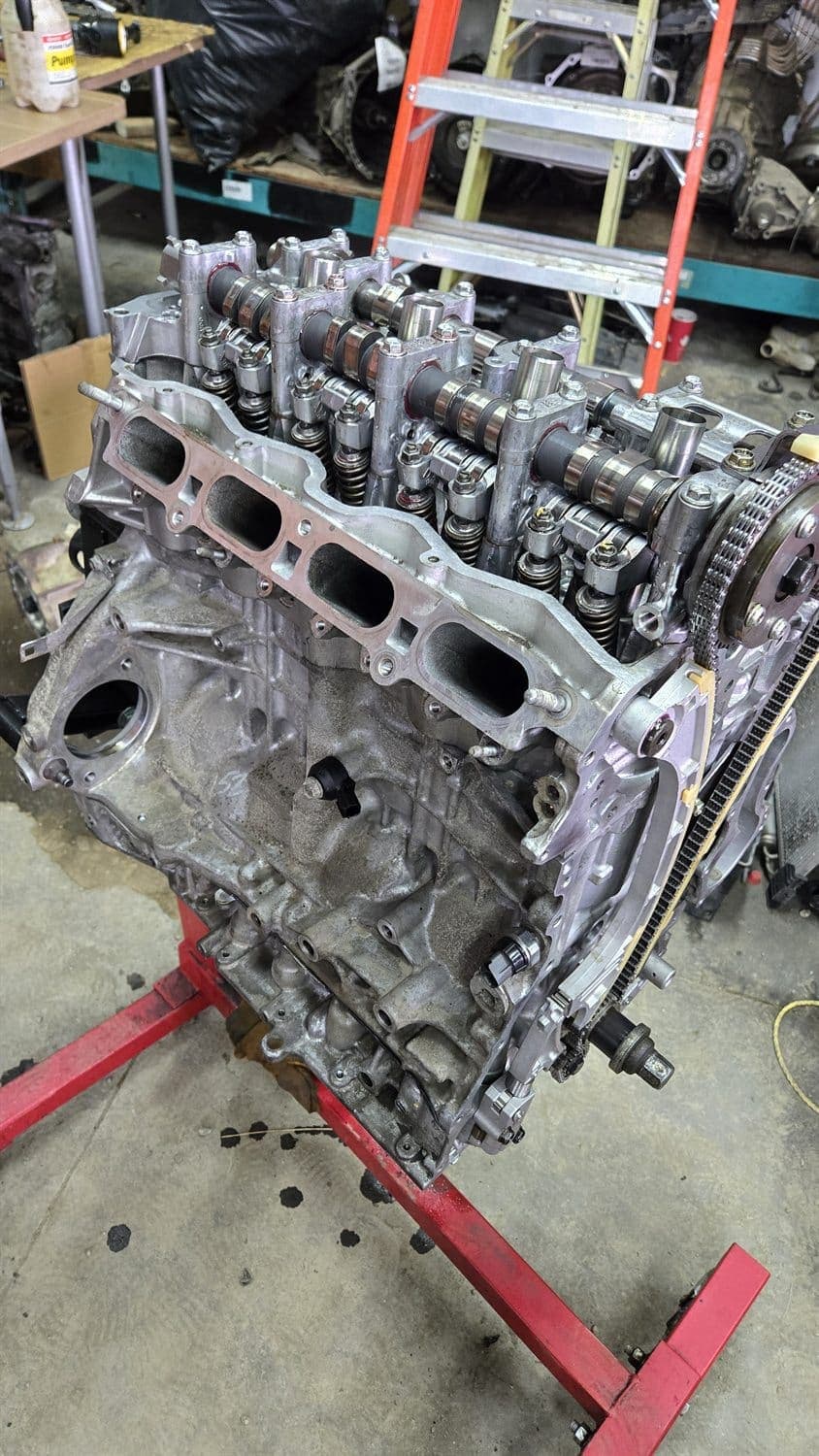
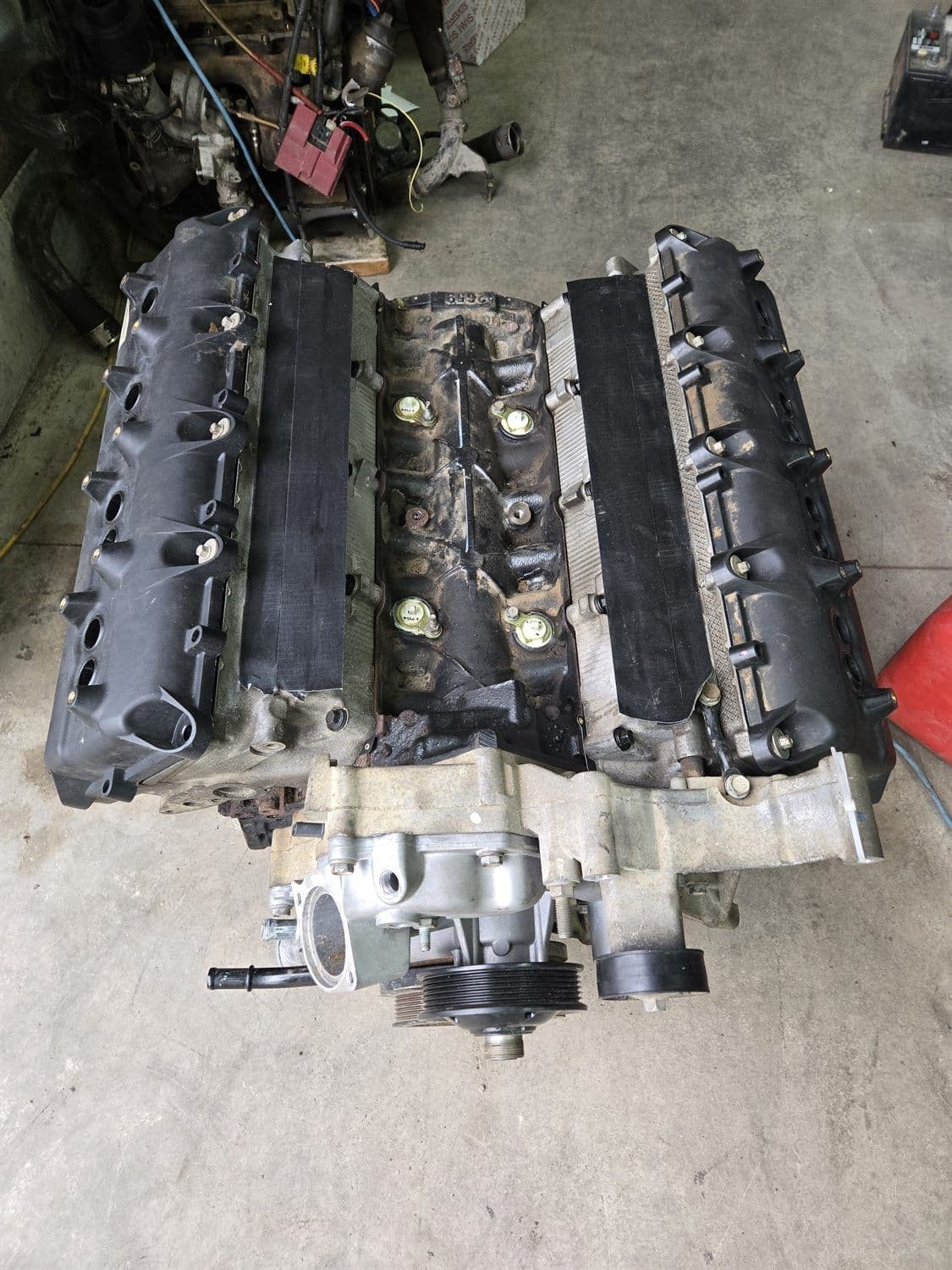
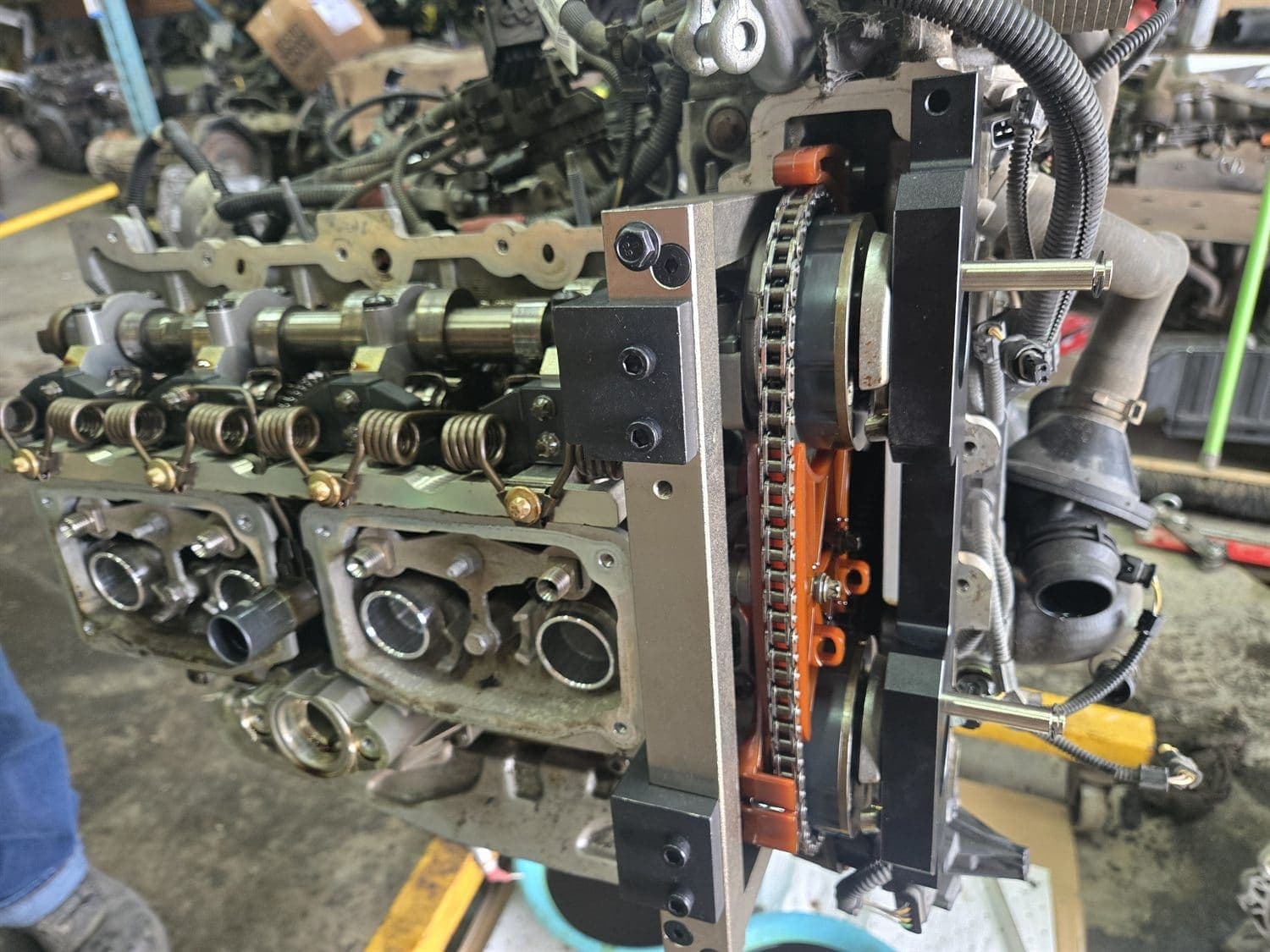
Photos from the job
Our own bays, our own bench — no stock photography.
Background
What to know about the 2.4L K24 four-cylinder
General background on this engine family — not findings from the job above.
Why a K24 ends up apart
The K24 is Honda's 2.4-litre i-VTEC four: an open-deck aluminum block with cast-in iron liners, a chain-driven twin-cam head, and a service life that routinely outlasts the vehicle wrapped around it. What ends one is a mechanism rather than age. Rod and main bearings ride on a film of oil no thicker than pressure and oil condition keep it; let the level fall, the interval stretch or the oil shear down, and the film thins until crank touches bearing. That contact is what spins a bearing, and it is well under way before anything sounds wrong. Heat works differently. An aluminum head run hot grows, distorts, and does not necessarily come back flat, so the gasket stops sealing even once the cooling fault behind it is repaired. The chain is a lifetime part only while its guides and hydraulic tensioner hold it tight; stretched chain or worn guides can let it jump, and on a modern Honda four that usually means valves and pistons meeting, which is the reason a chain noise is chased rather than lived with.
K24 cold-start rattle, ticking and oil consumption
Owners generally hear a K24 going off before anything measures wrong. The common complaint is a short rattle from the front of the engine on a cold start that clears within a second or two, typically the VTC actuator on the intake cam before oil pressure reaches it, and Honda has published updated hardware for that noise on a number of applications. A steadier tick that rises and falls with engine speed often points at valve lash, because the K-series uses mechanical adjusters rather than hydraulic lifters and the clearances need checking rather than assuming. Lash that has opened far enough to tick is the version an owner can hear; the one that matters more is silent. Oil consumption is the third. Certain versions of the K24 are known for oil control ring wear and show the loss on the dipstick between changes with a dry driveway underneath, and the coverage Honda extended on the affected engines lapsed years ago, so that repair is out of pocket now. An engine flat at the top of the rev range, with VTEC not engaging, is more often a clogged screen in the VTEC solenoid than anything internal.
Rebuild, used OEM or remanufactured on a K24
On this family the arithmetic usually favours keeping the engine. The K24 was built in enormous numbers, so rings, gaskets and bearings are easy to source, the bearings selected by the grade markings the factory stamps on the block, crank and rods rather than bought as one standard size. The machine work a sound core needs is the ordinary kind: decking the block, a fresh hone, a crank that cleans up on a polish, a valve job while the head is off. A damaged bore changes that calculus, because the iron liners cast into this aluminum block leave very little room and Honda does not catalogue oversize pistons for the K24, so recovering a scored cylinder means aftermarket pistons or resleeving, which is specialist work rather than routine. The same donor volume that keeps parts cheap also makes a used genuine OEM engine competitive here: a complete unit with known kilometres and an unknown history. A remanufactured engine is the third route, built off site to a fixed specification, with its warranty terms set out in writing on the engine replacement pages rather than summarised here.
What an Edmonton winter and road salt do to a K24
Cold changes the order in which a K24 gets its oil. The hydraulic chain tensioner and the VTC actuator both work on oil pressure and both sit at the top of a chain-driven head, so they are among the last parts fed after a start. At -30, with oil thickened by the cold, that wait is longer, which is why a cold-start rattle an owner barely registers in September is loudest and longest in January. Running the grade Honda specifies instead of something heavier shortens the wait, and a block heater, on the cars fitted with one, does on a two-to-four-hour timer what it does running all night, with below about -15°C the point where it earns its keep. Road salt sets up the other half of the arithmetic. On a high-kilometre Accord, CR-V or Element the body, exhaust and subframe are worth assessing alongside any engine decision, because on a salted-road car those can be the limiting factor rather than the engine — a question better settled before engine money is committed than after.
What the high-kilometre K24s have in common
Engines in this family do reach very high kilometres, and the ones that get there share an unremarkable history: oil changed on time and on grade, every time. A stretched oil-change interval on a short-trip car is one of the common ways a fundamentally healthy K24 ends up needing work, because oil in an engine that rarely reaches full operating temperature ages on the calendar rather than the odometer. Valve clearance is the item nearly everyone skips, and it is the one that quietly decides the cylinder head. The K-series adjusts mechanically, and the characteristic drift is tightening: as valves and seats wear into one another the clearance closes up. A tight exhaust valve stops closing fully, loses the seat contact it relies on to shed heat, and burns, with no noise to warn anyone, which is why the inspection is scheduled rather than symptom-driven. The rest is unglamorous. Honda's own long-life coolant instead of a universal, a cooling system genuinely refreshed rather than topped up, and seeps dealt with while they are still seeps.
If you run one of these
- Check the oil level monthly; at or below the low mark on the dipstick, top it up rather than waiting.
- Have the valve clearances inspected at the scheduled interval — a tight exhaust valve burns silently and takes the head with it.
- Get a one- or two-second cold-start rattle identified rather than assumed; on these engines it is usually the VTC actuator.
- Use the oil grade and the Honda long-life coolant the engine was designed around, not whatever is open on the shelf.
- If the car has a block heater, run it on a timer two to four hours before you leave, below about -15°C.
- Before spending engine money on a high-kilometre Accord, CR-V or Element, have the body, exhaust and subframe assessed first.
More jobs from our bays
See every job →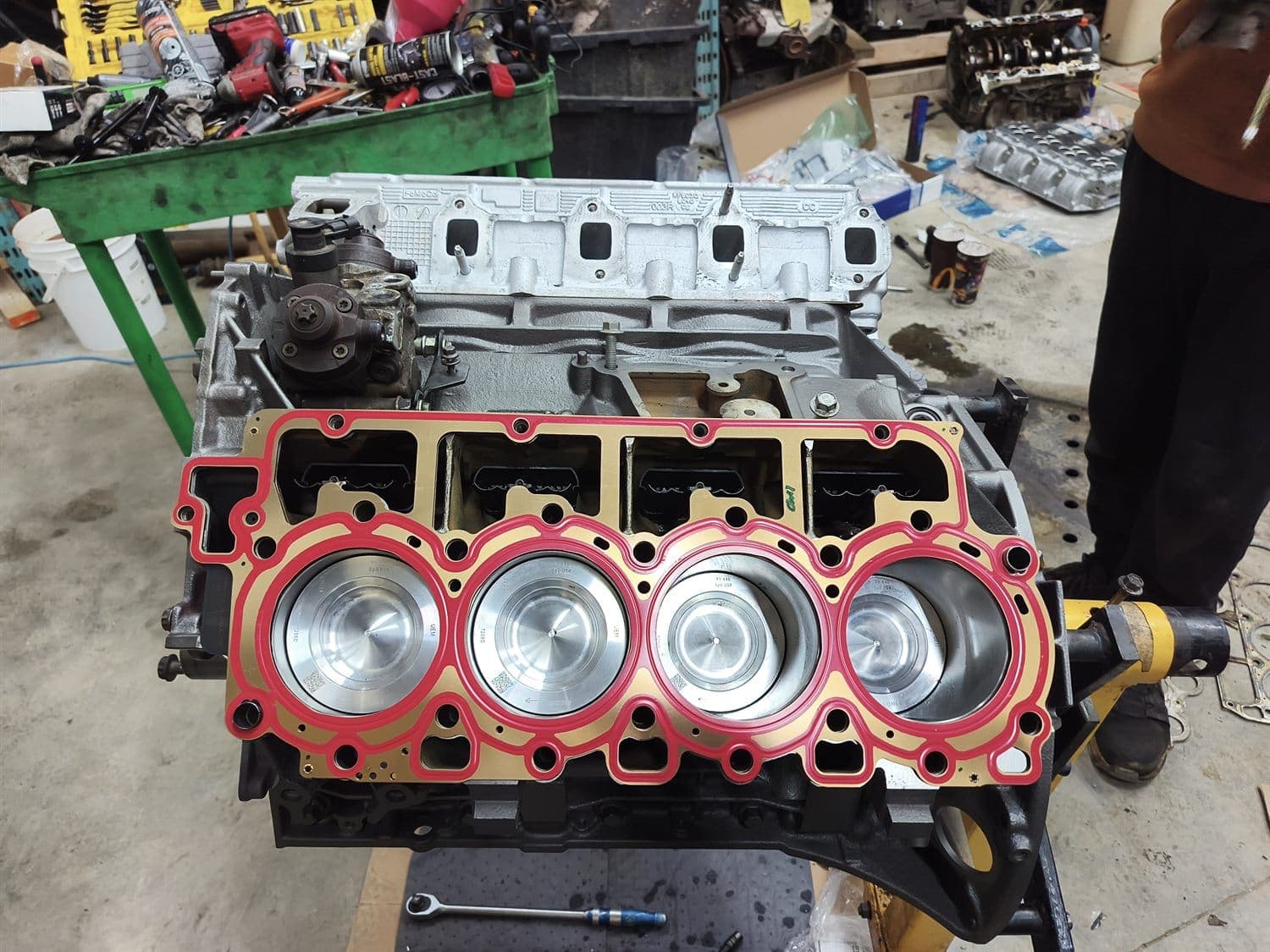
Got a job like this one?
Engine or transmission trouble — call (780) 482-2424 for a straight answer, or send us the details.