
The short answer
Volkswagen and Audi 2.0T TSI engines built from roughly 2008 to 2013 left the factory with a timing chain tensioner that can lose its grip while the car sits overnight. On a cold start the slack chain can jump a tooth or more, and because this is an interference engine, that usually means bent valves — sometimes a destroyed engine. The good news: a redesigned tensioner exists, it is not expensive, and if you catch the warning signs early you can avoid the worst outcome entirely.
Symptoms, from first warning to failure
Brief rattle at cold start
A metallic rattle or clatter from the engine for one to two seconds right when you start the car after it has sat overnight, then it goes quiet. This is the classic first warning: the tensioner has bled down and the chain is slapping around until oil pressure catches up. It is easy to dismiss because the car runs fine afterward. Do not dismiss it.
Check engine light with cam/crank correlation codes
Codes like P0016 or P0017 (crankshaft/camshaft position correlation) or P000A (camshaft position slow response) suggest the chain has stretched or the timing has drifted slightly. The car may still drive normally. This is the computer telling you the chain and tensioner are on their way out while the repair is still cheap.
Rattle on every start, or lasting longer
When the start-up rattle happens warm as well as cold, or drags on for several seconds, the tensioner has lost most of its ability to hold the chain. The window for a preventive fix is closing.
Rough running, misfires, or reduced power after start-up
If the chain has already jumped one tooth, the engine may still run but poorly — rough idle, misfire codes, hesitation, or limp mode. Many engines that jump a single tooth survive if they are shut down and repaired immediately. Keep driving it and the next start can finish the job.
Engine cranks but will not start after sitting
You parked it running fine; the next morning it spins over but never fires, often cranking faster than usual because compression is gone. This is the textbook presentation of a jumped chain on this engine. Stop cranking — every extra revolution can bend more valves — and have it towed.
Loud bang or clatter at start-up, then engine dies
If the chain jumps several teeth, pistons meet valves immediately. The engine may fire briefly, knock loudly, and stall. At this point you are into cylinder head repair at minimum, and possibly a replacement engine.
Affected models
| Model | Years | Notes |
|---|---|---|
| VW GTI | 2009–2012 | Transverse EA888 Gen 1 (engine codes CCTA/CBFA). 2013 and later builds generally received the revised tensioner from the factory. |
| VW Jetta / Jetta GLI | 2009–2010, 2012–2014 | 2.0T models only; the 2011 Jetta had no 2.0T. Later 2013–2014 builds usually have the updated tensioner — verify by engine build date, not model year. |
| VW Tiguan | 2009–2012 (engine family to 2017) | The first-generation Tiguan kept the CCTA engine through 2017, but engines built from roughly mid-2012 on came with the revised tensioner. The 2009–2012 Canadian settlement years are the high-risk ones. |
| VW Passat | 2008–2010 | B6 Passat sedan and wagon with the 2.0T. The 2012+ NMS Passat did not use this engine. |
| VW CC | 2009–2012 | Same CCTA/CBFA engine as the GTI. Covered by the Canadian settlement for these years. |
| VW Eos | 2009–2012 | Same transverse 2.0T TSI engine and tensioner design. |
| VW Beetle | 2012–2014 | 2.0T Turbo models. Later builds increasingly carry the updated tensioner; check the engine build date. |
| Audi A3 | 2008–2012 | 8P chassis with the transverse 2.0 TFSI (EA888). Earlier 2.0T A3s used the older EA113 engine, which has a different (belt-driven) timing setup. |
| Audi A4 | 2009–2012 | B8 chassis, longitudinal EA888 Gen 2 (codes such as CAEB/CAEA/CDNC). The US settlement extended to some 2013 sedans; Canadian settlement coverage ran to 2012. |
| Audi A5 | 2010–2012 | Coupe and Cabriolet with the 2.0 TFSI. Same Gen 2 longitudinal engine as the A4. |
| Audi Q5 | 2011–2012 | The 2.0T arrived in the North American Q5 for 2011. 2013+ builds generally have the revised tensioner. |
| Audi TT | 2009–2012 | Coupe and Roadster with the transverse 2.0 TFSI. |
What actually goes wrong
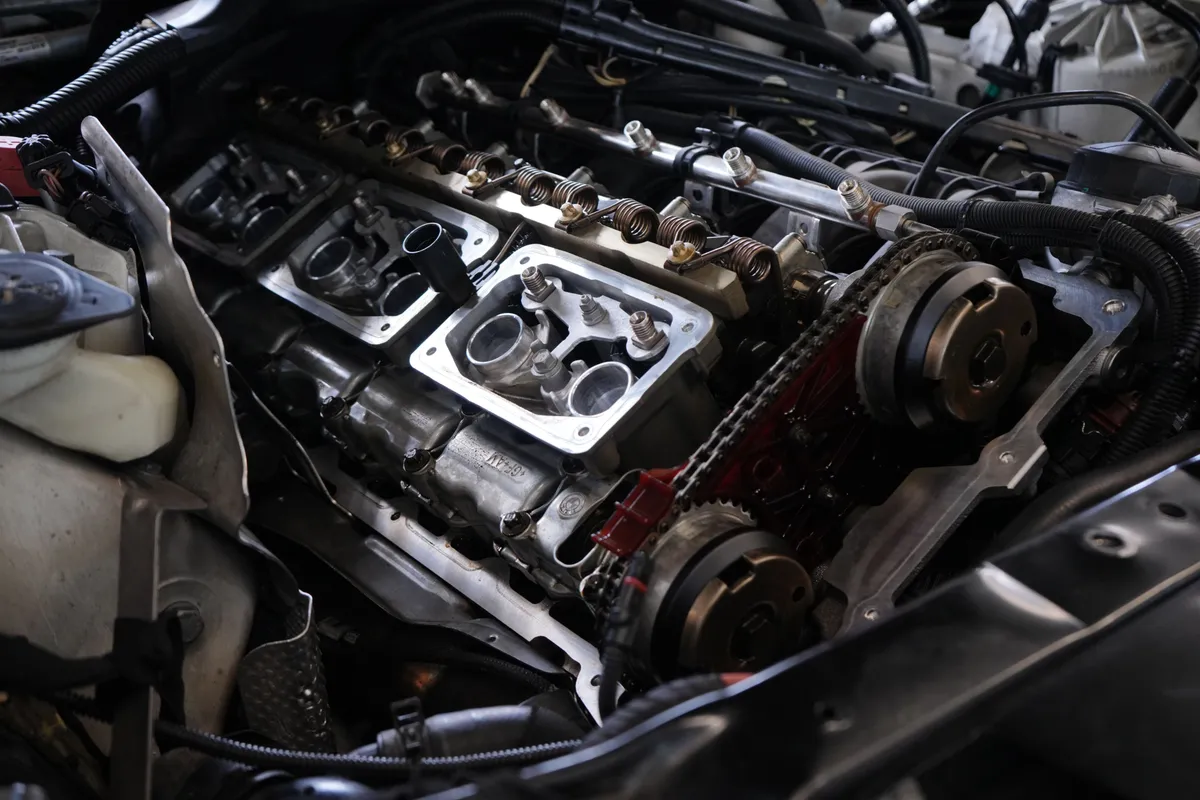
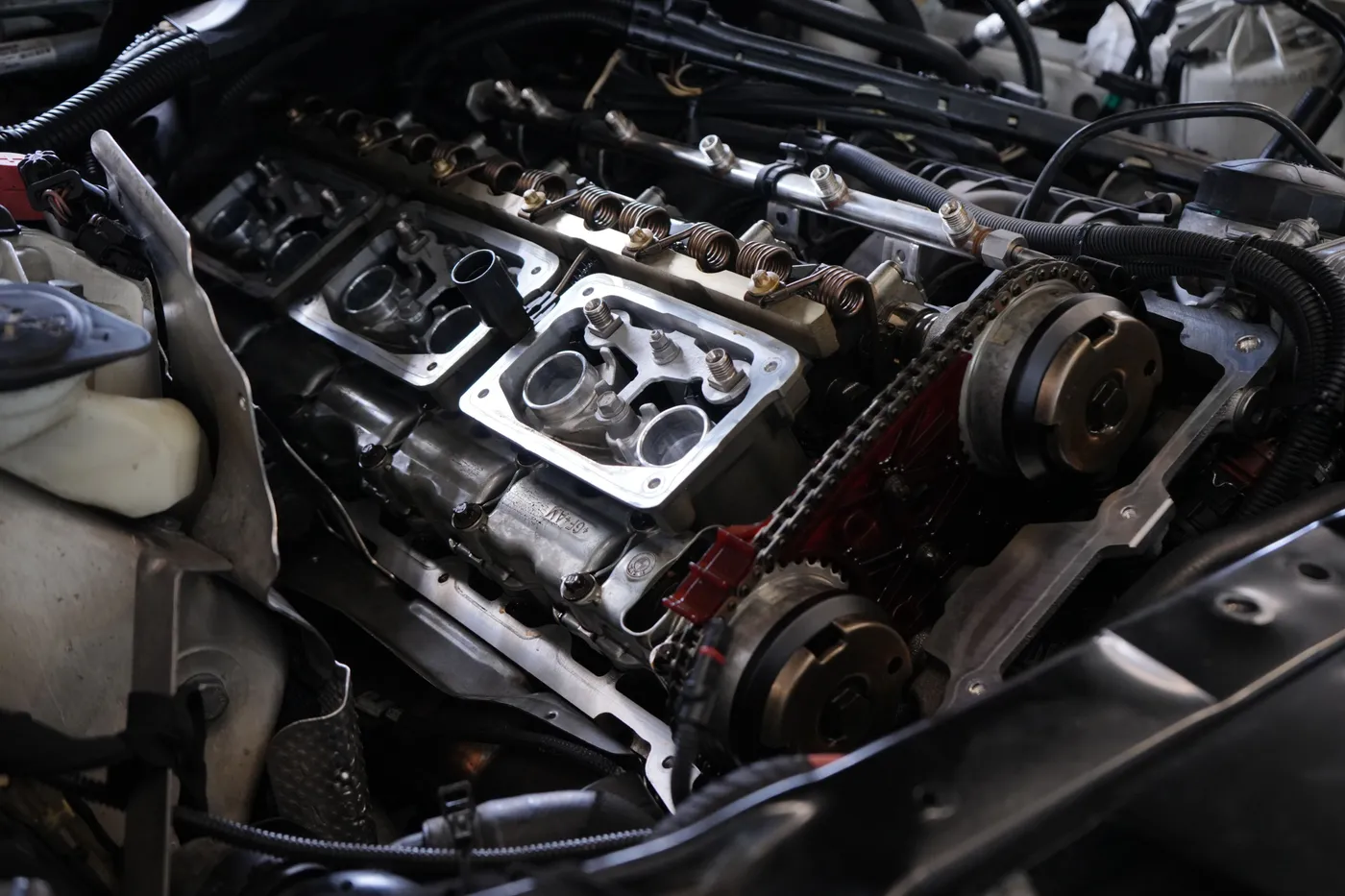
When Volkswagen and Audi moved the 2.0T from a timing belt to a timing chain with the EA888 engine family around 2008, the pitch was that the chain was a lifetime part — no more belt changes every 100,000 kilometres or so. The chain itself mostly lives up to that. The part that keeps the chain tight does not. The upper timing chain on these engines is controlled by a hydraulic tensioner that uses engine oil pressure to push a plunger against the chain guide, with a ratchet mechanism that is supposed to hold that tension mechanically when the engine is off and there is no oil pressure.
On the original tensioner design fitted to Gen 1 and Gen 2 EA888 engines — roughly everything built from 2008 into 2012 — that ratchet mechanism is the weak point. As the part ages, it stops reliably holding its position when the engine shuts down. Oil drains out of the tensioner overnight, the plunger backs off, and the chain goes slack. The next time you turn the key, there is a moment — a second or two — where the engine is spinning and the chain has enough slack to flap around before oil pressure pumps the tensioner back up. Most mornings, nothing happens except a brief rattle. One morning, the slack chain skips a tooth or several on a sprocket, and the camshafts fall out of sync with the crankshaft.
That matters so much because the 2.0T TSI is an interference engine: the pistons and the valves occupy the same space in the cylinder, just never at the same time — as long as the timing is right. Jump the timing far enough and a rising piston meets open valves. Best case, the chain skips one tooth, the computer sees the correlation error, and you get codes and rough running with no contact damage. Worst case, valves bend, valve guides crack, pistons get marked, and occasionally the damage extends into the bottom end. The difference between a $1,500 preventive repair and a $6,000 engine job is often literally one cold start.
Cold starts are the trigger, and that deserves emphasis for anyone running one of these cars in Alberta. The failure happens at start-up because that is when the tensioner has bled down and oil pressure has not yet built. Cold, thick oil after a minus-25 night in Edmonton takes longer to pressurize the tensioner than warm oil in July, which stretches the vulnerable window. These engines fail year-round everywhere, so we will not overstate it — but a prairie winter is exactly the operating environment this design flaw likes least.
Volkswagen quietly revised the tensioner several times and landed on a fundamentally better design — current part number 06K109467K — with a proper ratcheting mechanism that holds chain tension mechanically without depending on oil pressure. The updated design entered production roughly between late 2011 and mid-2012, and by the 2013 model year essentially all 2.0T TSI engines carried it. The catch is that the changeover followed engine build dates, not model years, so a given 2012 could have either part. A technician can confirm which tensioner is installed by removing an access grommet on the timing cover and inspecting it — a quick, cheap check that settles the question for good. In North America the defect also produced class actions: in Canada, a settlement approved in 2020 gave affected owners a warranty extension of 10 years or 160,000 kilometres from the in-service date on the timing chain system. Note the past tense — with the newest covered vehicles being 2014 models, that coverage has now expired for virtually every car on the road, and the claim deadline for reimbursement passed in January 2021. This is an out-of-pocket repair in 2026.
Two companion failures are worth knowing about on the same engines, because they tend to show up in the same ownership window. First, the water pump: it sits in a plastic housing that gets brittle through years of heat cycles and eventually cracks or seeps coolant — a very common repair on Gen 1/2 and Gen 3 EA888 engines alike. Second, the PCV (crankcase ventilation) valve: its rubber diaphragm tears with age, causing rough idle, a whistling noise, oil consumption, and oil leaks as crankcase pressure rises — a failing PCV can even push oil past the rear main seal. Neither of these causes the tensioner failure, but if you are budgeting to keep one of these cars long-term, plan for all three. They are all far cheaper than the engine damage they can lead to if ignored.
How the failure happens
Hover the diagram — or tap a part below — to see what it does and how it fails.
What it costs to fix
Typical ranges in Canadian dollars — every vehicle is quoted individually.
Diagnosis and tensioner inspection
$100–$250 CAD
Scan for cam/crank correlation codes, check timing alignment, and visually confirm whether the old or updated tensioner is installed through the access port in the timing cover. If you own a 2008–2012 car and do not know which tensioner it has, this is the single best money you can spend on it.
Preventive updated tensioner / chain service
typically $1,200–$2,500 CAD
Replacing the tensioner with the revised 06K109467K part, usually along with the upper chain, guides, and seals depending on wear and mileage. Several hours of labour. This is the fix done on your schedule instead of the engine's — and it permanently addresses the design flaw.
Jumped chain with bent valves (head repair)
typically $3,500–$6,500 CAD
Cylinder head removal, bent valves and guides replaced, head checked and machined as needed, plus a full new chain kit and updated tensioner. Cost depends on how many valves were hit and whether pistons were marked. Worth doing only after a proper inspection confirms the bottom end survived.
Genuine OEM replacement engine (through Eskimo Auto & Truck Parts)
typically $4,000–$7,500 CAD installed
When valves, pistons, or the bottom end are damaged, a complete genuine OEM engine is usually the sensible route — genuine OEM 2.0T TSI engines typically run $1,200–$3,500 for the unit, plus installation labour and fluids. Ask for a later-build engine that already has the updated tensioner, or have the new tensioner fitted before the swap goes in. Our sister company, Eskimo Auto & Truck Parts in Edmonton, stocks tested genuine OEM VW and Audi engines and ships across Canada and the USA.
New or remanufactured engine
$9,000–$14,000+ CAD installed
A new or factory-reman long block plus installation. On 12-to-18-year-old vehicles this almost always exceeds what the car is worth, and we rarely recommend it when a sound genuine OEM engine is available.
Repair it, or replace it?
If your engine runs fine and still has the original tensioner, the math is simple: roughly $1,500–$2,500 of preventive work protects you from a $4,000–$7,500 outcome. On any of these cars you plan to keep, do it. On one you plan to sell soon, at least get the inspection so you know what you are selling.
If the chain jumped but the engine only ran rough (one tooth, no valve contact), a chain kit with the updated tensioner usually brings it back for around the preventive price. Have compression and leak-down checked before assuming you got lucky.
If valves are bent but the bottom end checks out, head repair at $3,500–$6,500 can still make sense on a clean GTI, A4, or Q5 worth $8,000–$12,000 — less so on a high-kilometre Jetta worth $5,000. Compare the quote to both the car's value and the genuine OEM engine option before committing.
At typical Alberta mileages — many of these cars are now at 180,000–280,000 km — a genuine OEM engine is often the smarter spend than rebuilding a damaged head on a worn original engine, because you get fresh top and bottom end together, often for similar money.
Before approving any four-figure repair, weigh the rest of the car honestly: DSG/automatic transmission health, rust, suspension, and the known water pump and PCV items. A $5,000 repair on a car that needs another $3,000 elsewhere is how people end up upside down.
Walk away from repair when the block or crank is damaged and the vehicle has other major needs — at that point the car is worth more sold as-is or parted out, and your repair budget buys a better vehicle.
How we fix this in Edmonton
Engine Repair & Replacement in Edmonton
A bad engine doesn't automatically mean a new vehicle. We diagnose before we condemn — and then we can fix it every way there is: rebuild it in-house, install a remanufactured ATK engine, or fit a genuine OEM engine sourced through our sister company, Eskimo Auto & Truck Parts.
See the service →Vehicle Diagnostics & Check Engine Light in Edmonton
A trouble code tells you what the computer noticed, not what is broken. We read the codes, look at live data, and test the actual circuit before anything gets replaced. Diagnostic time is $120 an hour, quoted before we start, because the most expensive repair is the one that didn't fix the problem.
See the service →Audi & Volkswagen Repair in Edmonton
Audi and Volkswagen repair without dealer pricing. We know the EA888 chain tensioner rattle, the PCV failure that gets blamed on piston rings, the DSG service nobody told you about, and what short winter trips at -30 do to a TDI. We diagnose first, quote in writing, and if your car genuinely needs dealer-only programming we will say so instead of billing you to find out.
See the service →The genuine OEM parts option
If a jumped chain has taken the engine past the point of economical repair, a tested genuine OEM engine is usually the smartest path back on the road. Our sister company, Eskimo Auto & Truck Parts in Edmonton, is one of Edmonton's largest parts operations and stocks genuine OEM Volkswagen and Audi 2.0T TSI engines and cylinder heads from insurance-write-off vehicles — often low-kilometre units from cars that died from collision damage, not engine trouble. Every engine is checked before sale, later-build engines with the factory-updated tensioner can be requested, and we fit the revised tensioner before installation either way. A genuine OEM engine is the exact factory unit your car was built with, and Eskimo Auto & Truck Parts ships across Canada and the USA if you are having the work done elsewhere. One phone call gets you a price on the engine and a straight answer on whether your car is worth it.
Browse inventory at Eskimo Auto & Truck Parts →How to make yours last longer
- Find out which tensioner you have. If your 2008–2012 (and some 2012–2013 build) VW or Audi 2.0T still has the original part, replace it with the updated 06K109467K design proactively. This is the one item on this list that actually eliminates the problem.
- Never ignore a rattle on cold start, even for a second or two. It is the tensioner telling you it is bleeding down. Book an inspection immediately, and if the noise is getting longer or louder, stop starting the engine and have the car towed in.
- Take cam/crank correlation codes (P0016, P0017, P000A) seriously the first time they appear. They usually show up before the catastrophic jump, while the fix is still cheap.
- Change oil on time with the correct VW 502 00 specification oil. Clean oil at the right viscosity is what pumps the tensioner up quickly on cold mornings; long-neglected oil intervals accelerate chain and tensioner wear.
- In an Edmonton winter, plug in the block heater. It does not fix the design flaw, but warmer oil pressurizes the tensioner faster and makes every cold start gentler on the timing system.
- Fix water pump leaks and a failed PCV valve promptly. Low coolant and elevated crankcase pressure create their own expensive problems, and a healthy engine is more forgiving of everything else.
- If you are buying one of these cars used, make proof of the updated tensioner (invoice or inspection) a condition of the sale, and treat a cold first-start rattle at a private sale as a repair bill in waiting.
Frequently asked questions
Which VW and Audi years have the timing chain tensioner problem?
Broadly, 2.0T TSI/TFSI engines from the EA888 Gen 1 and Gen 2 families built from 2008 into 2012 — in Canada that means roughly 2009–2012 GTI, CC, Eos and Tiguan, 2009–2010 and 2012–2014 Jetta 2.0T, 2008–2010 Passat, 2012–2014 Beetle 2.0T, plus Audi A3 (2008–2012), A4 (2009–2012), A5 (2010–2012), Q5 (2011–2012) and TT (2009–2012). The updated tensioner entered production between late 2011 and mid-2012, so it follows engine build dates rather than model years — some 2012s have the good part, and essentially all 2013-and-later engines do.
How do I know if my car has the old or updated tensioner?
The only sure way is to look. A technician removes a rubber access grommet on the timing cover and inspects the tensioner — the old and revised designs look visibly different. It takes minutes and typically costs little more than a basic inspection fee. If the car has service records showing part number 06K109467K was installed, you are already covered.
What does a failing timing chain tensioner sound like?
A metallic rattle or clatter from the engine for a second or two right at start-up, most noticeable on the first cold start of the day, that disappears once the engine is running. As the tensioner deteriorates the rattle lasts longer and starts happening on warm starts too. A loud sustained clatter, or a bang followed by a no-start, means the chain has likely already jumped.
Is the 2.0T TSI an interference engine?
Yes. The pistons and valves share the same space in the cylinder and rely on correct timing to never meet. If the chain jumps more than about a tooth, open valves can be struck by rising pistons. That is why this failure is expensive: it is rarely just a chain and tensioner by the time it lets go, it is bent valves and cylinder head work, and sometimes a whole engine.
Was there a recall for the VW/Audi timing chain tensioner?
No safety recall — this was handled through class actions. In Canada, a settlement approved in 2020 gave owners of affected 2008–2014 models a warranty extension on the timing chain system of 10 years or 160,000 km from the vehicle's in-service date, with a reimbursement claim deadline of January 25, 2021. A similar US settlement was approved in 2018. As of 2026, that extended coverage has expired for virtually every affected vehicle, so repairs are now out of pocket.
How much does the fix cost in Canada?
Done preventively, replacing the tensioner — usually with the upper chain and guides while everything is apart — typically runs $1,200–$2,500 depending on the model and what is replaced. If the chain has already jumped and bent valves, cylinder head repair typically lands between $3,500 and $6,500. If the damage goes deeper, a good genuine OEM engine installed typically costs $4,000–$7,500, which is usually the ceiling worth spending on these cars.
Can I keep driving with a cold-start rattle?
We would not. The rattle itself does not damage anything in the moment — the danger is that every start is a roll of the dice on the chain jumping, and the failure happens at start-up, not while driving. If the rattle is new and brief, drive it straight to a shop and have it checked. If it is getting longer or the engine has started running rough, stop starting it and tow it. A tow bill is the cheapest part of this whole story.
Does the timing chain itself wear out, or is it just the tensioner?
The tensioner is the design flaw, but a chain that has run slack also stretches faster, and a stretched chain sets correlation codes and accelerates guide wear. That is why most shops replace the upper chain, guides, and tensioner together once they are in there — the added parts cost is modest compared to the labour of opening it up twice.
My engine jumped time — is a genuine OEM engine a good idea?
Often it is the most sensible repair. Once valves and pistons are involved, a tested genuine OEM engine frequently costs about the same as rebuilding your damaged head, and you get a complete running engine rather than a fresh top end on a worn bottom end. Two rules: buy from a supplier that tests and guarantees its engines, and make sure the replacement either is a later build with the updated tensioner or gets a new one installed before it goes in.
Should I avoid buying a used 2008–2013 VW or Audi 2.0T altogether?
No — these are otherwise strong, enjoyable engines, and by 2026 a large share of survivors have already had the updated tensioner fitted. The rule is simple: proof of the updated tensioner (or budget roughly $1,500–$2,500 to do it right away), a pre-purchase inspection that includes a cold start, and a look at the water pump and PCV while it is on the hoist. Priced accordingly, these cars can be good value precisely because of their reputation.
Dealing with this problem right now?
Edmonton and area: bring it in and we'll confirm the diagnosis before any work. Anywhere else in Canada or the USA: our sister company ships the genuine OEM parts to your shop.